

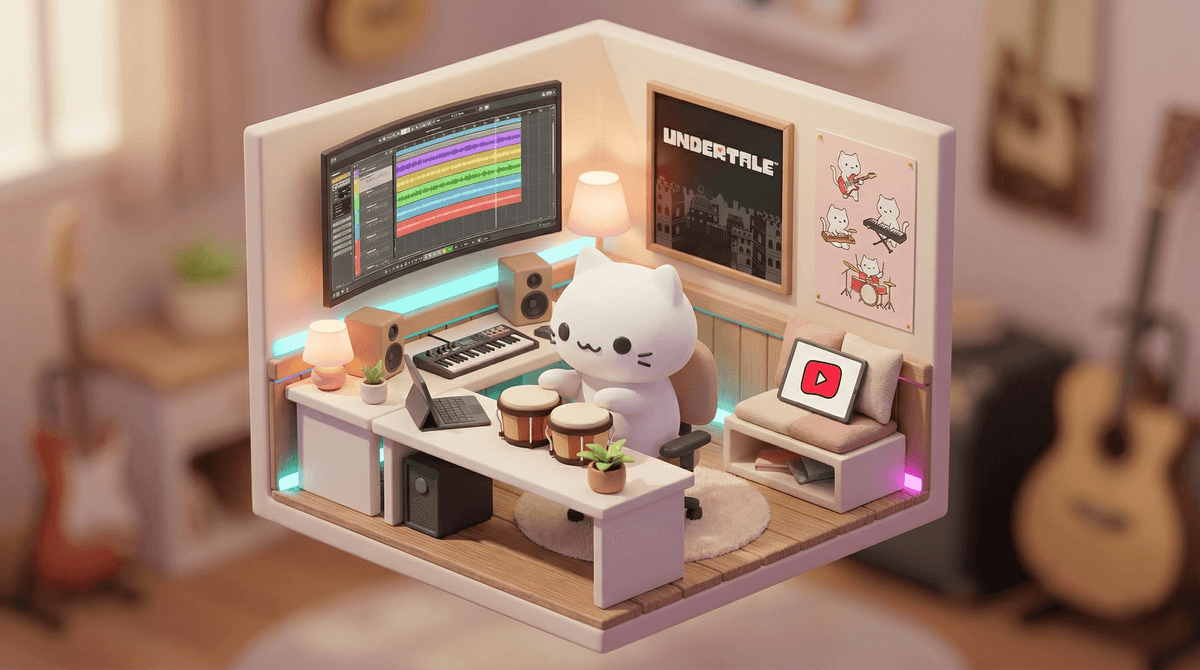
Bongo Cat is one of those rare internet phenomena that's genuinely wholesome—a simple animated white cat with wide eyes that bops along to music by tapping two bongos. That's it. That's the whole thing.
The original animation appeared in 2018, created by Twitter artist @StrayRogue, and it exploded because people immediately started making their own versions. The cat plays piano. The cat plays drums. The cat types on a keyboard. The cat plays whatever instrument or activity you can imagine, perfectly synced to music or sound effects.
What makes Bongo Cat special is that it's participatory. Unlike most memes that you just consume and share, Bongo Cat became a creative playground. Kids (and adults) use apps and websites to make the cat play their favorite songs, remix popular tracks, or create elaborate musical performances. It's part meme, part music tool, part creative outlet.
And here's the thing: this is actually one of the better internet obsessions your kid could have. More on that in a second.
Bongo Cat hits several sweet spots for kids:
It's satisfyingly simple. In a digital landscape full of complex games, elaborate storylines, and social pressure, there's something deeply appealing about a cat bopping to music. It's pure, uncomplicated joy.
It's endlessly remixable. Kids love taking something and making it their own. Bongo Cat can play anything—Megalovania from Undertale, the Roblox death sound, their favorite K-pop song, or that one TikTok audio everyone's using. The creative possibilities feel infinite.
It's participatory without being performative. Unlike social media where kids feel pressure to look a certain way or say the right thing, Bongo Cat is about the music and the animation. You can share your creation or just enjoy making it for yourself.
It connects to music they already love. Whether your kid is into video game soundtracks, pop music, or whatever's trending on YouTube (and with about 80% of kids using YouTube either supervised or solo, they're definitely finding music there), Bongo Cat becomes a way to engage with those songs more actively.
Here's where Bongo Cat gets interesting from a parent perspective: it's actually teaching kids about music, rhythm, and digital creation.
When kids make Bongo Cat videos, they're learning:
- Rhythm and timing - Getting the cat's bops to sync with the music requires understanding beats and tempo
- Basic animation principles - Even simple Bongo Cat edits teach cause and effect, timing, and visual storytelling
- Audio editing - Many kids progress from using pre-made Bongo Cat tools to actually editing audio and video together
- Creative problem-solving - Figuring out how to make the cat "play" a complex song involves breaking down the music into manageable parts
It's not a music education curriculum, obviously, but it's creative screen time rather than passive consumption. And in a world where we're constantly worried about kids just scrolling and consuming, that distinction matters.
Ages 5-7: At this age, kids mostly enjoy watching Bongo Cat videos. They might use very simple apps that let them tap along with the cat. This is fine! It's silly, it's musical, and there's nothing concerning about the content.
Ages 8-11: This is peak Bongo Cat creativity age. Kids can use apps like Bongo Cat Musical Instruments or web-based tools to create their own videos. Some might even start learning basic video editing to make more complex versions. Encourage this! It's a gateway to digital creativity that doesn't involve social media.
Ages 12+: Older kids might use Bongo Cat as part of larger video projects, memes, or creative works. They might incorporate it into YouTube videos or share creations with friends. The main thing to watch here is where they're sharing—make sure they understand basic digital privacy and aren't posting to public platforms without your knowledge.
It's genuinely safe content. Bongo Cat itself has no concerning elements. The original animations are completely appropriate for all ages. The main thing to monitor is where your kid is finding Bongo Cat content and what else is in those spaces.
YouTube is the main hub. Most Bongo Cat content lives on YouTube, which means the usual YouTube considerations apply. If your kid is watching Bongo Cat compilations, they might encounter suggested videos that aren't as wholesome. Consider using YouTube Kids for younger children or supervising YouTube sessions for older kids.
Creation tools vary in quality. There are many Bongo Cat apps and websites. Some are well-designed and kid-friendly, others are ad-filled or poorly made. If your kid wants to create Bongo Cat content, preview the tool first. Look for apps with good ratings and minimal ads.
This could be a gateway to music or animation. Seriously. Many kids who get obsessed with Bongo Cat end up interested in music production, animation, or video editing. If your kid is showing sustained interest, consider exploring music creation apps or basic animation tools.
In the grand scheme of internet things your kid could be obsessed with, Bongo Cat is pretty great. It's wholesome, it's creative, and it's actually engaging their brain rather than just occupying their eyeballs.
The main parental job here is channeling this interest toward creation rather than just consumption. If your kid loves watching Bongo Cat videos, great—but can they make their own? Can they figure out how to sync the cat to their favorite song? Can they teach a younger sibling how it works?
This is the kind of digital engagement that actually builds skills. Let them run with it.
If your kid just discovered Bongo Cat: Set them up with a simple creation tool and let them experiment. Sit with them for the first few sessions to see what they're making and where they're finding inspiration.
If they're deep in the Bongo Cat phase: Consider whether this interest could expand into music lessons, animation classes, or video editing skills. Even free tools like GarageBand or simple animation apps can take this casual interest and turn it into actual skill-building.
If you're worried about screen time: Remember that not all screen time is equal. Twenty minutes making a Bongo Cat video is fundamentally different from twenty minutes scrolling TikTok. Focus on what they're doing, not just how long they're doing it.
And hey—if you need a break from explaining why the cat is bopping, just remember: at least it's not Skibidi Toilet.