

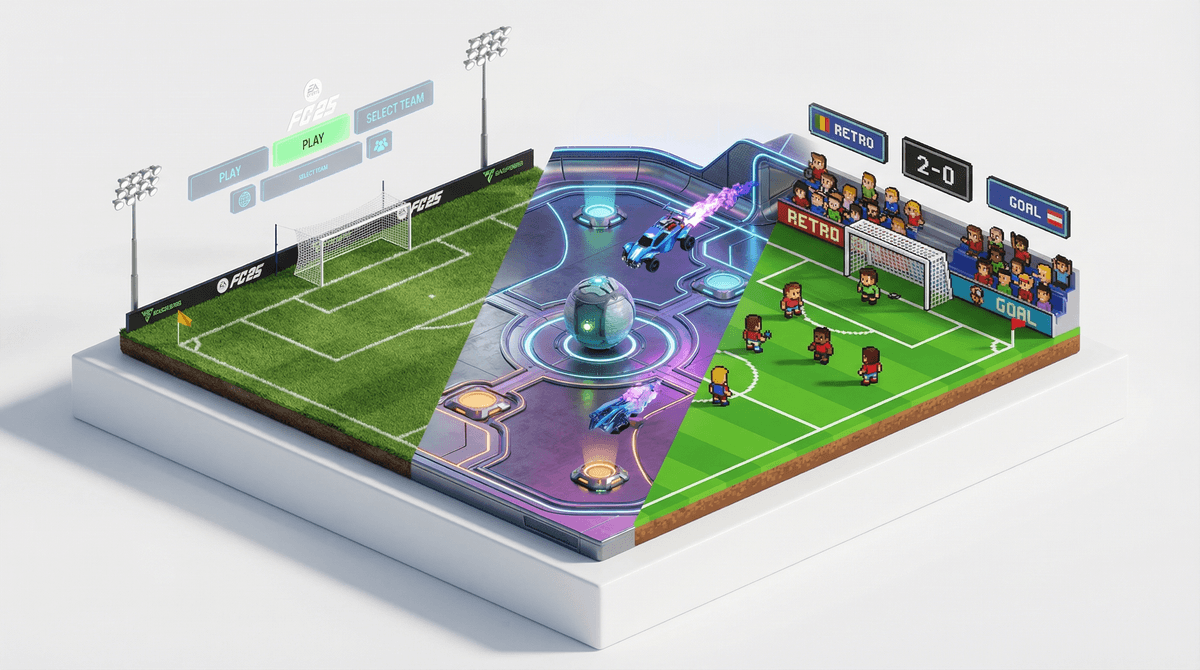
The Ultimate Ranking: Top Football Video Games for Kids in 2026
TL;DR: EA Sports FC 25 is still the gold standard but comes with microtransaction concerns. FIFA Mobile offers free-to-play fun with similar caveats. Rocket League mashes soccer with cars and has surprisingly fair monetization. eFootball is free but grindy. Retro Bowl is perfect for younger kids who want simple, screen-time-friendly gameplay.
Quick links:
- EA Sports FC 25 - Ages 10+
- Rocket League - Ages 8+
- FIFA Mobile - Ages 10+
- Retro Bowl - Ages 7+
- EFootball - Ages 10+
Football (or soccer, depending on where you live) video games have come a long way from the pixelated chaos of the '90s. Today's titles offer stunning graphics, realistic gameplay, and—here's where it gets tricky for parents—complex online ecosystems with in-game currencies, loot boxes, and social features that can feel like a second job.
Whether your kid is obsessed with Messi, dreams of managing their own team, or just wants to kick a virtual ball around, there's a football game out there. But not all of them are created equal when it comes to age-appropriateness, cost, and the dreaded "Mom, can I have $20 for FIFA points?" conversation.
Let's break down the top football games for kids in 2026, what makes them tick, and what you actually need to know before handing over the controller.
Before we dive into rankings, here's the reality: most modern football games are designed to keep players engaged long-term, which means they're built around online modes, seasonal content, and microtransactions. This isn't inherently evil, but it does mean you need to understand what you're signing up for.
The big three concerns:
- Ultimate Team modes - These are the card-collecting, team-building modes that drive most football games' revenue. They're fun, but they're also designed to encourage spending real money on player packs.
- Online play - Most kids want to play online, which means voice chat, competitive pressure, and potential exposure to toxic behavior.
- Annual releases - EA's flagship titles release yearly, which can feel like a $70 subscription fee to stay current with friends.
Now, onto the rankings.
Ages 10+ | $69.99 | PlayStation, Xbox, PC, Nintendo Switch
This is the game formerly known as FIFA, rebranded after EA lost the FIFA license. It's still the most popular football game on the planet, and for good reason: the gameplay is smooth, the presentation is top-tier, and it's what all your kid's friends are probably playing.
Why kids love it:
- Ultimate Team mode is basically Pokémon for football fans—collect players, build squads, compete online
- Career Mode lets them manage their favorite club or create a player and rise through the ranks
- Licensed teams, stadiums, and players make it feel authentic
- Cross-platform play means they can compete with friends regardless of console
The parent reality check:
EA Sports FC 25 is rated E for Everyone by the ESRB, but that rating doesn't tell the full story. Ultimate Team is a microtransaction machine. Kids open player packs (which cost real money or in-game currency earned through grinding) hoping to get their favorite stars. The odds are terrible, and the psychological hooks are real. Learn more about how Ultimate Team monetization works .
.
What to do:
- Turn off in-game purchases through your console's parental controls
- Set clear expectations about spending before your kid starts playing
- Consider Career Mode or Seasons Mode as alternatives to Ultimate Team
- Monitor online interactions—voice chat can get toxic in competitive modes
Bottom line: This is the best football game for gameplay and features, but it requires active parenting around spending and online behavior.
Ages 8+ | Free-to-play | PlayStation, Xbox, PC, Nintendo Switch
Okay, hear me out: Rocket League is technically a football game. It's just that instead of players, you control rocket-powered cars that flip, boost, and fly to hit a giant ball into a goal. It's absurd, it's chaotic, and kids absolutely love it.
Why kids love it:
- Fast-paced, 5-minute matches feel perfect for short gaming sessions
- Easy to learn, impossible to master—there's always room to improve
- Cross-platform play with friends
- Cosmetic customization lets them personalize their cars
- No pay-to-win mechanics—all purchases are cosmetic
The parent reality check: Rocket League is free-to-play, which means it makes money through cosmetic microtransactions (car skins, goal explosions, etc.). The good news? These don't affect gameplay at all. The bad news? Kids still want them. The game also has a "Rocket Pass" (basically a battle pass) that costs about $10 per season and unlocks additional cosmetics.
What to do:
- This is one of the more parent-friendly free-to-play games out there
- Set a budget for cosmetics if your kid wants to spend
- Disable voice chat—the community can be salty
- Consider it a gateway to other cozy multiplayer games
Bottom line: If you want a football-adjacent game that's genuinely fun, skill-based, and less predatory than most free-to-play titles, Rocket League is a solid choice.
Ages 10+ | Free-to-play | iOS, Android
FIFA Mobile is EA's mobile-first football game, and it's basically a streamlined version of the console experience designed for touchscreens and shorter play sessions.
Why kids love it:
- Free to download and play
- Simplified controls work well on phones and tablets
- Ultimate Team mode (see the pattern?) with familiar card-collecting mechanics
- Events and seasonal content keep things fresh
- Can play anywhere
The parent reality check: FIFA Mobile is aggressively monetized. It's free-to-play in the same way a casino is free to enter—sure, you can play without spending, but the game constantly nudges you toward purchases. Pack odds are even worse than the console version, and the game is designed to create FOMO (fear of missing out) through limited-time events.
What to do:
- Disable in-app purchases on your kid's device
- Talk about how free-to-play games make money before they start playing
- Set time limits—mobile games are designed to be addictive
- Consider whether a paid console game might actually be cheaper in the long run
Bottom line: Convenient and accessible, but the monetization is rough. Best for older kids who understand the business model.
Ages 10+ | Free-to-play | PlayStation, Xbox, PC, Mobile
eFootball is Konami's answer to EA Sports FC, and it's gone fully free-to-play. It used to be called Pro Evolution Soccer (PES), and while it's always had solid gameplay, it's never quite matched EA's polish or licensing.
Why kids love it:
- Free to download and play on console, PC, and mobile
- Gameplay feels more simulation-focused than EA's arcade-y approach
- Some kids prefer the physics and ball control
- Cross-platform play
The parent reality check: eFootball has all the same microtransaction concerns as EA Sports FC, but with even less polish. The game launched in rough shape and has been slowly improving, but it still feels like a budget alternative. The monetization is similar—player packs, premium currency, seasonal content—but the player base is much smaller, which can make online matchmaking slower.
What to do:
- Same precautions as EA Sports FC—disable purchases, monitor online play
- Manage expectations—this isn't as polished as EA's offering
- Consider it if your kid specifically prefers the gameplay style
Bottom line: A decent free alternative to EA Sports FC, but it feels like you get what you pay for.
Ages 7+ | Free (with optional $1 unlock) | iOS, Android, Nintendo Switch
Wait, Retro Bowl is American football, not soccer. But stick with me—if you have a younger kid who wants a football management game without the complexity and monetization nightmares of the big titles, Retro Bowl's soccer cousin exists, and it's called Retro Goal.
Why kids love it:
- Retro pixel art style feels nostalgic and approachable
- Simple controls—mostly management decisions and quick gameplay moments
- No online requirements, no microtransactions (beyond the one-time unlock)
- Perfect for younger kids who aren't ready for simulation-heavy games
- Short play sessions fit well into limited screen time
The parent reality check: This is refreshingly simple. The free version has ads; the paid version ($1-2 depending on platform) removes them and unlocks all features. That's it. No loot boxes, no premium currency, no battle passes. It's a throwback to when mobile games were just... games.
What to do:
- Consider paying the $1-2 to remove ads and support the developer
- Great for younger kids (7-9) who want to feel included in football game conversations
- Works offline, making it perfect for car rides or flights
Bottom line: The antidote to modern game monetization. Simple, fun, and parent-friendly.
Ages 7-9: Start with Retro Goal or Rocket League with voice chat disabled. These offer football fun without the complexity or monetization pressure of simulation games.
Ages 10-12: EA Sports FC 25 becomes appropriate here, but with strict parental controls around purchases and online play. Career Mode is a great single-player option. Rocket League remains excellent for this age group.
Ages 13+: Most football games are fair game at this point, but the conversation shifts to responsible spending, time management, and online behavior. This is a good age to talk about how free-to-play games are designed to encourage spending.
Voice chat: Every game on this list that includes online play has voice chat, and football games attract a particularly competitive (read: sometimes toxic) player base. Disable voice chat for younger kids, and monitor it for older ones.
Spending: Set up parental controls on your console, PC, or mobile device to require approval for purchases. Better yet, use gift cards with set amounts rather than linking a credit card.
Time management: Football games—especially Ultimate Team modes—are designed to keep players engaged with daily objectives, limited-time events, and seasonal content. Set clear boundaries around screen time and help your kid understand FOMO tactics.
Online strangers: Most online play is against random opponents, not friends. Make sure your kid knows not to share personal information and understands how to report inappropriate behavior.
If you're looking for the most polished, feature-complete football game, EA Sports FC 25 is the answer—but it requires active parenting around monetization. Rocket League offers the best balance of fun, fairness, and family-friendliness. For younger kids, Retro Goal is a breath of fresh air in a sea of microtransaction-heavy games.
Whatever you choose, the key is understanding what you're signing up for. Modern football games aren't just $70 purchases anymore—they're platforms designed to keep players engaged (and spending) year-round. That doesn't make them bad, but it does mean you need to go in with eyes open.
Next steps:
- Check your console's parental controls and disable in-game purchases
- Have a conversation about spending before your kid starts playing
- Consider setting up a monthly gaming budget for cosmetics or premium content
- Explore alternatives to competitive online games if the pressure gets too intense
And remember: it's just a game. If your kid is having fun, learning about teamwork and strategy, and staying within healthy boundaries, you're doing fine. Even if they insist on playing as Manchester City. Again.