

TL;DR
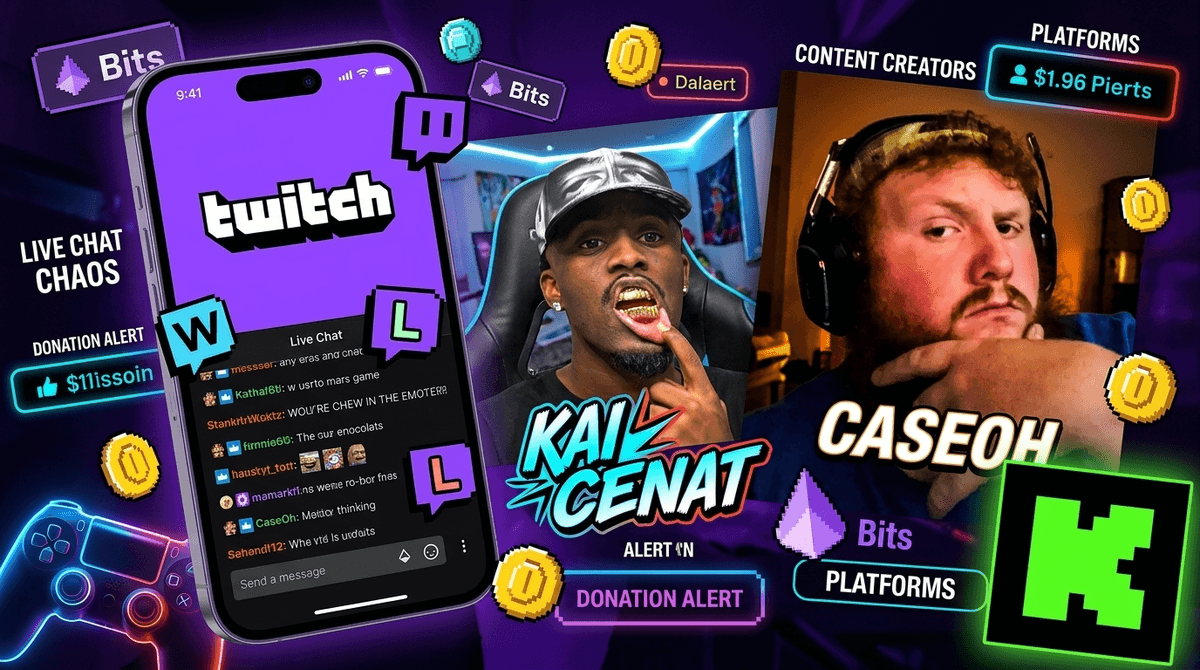
Twitch is no longer just a place to watch people play Minecraft. It is a 24/7 interactive reality show where creators like Kai Cenat and CaseOh are the new A-list celebrities. The draw isn't the gameplay; it's the community, the "chaos," and the ability to buy a moment of a streamer's attention.
Quick Links for Parents:
If YouTube is Netflix, Twitch is live TV—but with a thousand "choose your own adventure" buttons and a live audience that never stops screaming.
Twitch is a live-streaming platform where creators (streamers) broadcast themselves in real-time. While it started with gaming, the most popular category now is "Just Chatting." This is where streamers sit in front of a camera, react to videos, talk to their chat, and perform stunts.
The "culture" part is what catches parents off guard. It’s a language of its own. When your kid says "L" or "W" in response to a dinner choice, or mentions a "subathon," they are speaking Twitch. It’s an ecosystem built on parasocial relationships—the one-sided feeling of friendship a viewer has with a creator. Because the streamer can see the chat and respond to "donos" (donations) in real-time, kids feel like they are actually "hanging out" with their idols.
You can't understand the current state of live streaming without knowing the heavy hitters. These aren't just gamers; they are entertainers who command audiences larger than most cable TV shows.
Kai is the undisputed king of Twitch right now. He’s high-energy, incredibly loud, and responsible for mainstreaming terms like "rizz." His streams are chaotic, often featuring celebrity guests and massive "subathons" (marathon streams that last for weeks where every new subscriber adds time to the clock). The Parent Vibe: It’s loud. It’s frantic. There is frequent profanity and "locker room" humor. It’s not "evil," but it is definitely "brain rot" adjacent if consumed for 6 hours a day.
CaseOh has exploded in popularity because of his "roast" culture. He plays games like Roblox or horror titles, but the main attraction is the audience making fun of his weight and him reacting with mock outrage. The Parent Vibe: Surprisingly, CaseOh is often seen as one of the "cleaner" big streamers. He generally avoids heavy profanity, though the community's humor is 100% based on "fat jokes," which might not sit well with every family's values regarding body image.
Speed is the wildcard. Originally on Twitch (now primarily on YouTube), his content is built on "clout chasing" and extreme, often dangerous or offensive stunts. The Parent Vibe: This is the one to watch out for. Speed’s content often pushes the boundaries of safety and decency for the sake of a viral clip. If your kid is watching Speed, they are seeing a lot of "edgy" behavior that frequently crosses the line into harassment or misogyny.
Twitch is a masterclass in gamified spending. This is where the "draining the bank account" concern becomes very real.
- Subs (Subscriptions): This is a monthly fee (usually $4.99) to "support" the creator. It gives the viewer special emotes and removes ads.
- Bits: Twitch's internal currency. You buy them with real money and "cheer" them in chat. It’s basically digital tipping.
- Donos (Donations): This is the big one. Viewers can send direct cash tips to streamers. Often, if the donation is high enough, a Text-to-Speech (TTS) bot will read the viewer's message out loud on the stream.
Why kids do it: For a 12-year-old, having Kai Cenat say their name out loud is the ultimate hit of dopamine. It’s social status. They aren't just watching the show; they are buying their way into it.
Learn more about how digital currency like Bits and Robux is real money
It’s easy to look at a Twitch stream and see a mess of scrolling text and a guy screaming at a camera. But for kids, it’s:
- Unfiltered: Unlike TV or even edited YouTube videos, Twitch feels "real."
- A "Third Place": With fewer physical places for kids to hang out, the Twitch chat becomes their mall or park.
- FOMO (Fear Of Missing Out): If a "subathon" is happening, something crazy could happen at 3:00 AM. If you aren't there, you missed the meme of the week.
Twitch officially requires users to be 13+, but let’s be real—the moderation is spotty at best.
Ages 9-12 (The "Grey Area")
At this age, kids usually find Twitch through TikTok clips.
- Recommendation: If they want to watch, keep it to the "big screen" (the living room TV) rather than a private phone.
- What to watch: Look for "family-friendly" tags, though even those are risky. Streamers like DanTDM or CaptainSparklez are safer bets, though they are less "trendy" than the Kai Cenats of the world.
Ages 13-15 (The "Target Demo")
This is peak Twitch age.
- The Risk: The "Just Chatting" section can get suggestive quickly. There is also the "gambling" meta—some streamers (especially on the Twitch alternative Kick) spend hours gambling with crypto.
- Recommendation: Have a hard "no-save" rule for credit cards on the platform. Talk about the "parasocial" aspect—remind them that Kai Cenat is a millionaire performer, not their best friend.
Ages 16+
At this point, it’s about media literacy. They should understand how streamers manipulate engagement to keep people watching (and paying) for hours on end.
If your kid mentions Kick, pay attention. Kick is a competitor to Twitch with almost zero moderation. It is where streamers go when they get banned from Twitch for being too offensive, or where they go to live-stream unregulated gambling. I generally recommend parents treat Kick as "adults only" content.
Check out our guide on the differences between Twitch and Kick
- The "Hate-Watch": Sometimes kids watch streamers just to be part of a "raid" or to talk trash in the chat. This can lead to toxic online behavior.
- Sleep Deprivation: Subathons are designed to keep viewers engaged at all hours. If your kid is "checking in" on a stream at 2:00 AM, the algorithm is winning.
- The "Dono" Addiction: If you see small, frequent charges on your Apple or Google account, your kid might be "tipping" their favorite creator to get a shoutout.
Instead of saying "This is garbage, turn it off," try to engage with the absurdity.
- "Wait, why is everyone typing 'L' in the chat right now?"
- "How much does that guy make when someone 'subs' to him?"
- "Do you think he'd actually hang out with his fans in real life, or is this just his job?"
By acknowledging it's a performance, you break the parasocial spell just a little bit.
Twitch culture is the modern version of the "wild" internet. It’s creative, funny, and community-driven, but it’s also a high-octane commercial machine designed to capture attention and dollars.
You don't need to ban it, but you do need to be the "moderator" in your own home. Set limits on the type of creators (avoid the "clout-at-any-cost" crowd) and keep a very close eye on the digital wallet.
- Check the "Following" list: Sit down with your kid and look at who they actually follow on Twitch.
- Turn off "One-Click" purchasing: Ensure your App Store or Google Play account requires a password for every single transaction.
- Set a "Streamer Budget": If they want to support a creator, give them a monthly "digital allowance" rather than an open-ended connection to your card.