

TL;DR
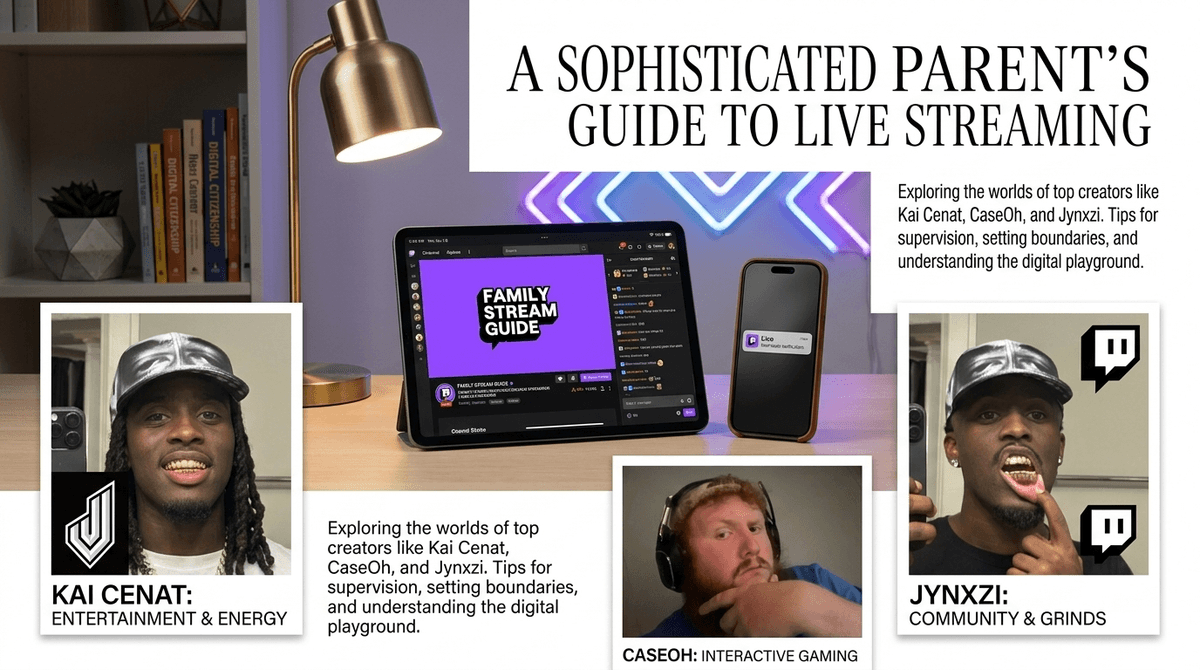
Twitch is the "wild west" of live-streaming. Unlike YouTube, everything happens in real-time, meaning there’s no "undo" button for bad behavior, accidental slips, or toxic chat. If your kid is obsessed, they’re likely watching Kai Cenat for the high-energy chaos, CaseOh for the self-deprecating humor, or Jynxzi for competitive gaming. The biggest risks aren't just the "brain rot" content, but the financial "tipping" culture and the intense parasocial bonds kids form with creators who feel like their "friends."
- Quick Links:
Think of Twitch as live TV, but the audience is constantly screaming at the screen and the actors can scream back. While it started as a platform exclusively for gaming, it has evolved into a massive cultural hub.
The most popular category on the platform right now isn't actually a specific game like Minecraft; it’s "Just Chatting." This is exactly what it sounds like: a creator sitting in front of a camera, reacting to videos, eating food, or talking to their "chat" (the live scroll of thousands of viewers).
For parents, the main thing to understand is the live aspect. On YouTube, creators edit out the boring parts, the mistakes, and the swearing (usually). On Twitch, you get the raw, unfiltered version of a person for 4 to 12 hours a day.
If you hear loud yelling coming from your kid’s room, it’s probably one of these guys:
The current king of Twitch. He’s known for high-budget "subathons" (marathon streams) where he lives on camera for 30 days straight. He brings on celebrities like Kevin Hart or Druski.
- The Vibe: Pure chaos, loud music, "rizz" culture, and constant movement.
- The Risk: Language is heavy, and the energy can be overstimulating. It’s the definition of "Gen Alpha" entertainment.
A massive creator known for playing horror games and "reacting" to his fans making fun of his weight.
- The Vibe: Surprisingly wholesome compared to others, but the humor is 100% based on "roasting."
- The Risk: It’s mostly harmless, but the chat can get mean, and the constant focus on body image—even if self-deprecating—might be a lot for some kids.
The top Rainbow Six Siege streamer.
- The Vibe: High-intensity gaming and "clipping" (creating short viral moments).
- The Risk: Competitive gaming brings out "gamer rage." Expect a lot of shouting and some toxic competitive language.
To a 12-year-old, watching a streamer feels like hanging out in a treehouse with the "cool older kid." This is called a parasocial relationship. Your kid feels like Kai Cenat is their friend because Kai reads their message out loud or says "W" (win) in response to something they typed.
This is also where the slang comes from. Terms like "Skibidi," "Gyatt," "Rizz," and "Only in Ohio" often start or gain massive traction on Twitch before they ever hit TikTok. Watching these streams is how kids stay "fluent" in their social circles. If they don't watch, they don't get the jokes at lunch.
This is where the "draining the bank account" part comes in. Twitch is free to watch, but it is designed to make you want to pay.
- Subscriptions (Subs): These cost about $5/month. It gives the viewer a "badge" next to their name and special emojis. It’s a status symbol.
- Bits: This is Twitch’s virtual currency. Kids buy Bits to "cheer." When you cheer, your message gets highlighted.
- Donations (Donos): Direct cash tips to the streamer, often to get them to watch a specific video or answer a question.
The dopamine hit a kid gets when a famous streamer says "Thanks for the 50 bits, [Kid's Username]!" is massive. It’s literal validation from a celebrity.
Learn more about how virtual currencies like Bits and Robux affect kid's spending habits
The Chat is a Garbage Fire
Even if the streamer is "clean," the chat usually isn't. It moves at 100mph and is filled with slang, emojis, and occasionally, hate speech or bullying that moderators can't catch fast enough. It is a very "un-curated" experience.
Privacy Risks
Streamers often encourage kids to join their Discord servers. While Twitch is relatively public, Discord is where things go into private DMs, which is a much higher risk for predatory behavior.
Gambling and "Skins"
Twitch has a complicated history with gambling. While they’ve banned most "unregulated" slots, there is still a heavy culture of "loot boxes" and "skin gambling" in games like Counter-Strike. It can look a lot like a casino designed for teenagers.
- Under 13: Honestly? Stay off Twitch. The platform officially requires users to be 13+, and for good reason. If they want gaming content, YouTube Kids or curated creators on YouTube are much safer bets.
- Ages 13-15: Co-watching is key. Sit down and watch a stream for 20 minutes. You’ll quickly see if the vibe fits your family values. Use the "Chat Hidden" feature to avoid the worst of the comments.
- Ages 16+: Focus on the financial side. Set a "digital allowance" so they aren't tempted to blow their savings on "Bits" to get a shoutout from a millionaire.
Don't start with "That guy is annoying." (Even if he is.) Start with curiosity.
- "What’s the funniest thing [Streamer Name] has done lately?"
- "Why do people keep typing 'L' in the chat right now?"
- "How much do you think that guy makes just by sitting there?" (This is a great opening for a conversation about the creator economy and entrepreneurship).
Twitch isn't inherently "evil," but it is highly addictive and unfiltered. It’s the ultimate "snack food" for the brain—fun in small doses, but potentially rotting if it’s the only thing they’re consuming.
If your kid is using it to learn high-level strategy for League of Legends, that’s one thing. If they’re spending five hours a day watching someone scream at a wall, it might be time to suggest some alternatives to Twitch.
- Check the credit card: Ensure your Amazon Prime account (which owns Twitch) isn't automatically linked to your kid's account, giving them a free "Prime Sub" every month without you knowing.
- Set a "No Headphones" rule: For Twitch, hearing what the streamer is saying is the easiest way to monitor content without hovering.
- Explore educational YouTube channels to balance out the "brain rot" with some actual substance.