

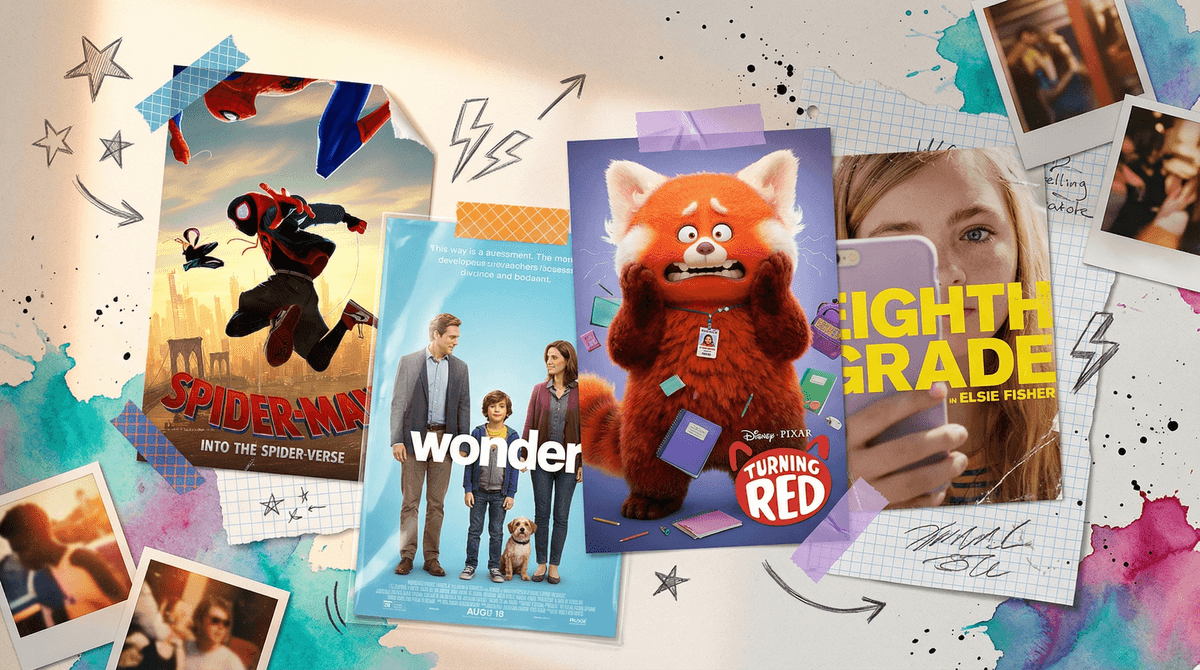
Tween movies are films designed for that sweet spot between childhood and adolescence—roughly ages 9-14. They're not quite Disney Junior, but they're not Euphoria either. Think coming-of-age stories, friendship dramas, first crushes, identity exploration, and navigating middle school social hierarchies.
These movies tackle themes like fitting in, standing out, body changes, family dynamics, and finding your voice. The best ones treat tweens like actual humans with complex feelings. The worst ones... well, we'll get to that.
The challenge? The PG and PG-13 ratings are wildly inconsistent guides. A PG movie might have intense emotional themes that wreck your kid, while a PG-13 might just have a few curse words but otherwise be totally fine. The rating system tells you almost nothing about whether a movie will resonate with your specific kid.
Here's what's actually happening: your kid is outgrowing talking animals and princess transformations, but they're not ready for R-rated content (despite what they tell you). They're looking for stories that reflect their own confusion about who they are and where they fit.
This is a crucial developmental window. The movies they watch now are helping them form ideas about:
- What friendship should look like
- How to handle conflict
- What's "normal" about their changing bodies and feelings
- Gender roles and identity
- Romance and relationships
- Standing up for themselves
The problem? The tween movie landscape is littered with content that's either too sanitized to be relatable or too mature for their emotional toolkit. Plus, there's a ton of straight-up garbage that treats tweens like idiots or walking wallets.
Let me break down what you're actually dealing with:
The Good Stuff:
- Turning Red - Puberty as a giant red panda metaphor, family expectations, friend dynamics
- The Mitchells vs. The Machines - Creative kids, family connection, genuinely funny
- Encanto - Family trauma, finding your identity outside expectations
- Spider-Man: Into the Spider-Verse - Becoming who you're meant to be, mentorship, stunning visuals
The Solid Middle:
- Most Pixar movies still work for tweens (though they might pretend they're "over it")
- The Hunger Games series (PG-13, but know your kid—it's intense)
- Coming-of-age Netflix originals (quality varies wildly)
The Skip-Its:
- Anything that treats middle school like it's just about getting a boyfriend/girlfriend
- Movies where the "lesson" is just "be yourself!" without any actual character development
- Cheap cash-grabs based on trending topics
Ages 9-11: Look for movies that deal with friendship dynamics, family relationships, and early identity questions. They can handle more emotional complexity than you think, but explicit content and intense violence are still too much.
Good fit: Matilda, Wonder, Akeelah and the Bee
Ages 12-14: They can handle heavier themes—mental health, social justice, first romance, family conflict. PG-13 becomes more appropriate, but watch out for content that normalizes unhealthy relationship dynamics or glorifies risky behavior.
Good fit: The Perks of Being a Wallflower (older tweens), Eighth Grade (R rating but incredibly accurate and valuable for mature 13-14 year olds), Hidden Figures
But here's the real talk: Your 10-year-old who's dealt with family divorce might be ready for more complex emotional content than your sheltered 13-year-old. Your anxious kid might not be ready for intense scenes that your resilient kid handles fine. Age ratings are a starting point, not a finish line .
.
1. Watch with them (at least the first time) Yes, even if they roll their eyes. You'll catch things they might not process correctly, and you'll have built-in conversation starters.
2. Use better resources than MPAA ratings Check Common Sense Media for detailed content breakdowns. Look at WHY something got its rating, not just what the rating is. Read parent reviews on Screenwise to see what real families thought.
3. Talk about what you're watching "Why do you think her friend acted that way?" "How would you handle that situation?" "Did that seem realistic to you?" These conversations are worth more than any rating system.
4. Let them have opinions If they think a movie is babyish, don't force it. If they want to rewatch something you find annoying, that probably means it's resonating with something they're working through.
5. Be strategic about the "big" movies Movies like The Hunger Games or Harry Potter series become social currency in middle school. It's worth thinking through when and how to introduce them rather than having your kid watch them at a friend's house with zero context.
Tween movies aren't just entertainment—they're part of how your kid is figuring out this weird in-between stage. The best ones give them language for feelings they're having but can't name yet. The worst ones give them terrible models for relationships and self-worth.
Your job isn't to find the "perfect" movies. It's to be involved enough to know what they're watching, thoughtful enough to consider whether it's right for YOUR kid, and present enough to talk about what they're seeing.
Also? It's totally fine to say no to movies that don't align with your family values, even if "everyone else" has seen them. But be ready to explain why, and be ready for them to watch it at 16 and realize it wasn't that big a deal.
- Make a family movie night a regular thing (even if they pretend to hate it)
- Ask your kid what their friends are watching and do your homework before saying yes or no
- Check out age-appropriate Netflix shows for more options
- Build a list of movies you're excited to share with them as they get older—make it something to look forward to, not just restrictions
And remember: they're going to watch some garbage. You watched some garbage. They'll survive. Your job is to help them think critically about what they're consuming, not to curate a perfect media diet.