

TL;DR
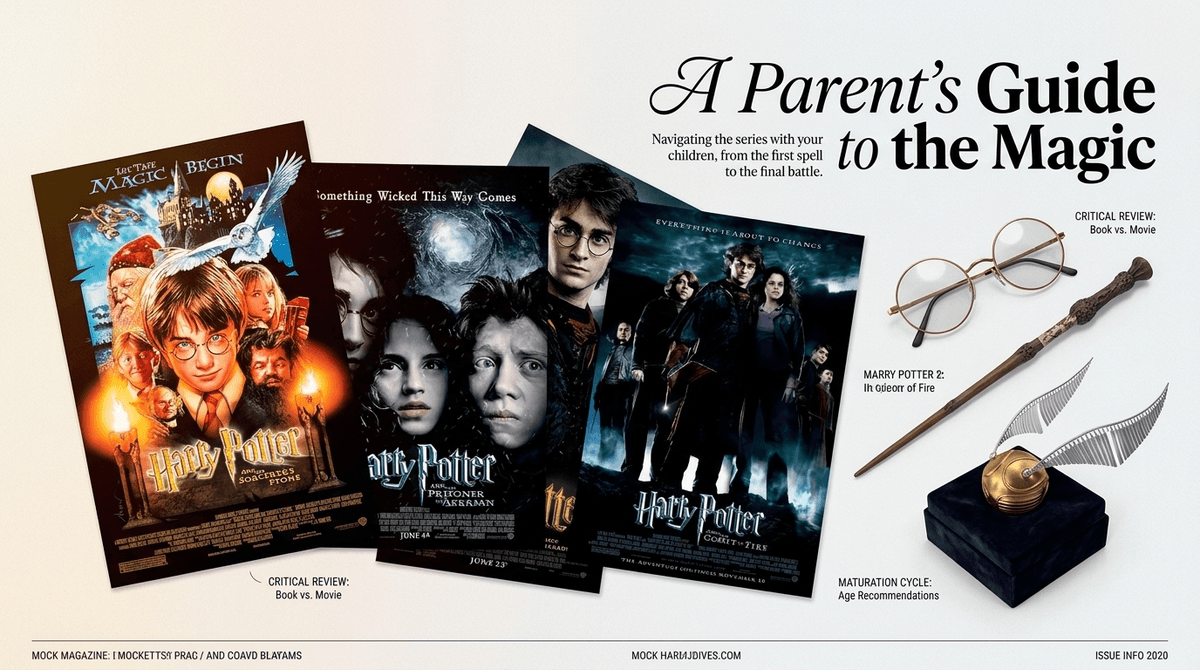
The Harry Potter movies are a cultural touchstone that most kids will encounter eventually, but they're not all created equal when it comes to age-appropriateness. The first two films (Sorcerer's Stone and Chamber of Secrets) work well for kids 7-8+, but the series gets progressively darker. By the time you hit Deathly Hallows, you're looking at intense violence, character deaths, and themes better suited for ages 12+.
Quick age breakdown:
- Films 1-2: Ages 7-8+ (magical wonder, mild scares)
- Films 3-5: Ages 9-11+ (darker themes, more intense)
- Films 6-8: Ages 12+ (war, death, complex moral questions)
Harry Potter is everywhere in our culture. According to our Screenwise community data, 92% of families have some form of TV/streaming in their homes, with 40% of families letting kids use Netflix regularly and another 40% using it for kids' content specifically. Harry Potter sits at the intersection of "beloved family franchise" and "progressively intense young adult content."
The series follows Harry from age 11 to 17, and the films mirror that maturation. What starts as a whimsical story about a boy discovering he's a wizard becomes a story about fascism, sacrifice, and war. That's intentional—J.K. Rowling designed it that way—but it means you can't treat all eight films the same when deciding what's appropriate for your kids.
Harry Potter and the Sorcerer's Stone (2001) - Ages 7-8+
This is the most kid-friendly entry point. It's rated PG for "some scary moments and mild language," and that's accurate. The three-headed dog Fluffy is legitimately frightening, and the final confrontation with Voldemort (via Professor Quirrell's face-on-the-back-of-his-head situation) can be intense for younger viewers.
What works: The sense of wonder is unmatched. Diagon Alley, Hogwarts, Quidditch—it's pure magic. Themes of friendship, bravery, and standing up to bullies are front and center.
What to watch for: The troll scene in the bathroom is scary, and Voldemort's appearance is genuinely creepy. Some kids under 8 will be fine; others will have nightmares. You know your kid.
Harry Potter and the Chamber of Secrets (2002) - Ages 8+
Still PG, but the scares ramp up. The basilisk is terrifying, and there are multiple scenes of students being petrified (essentially frozen/comatose). The spiders in the Forbidden Forest scene? That's a hard no for arachnophobes of any age.
What works: The mystery element is engaging, and the themes about prejudice (pure-bloods vs. Muggle-borns) introduce important conversations about discrimination.
What to watch for: The basilisk sequences are intense, and Ginny's possession by Tom Riddle's diary has some dark undertones about manipulation and control.
Harry Potter and the Prisoner of Azkaban (2004) - Ages 9-10+
This is where the series starts growing up. Still PG, but director Alfonso Cuarón brings a darker, more atmospheric tone. The Dementors—soul-sucking creatures that force you to relive your worst memories—are legitimately frightening and represent depression in a way that's more conceptually heavy than anything in the first two films.
What works: The time-travel plot is clever, and the themes about facing your fears (the Boggart lessons) are genuinely useful. Sirius Black's story introduces moral complexity—not everyone who seems bad is bad, and not everyone who seems good is good.
What to watch for: The Dementors are scary in a psychological way that's different from monsters or creatures. Some kids find them more disturbing than physical threats.
Harry Potter and the Goblet of Fire (2005) - Ages 10-11+
First PG-13 rating, and it's earned. Cedric Diggory's death is the first major character death in the series, and Voldemort's rebirth scene is genuinely disturbing—blood rituals, Peter Pettigrew cutting off his own hand, the whole deal.
What works: The Triwizard Tournament is exciting, and the film does a good job exploring themes of competition, jealousy, and the cost of fame. The dragon scene is thrilling.
What to watch for: Cedric's death is sudden and brutal. The graveyard scene is intense. If your kid isn't ready to process death and violence in a serious way, wait on this one.
Harry Potter and the Order of the Phoenix (2007) - Ages 11+
PG-13 again. This one's emotionally heavy more than visually scary. Harry's dealing with PTSD from Cedric's death, the Ministry of Magic is gaslighting everyone about Voldemort's return, and Dolores Umbridge is one of the most hateable villains in cinema (which is the point).
What works: The formation of Dumbledore's Army is empowering—kids taking control of their own education and resistance. Themes about authoritarianism, propaganda, and standing up to unjust authority are incredibly relevant.
What to watch for: Sirius Black's death hits hard. Umbridge's torture of Harry (the blood quill) is disturbing. Harry's rage and isolation throughout the film can be tough for kids who aren't ready for that level of emotional complexity.
Harry Potter and the Half-Blood Prince (2009) - Ages 11-12+
PG, surprisingly, but don't let that fool you. Dumbledore's death is devastating, and the film is steeped in dread and foreboding. The romantic subplots take center stage (sometimes to the film's detriment), but the overall tone is dark.
What works: The exploration of Voldemort's backstory through the Pensieve memories is fascinating. Themes about choices, nature vs. nurture, and the consequences of seeking power are rich.
What to watch for: Dumbledore's death. It's not graphic, but it's emotionally brutal. The scene in the cave with the Inferi is nightmare fuel.
Harry Potter and the Deathly Hallows Parts 1 & 2 (2010-2011) - Ages 12+
Both rated PG-13 for "sequences of intense action violence and frightening images." This is war. Characters die—some beloved, some suddenly. The stakes are existential. Voldemort's snake Nagini decapitates people. There's torture, loss, and sacrifice.
What works: The finale is earned. Themes about love, sacrifice, mortality, and the choice between what's easy and what's right culminate powerfully. If your kid has made it this far, they're invested, and the payoff is worth it.
What to watch for: Multiple character deaths (Fred, Lupin, Tonks, Snape, Dobby). The Battle of Hogwarts is intense. Voldemort's final form (when he's been split into too many Horcruxes) is genuinely disturbing.
Harry Potter came out 25 years ago, but it's still everywhere. Why? A few reasons:
- Universal themes: Feeling like an outsider, finding your people, discovering you're special—these resonate across generations.
- Immersive world-building: Hogwarts houses, wands, spells, magical creatures—it's a world kids want to live in.
- Accessibility: The movies are on streaming (50% of Screenwise families watch Disney+ together, and Harry Potter has bounced between platforms), and the books are in every library.
- Cultural saturation: Universal theme parks, merchandise, Lego sets, video games—Harry Potter is an ecosystem.
But here's the thing: just because it's popular doesn't mean it's right for your kid right now. And that's okay.
The J.K. Rowling controversy: You can't talk about Harry Potter in 2026 without acknowledging this. Rowling's public statements about transgender people have been widely criticized, and many families are navigating how to engage with the franchise given the creator's views. Some families have stepped away entirely; others separate the art from the artist; others use it as an opportunity to discuss how we can love something while disagreeing with its creator. There's no single right answer, but it's worth thinking through your family's values before diving in.
Reading vs. watching: The books allow kids to process scary content at their own pace and use their imagination. The movies put everything on screen, which can be more intense. If your kid is borderline on age-appropriateness, consider reading first.
Watch together: Especially for the later films, watching together lets you gauge reactions, pause for questions, and debrief afterward. With 50% of Screenwise families watching Disney+ content together, co-viewing is already a norm—Harry Potter is a great franchise for that approach.
It's okay to skip around: Your kid doesn't have to watch all eight films in order. Some families stop after Prisoner of Azkaban and revisit the later ones in a few years. Some skip Goblet of Fire and pick back up with Order of the Phoenix. There's no wrong way to do this.
Harry Potter is rich with themes worth discussing:
- Prejudice and discrimination: The pure-blood ideology is a clear allegory for racism and bigotry. How do we recognize and resist that in our world?
- Courage and fear: Harry's afraid constantly, but he acts anyway. What does bravery look like in real life?
- Friendship and loyalty: Ron and Hermione stick with Harry through everything. What makes a good friend?
- Power and corruption: Voldemort's quest for immortality destroys him. What are healthy vs. unhealthy relationships with power?
- Sacrifice and love: Lily's sacrifice protects Harry. Snape's love for her drives his choices. How do love and sacrifice shape our lives?
If your kid loves Harry Potter, they might also enjoy:
- Percy Jackson (books and Disney+ series)—similar "chosen one discovers magical world" vibes, but lighter tone
- The Chronicles of Narnia movies—classic fantasy with Christian allegory
- His Dark Materials (HBO series)—darker, more complex, for older kids
- Avatar: The Last Airbender—not wizards, but incredible world-building and character growth
Harry Potter isn't one-size-fits-all, and it's not all-or-nothing. The first two films are legitimately great for younger kids who can handle mild scares. The later films are legitimately intense and best saved for tweens and teens who can process themes of death, war, and moral complexity.
Trust your gut. If your 8-year-old is begging to watch and you think they can handle it, start with Sorcerer's Stone and see how it goes. If your 12-year-old isn't interested or seems too sensitive for the darker content, that's fine too. There's no deadline.
And remember: watching together, talking about what you're seeing, and being willing to turn it off if it's too much—that's good parenting. The magic of Harry Potter isn't going anywhere.
