

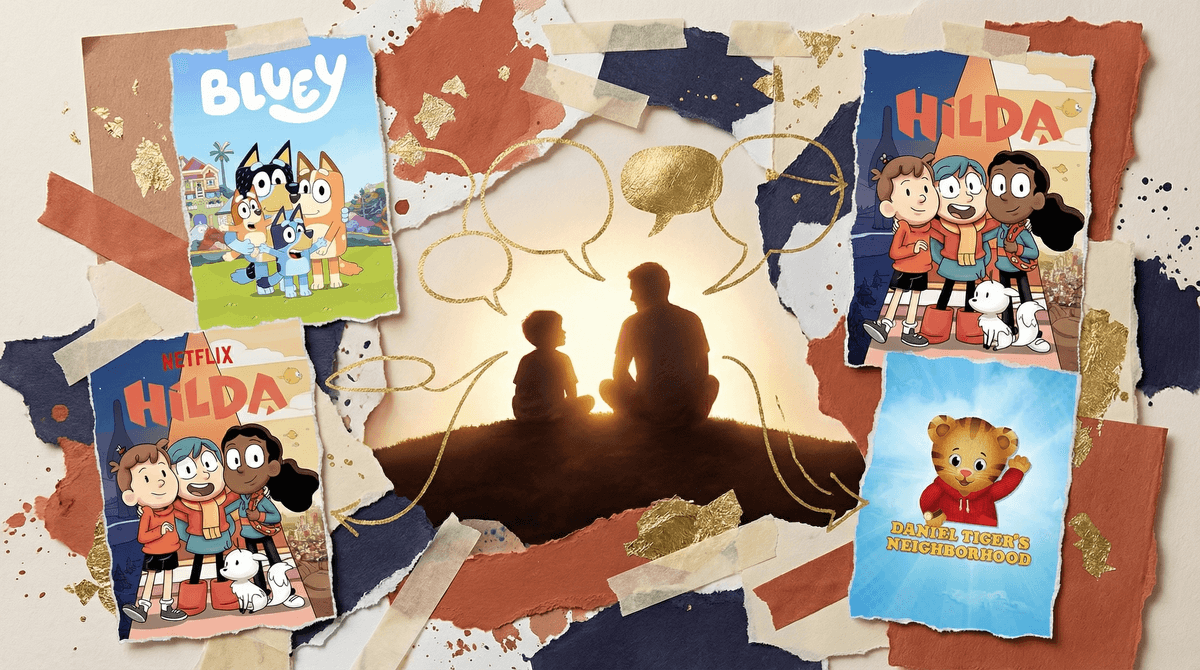
Look, we all know the stereotype: kids zombified on the couch, eyes glazed, parents desperately trying to get their attention. But here's the thing—not all screen time is created equal. Some shows are designed to be conversation starters, not conversation enders.
TV that promotes communication is content that naturally invites discussion, questions, and connection. It's the show that makes your kid turn to you mid-episode and ask "Wait, why did she do that?" or sparks a dinner table debate about whether the main character made the right choice. It's content that creates bridges instead of walls.
And honestly? In a world where we're all trying to balance screen time with family time, finding shows that do double duty—entertaining and connecting—feels like discovering a parenting cheat code.
The average kid is going to watch TV. That's just reality. But there's a massive difference between passive consumption and active engagement. Shows that spark conversation can:
- Build emotional intelligence - Characters navigating complex feelings give kids a safe way to explore their own
- Create natural teaching moments - Way easier to talk about friendship drama through a TV character than through their actual playground conflict
- Establish shared culture - Inside jokes, references, and moments you both remember
- Practice critical thinking - "What would you have done?" is a powerful question
- Keep communication channels open - Kids who talk to you about TV are more likely to talk to you about everything else
The goal isn't to turn every viewing session into an educational seminar. It's to choose content that naturally invites your kid to look up from the screen and engage with the humans in the room.
Not every show is going to spark deep philosophical discussions, and that's fine. But the best conversation-promoting shows tend to have a few things in common:
Complex characters who make mistakes - Perfect characters are boring. Kids need to see characters mess up, face consequences, and grow. Avatar: The Last Airbender is the gold standard here.
Moral ambiguity - When there's no clear "right answer," kids naturally want to talk it through. Shows like Hilda do this beautifully for younger kids.
Emotional depth - If a show makes you feel something, you want to process it. Bluey has made more adults cry than most prestige dramas.
Cultural or historical context - Shows that introduce new perspectives naturally invite questions. The Mighty Ones might not seem educational, but it gets kids thinking about ecosystems and perspectives.
Humor that works on multiple levels - When you're both laughing but at different jokes, that's a conversation waiting to happen.
Ages 4-7: Building the Foundation
At this age, you're looking for shows that model conversation and emotional vocabulary.
- Bluey - Seriously, if you're not watching this with your young kids, start tonight. Every episode is a masterclass in emotional intelligence and family communication.
- Daniel Tiger's Neighborhood - Those little songs are annoying until you realize your kid is using them to process their feelings.
- Tumble Leaf - Gorgeous stop-motion that naturally invites "what do you think will happen?" conversations.
Ages 8-11: Getting Deeper
This is the sweet spot for shows that tackle bigger themes while still being age-appropriate.
- Avatar: The Last Airbender - War, genocide, redemption, identity—and somehow perfect for elementary schoolers. The conversations this show sparks are incredible.
- Hilda - Explores anxiety, change, and belonging in ways that feel real without being heavy-handed.
- The Owl House - Found family, identity, standing up for what's right. Also casually includes LGBTQ+ representation that opens doors for important conversations.
- Gravity Falls - Mystery-solving that rewards paying attention and talking through theories together.
Ages 12+: Real Talk Territory
Tweens and teens need shows that respect their intelligence and tackle complex issues.
- The Dragon Prince - War, disability representation, moral complexity, and consequences that actually matter.
- She-Ra and the Princesses of Power - Trauma, toxic relationships, redemption, and healthy friendships. So much to unpack.
- Arcane - For older teens. Stunningly animated, emotionally devastating, and absolutely conversation-worthy. (Note: this one's intense, check the rating.)
Co-watch when possible - You can't talk about what you haven't seen. Even if it's just one episode a week, being present matters.
Ask open-ended questions - Not "Did you like it?" but "What did you think about when she said that?" or "What would you have done?"
Wait for natural moments - Don't pause every three minutes for a teaching moment. Let the conversation happen organically.
Share your own reactions - "That made me so sad" or "I didn't see that coming!" models that it's okay to have feelings about stories.
Connect to real life gently - "Kind of like when you and Emma had that fight, right?" But don't force it.
Let them teach you - Ask them to explain things, catch you up, or share theories. Kids love being the expert.
Shows designed to be background noise - If it's just rapid-fire jokes with no emotional core, it's not sparking anything except maybe a headache.
Content that's too mature - A show that makes them uncomfortable won't invite conversation—it'll invite shutdown. Learn more about age-appropriate content .
.
Anything you're using as a babysitter - No judgment, we all need breaks. But if the goal is connection, you need to be present.
The best family TV isn't the most educational or the most wholesome—it's the stuff that gets you talking. It's the show your kid references days later, the character they want to dress up as, the plot twist they need to process with you.
You're not trying to eliminate screens from your family life. You're trying to make sure that when screens are part of your life, they're building connections instead of replacing them.
So tonight, instead of sending your kid off to watch something alone while you doom-scroll, consider sitting down together with something that might actually give you something to talk about. Even if it's just one episode. Even if you're checking your phone half the time. It's still better than parallel play in separate rooms.
This week: Pick one show from the age-appropriate list above and watch one episode together. Don't force conversation—just be present and see what happens.
Struggling to find time for co-watching? Here's how to make it work with busy schedules.
Want more specific recommendations? Check out our guide to the best family shows by age or explore alternatives to YouTube if you're trying to shift away from endless scrolling.
The goal isn't perfection. It's connection. And sometimes, that connection starts with "Hey, want to watch something together?"