

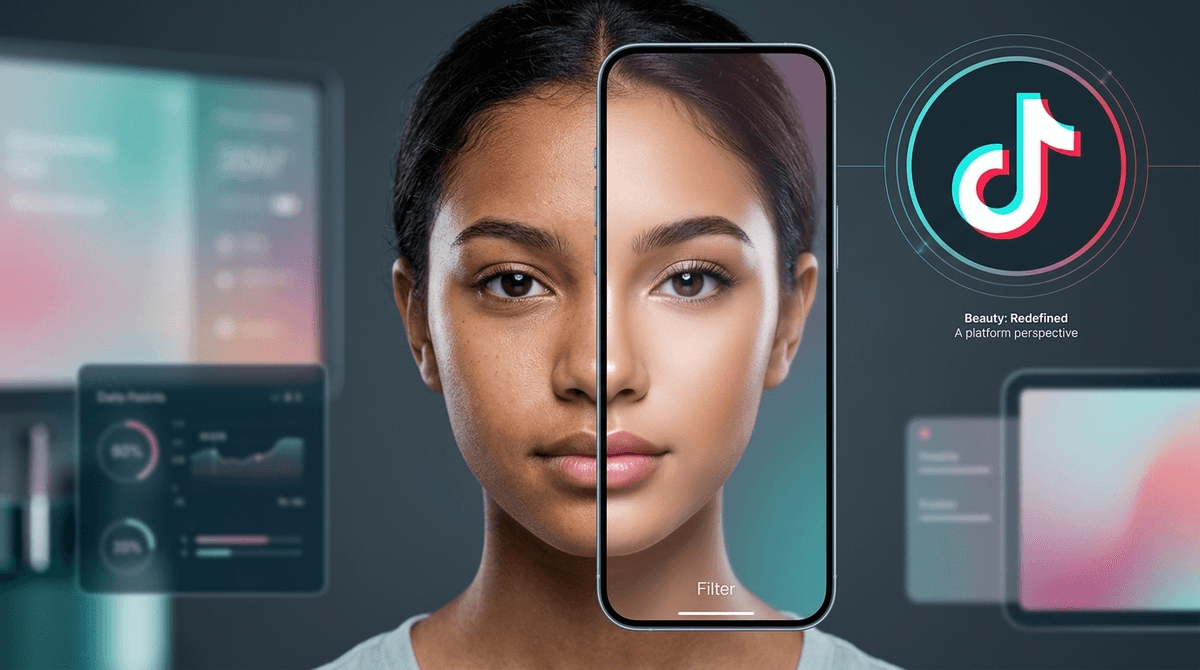
TL;DR: TikTok is finally banning "beauty filters" (the ones that morph face shapes) for users under 18. It’s a massive win for digital wellness, but it doesn't solve the "looksmaxxing" rabbit hole or the "Sephora Kids" obsession with anti-aging. If you're short on time, check out our guide to TikTok safety settings or see why we actually prefer BeReal for a more authentic vibe.
If you’ve spent five minutes on TikTok lately, you’ve probably seen the "Bold Glamour" filter. It doesn’t just add some digital eyeliner; it uses generative AI to reshape jawlines, brighten eyes, and smooth skin so perfectly that you forget what a human pore even looks like.
As of 2026, TikTok has officially started banning these "appearance-altering" filters for teens. Specifically, they are restricting filters that enlarge eyes, plump lips, or change skin tone in ways that mimic cosmetic surgery.
Why now? Because the data is finally catching up to what we’ve suspected: seeing a "perfect" version of yourself every time you open your camera creates a psychological gap that "real life" can’t bridge. When a 13-year-old spends three hours a day looking at a version of herself with a thinner nose and higher cheekbones, her actual face starts to look like a "before" picture.
While the filter ban is a great step, the culture behind the filters is still very much alive. You might have heard your son talk about "looksmaxxing" or "mewing."
Looksmaxxing is the trend of "optimizing" one's physical appearance through various means. It ranges from the harmless (getting a better haircut) to the "softmaxxing" (skincare routines and gym habits) to the "hardmaxxing" (encouraging teens to look into jawline surgery or extreme dieting).
On the flip side, we have the "Sephora Kids" phenomenon. We’re seeing 10-year-olds begging for Drunk Elephant retinol creams—products designed for 40-year-old skin—because TikTok influencers have convinced them that "pre-juvenation" is a necessity. It’s not just about vanity; it’s about a digital environment that treats aging and "imperfection" as a failure.
The TikTok algorithm is incredibly "sticky." If a kid lingers on one video about "how to fix a recessed chin," their entire feed will soon be flooded with:
- "Rating" videos where creators judge people's faces based on "symmetry"
- Aggressive fitness influencers pushing "bulk and cut" cycles
- "Get Ready With Me" (GRWM) videos featuring 12-step skincare routines
It’s a lot for a developing brain to process. According to recent community data, over 60% of middle schoolers on TikTok report feeling "not enough" after scrolling, yet they find it nearly impossible to put the phone down.
If you're looking to steer your kids toward apps and creators that don't make them feel like they need a face transplant, here are a few recommendations:
Ages 13+ BeReal is the antithesis of the "edited" world. It goes off once a day, and you have two minutes to take a photo of whatever you’re doing—no filters, no edits. It’s a great way for kids to see that their friends also have messy rooms and unwashed hair. Read our full guide to BeReal
Ages 12+ While Instagram is about performing, Pinterest is more about inspiration. They have actually been leaders in the industry by banning weight-loss ads and certain types of body-shaming content. It’s a much "quieter" place for kids to explore interests like fashion or room decor without the constant social comparison.
YouTube Creators to Follow
Instead of the "looksmaxxing" crowd, point them toward creators who debunk the "perfect" image.
- Creators who do "Filter vs. Reality" checks: These help kids spot the digital seams in the videos they consume.
- Educational channels like SciShow: Shifting the focus from what the body looks like to how the body works can be a powerful antidote to body dysmorphia.
Ages 9-12 (The "Pre-Teen" Phase)
At this age, the concern is mostly about "Sephora Kids" culture. They want the "cool" products they see in GRWM videos.
- The Move: Focus on "skin health" vs. "skin perfection." Explain that some of these chemicals (like retinol or AHAs) actually damage young skin.
- The Talk: "I know everyone at school has that gold bottle, but that stuff is actually made for Grandma's skin, not yours. Let’s find a moisturizer that won't give you a chemical burn."
Ages 13-15 (The High School Transition)
This is when the "looksmaxxing" and filter use peaks.
- The Move: Use the 2025 filter ban as a conversation starter. Ask them why they think TikTok felt the need to ban those filters.
- The Talk: "Have you noticed how everyone on your feed has the exact same nose? That’s not biology, that’s an algorithm. It’s okay to want to look your best, but let’s make sure you aren't trying to meet a standard that literally doesn't exist in the real world."
Ages 16+ (The "Optimization" Phase)
Older teens are more likely to be looking at "hardmaxxing" or extreme gym culture.
- The Move: Focus on media literacy. Talk about how influencers make money (spoiler: it’s by making you feel insecure enough to buy their supplement or workout plan).
- The Talk: "I’ve noticed your feed is really heavy on the 'body transformation' stuff lately. How does that make you feel after you’ve been scrolling for an hour? Energized or kind of crappy?"
Check out our guide on toxic masculinity and fitness influencers
It’s hard to tell the difference between "normal teen vanity" and something more serious. Watch for these red flags:
- Refusing to be in photos without a filter or unless they can edit them first.
- Obsessive checking of the "front-facing camera" (using the phone as a constant mirror).
- Sudden interest in cosmetic procedures or "fixing" a specific facial feature.
- Significant changes in eating habits or an obsession with "clean" eating that feels restrictive.
If you see these, it might be time for a "digital reset." We’re not talking about throwing the phone in the river, but rather a weekend off the apps to recalibrate their sense of reality.
TikTok’s ban on "deforming" filters is a step in the right direction, but it’s not a silver bullet. The "perfect" face is still the currency of social media. Our job as parents isn't to police every single filter, but to be the "reality check" in their pockets.
Remind them that the goal of these apps is to keep them scrolling, and the easiest way to do that is to make them feel like they need "one more thing" to be perfect.
- Check the settings: Go into TikTok and ensure your child’s age is set correctly so the 2025 filter ban actually applies to them.
- Diversify their feed: Follow a few "body neutral" creators together so the algorithm starts to show more than just one type of face.
- Take the Screenwise Survey: See how your family’s TikTok usage compares to other families in your community.
Learn more about how to talk to your teen about social media and mental health