

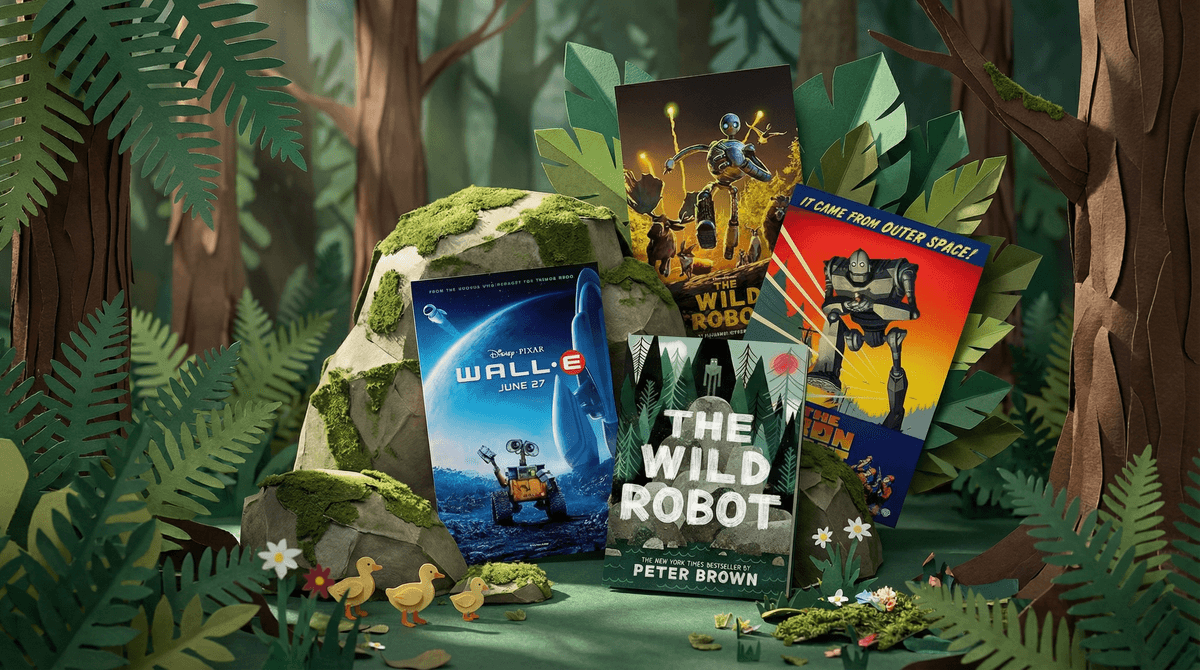
The Wild Robot is DreamWorks' 2024 animated film based on Peter Brown's beloved 2016 novel. It tells the story of Roz, a robot who washes up on a remote island after a shipwreck and must learn to survive in the wilderness while accidentally becoming the adoptive parent to an orphaned gosling named Brightbill.
The movie stars Lupita Nyong'o as Roz, with Pedro Pascal, Catherine O'Hara, Bill Nighy, and Mark Hamill rounding out the voice cast. It's getting serious Oscar buzz for its stunning animation style (think Spider-Verse meets nature documentary) and its surprisingly deep emotional core.
Here's what makes it different from your typical animated fare: this isn't a joke-a-minute comedy. It's a thoughtful, sometimes intense survival story about adaptation, belonging, and what it means to be a family. Think WALL-E meets The Iron Giant with a hefty dose of nature documentary realness.
The survival element is genuinely compelling. Kids are watching Roz figure out how to navigate a world she wasn't designed for—learning from failure, adapting her programming, and literally reprogramming herself to become who she needs to be. There's something deeply satisfying about watching competence develop, even in a robot.
The found family hits hard. Roz becomes a parent by accident, has absolutely no idea what she's doing, and has to learn on the fly. Sound familiar? Kids respond to the authenticity of that struggle, and the way the movie doesn't sugarcoat how difficult it is.
It's visually stunning in a way that feels different. The animation style uses painterly textures that make every frame look like concept art. Kids who've grown up on the hyperrealism of modern animation are noticing the artistic choices here—many are rewatching just to catch details they missed.
The animal characters aren't cutesy. They're animals. They have predator-prey relationships. Things eat other things. The movie respects the reality of nature while still being age-appropriate, and kids appreciate not being talked down to.
Ages 6-8: This is where it gets tricky. The PG rating is accurate—there are some genuinely intense moments. A fox attacks baby animals (it's nature, not gratuitous, but still). There's a forest fire. The themes of abandonment and death are real, not abstract. Some sensitive kids in this range will handle it beautifully; others might need to wait. You know your kid best, but consider watching it yourself first if you have a particularly tender-hearted first grader.
Ages 8-12: The sweet spot. Kids this age can handle the emotional complexity and appreciate the deeper themes. They're old enough to understand the metaphors about belonging and difference, but young enough to still be fully immersed in the story. Expect questions afterward about what makes someone a "real" parent, whether robots can have feelings, and why Brightbill's biological family matters (or doesn't).
Ages 12+: They'll get even more out of it. The themes about chosen family, the tension between nature and programming (read: nature vs. nurture), and the environmental undertones will resonate differently with older kids. This is also a great age to introduce the book series if they're into reading.
The emotional gut-punches are real. Multiple parents have reported crying. Not tearing up—actually crying. The movie earns its emotional moments, but be prepared. If you're still recovering from the opening of Up or the furnace scene in Toy Story 3, you've been warned.
It's a genuine conversation starter about AI and consciousness. Roz learns and adapts in ways that raise real questions about what makes someone "alive" or capable of love. With AI becoming increasingly present in kids' lives, this is actually a surprisingly timely framework for those discussions.
The environmental themes are present but not preachy. There's a clear message about humans' impact on nature, but it's woven into the story rather than delivered as a lecture. If your kid starts asking questions about why the robot was on the ship or what happened to make the island uninhabited, that's the movie working as intended.
It might inspire a nature phase. Be prepared for sudden intense interest in geese migration patterns, animal behavior, and possibly requests to watch nature documentaries. Worse things could happen.
The Wild Robot is that rare family film that doesn't condescend to kids or bore adults. It's beautiful, emotionally intelligent, and substantive in a way that gives you something to talk about on the drive home.
Is it intense? Yes. Will some kids find parts scary or sad? Also yes. But it's the kind of movie that expands what kids think animated films can be—and that's worth something.
This is quality screen time. The kind that might lead to reading the book, drawing their own robot characters, or asking deeper questions about family and belonging. If you're going to spend 90 minutes in a theater with your kid, you could do a lot worse.
- Check your kid's sensitivity level - If they struggled with Bambi or The Lion King, maybe preview this one yourself first
- Read the book together - Peter Brown's original novel is excellent and adds even more depth
- Plan for the conversation - This movie will generate questions. That's a feature, not a bug
- Use Screenwise to explore similar content - Find movies that balance emotional depth with age-appropriate storytelling