

Fifth grade is that sweet spot where kids are technically "independent readers" but still need the right books to keep them hooked. They're old enough to tackle complex themes but young enough that you still have a shot at influencing what they read before they disappear into their own literary worlds (or, let's be honest, into YouTube and Roblox).
The key at this age? Books that respect their growing maturity without throwing them into content they're not ready for. We're talking stories with real stakes, characters who face actual challenges, and writing that doesn't talk down to them—but also doesn't include graphic violence, explicit content, or themes that'll have you fielding questions you're not ready to answer at bedtime.
Look, I get it. Your 5th grader would rather watch Minecraft videos or play Fortnite. But here's the thing: reading builds different cognitive muscles than screens do. It develops sustained attention, empathy, vocabulary, and internal imagination in ways that even the best shows can't match.
Plus, books are one of the last screen-free zones where kids can build their own mental worlds. And honestly? A kid curled up with a good book is one of the few times they're genuinely entertained without you worrying about what algorithm is feeding them content.
Adventure & Fantasy (The Gateway Drug)
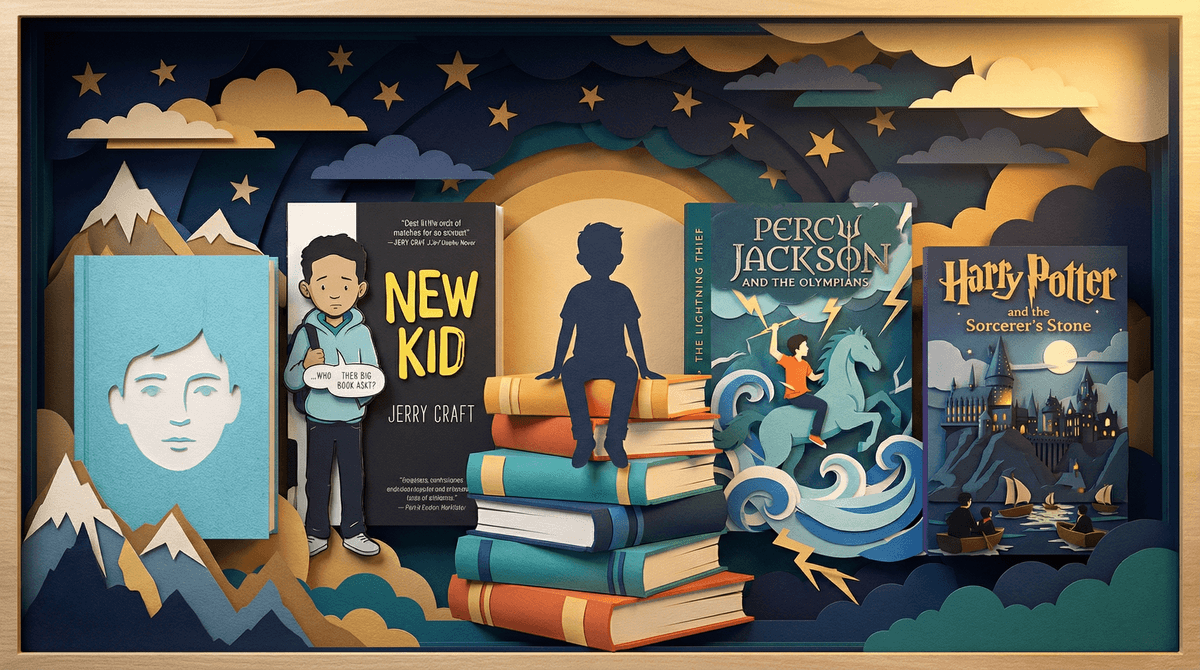
Percy Jackson series by Rick Riordan - If your kid hasn't read these yet, start here. Greek mythology meets modern middle school, dyslexic hero, actually funny. The whole series works for 4th-6th grade, and kids who love these will devour Riordan's other mythology series too.
Harry Potter series - Yes, it's obvious. Yes, there's been discourse. But these books still work magic (sorry) for this age group. Books 1-4 are perfect for 5th grade; save 5-7 for middle school when they can handle the darker themes.
The Hobbit by J.R.R. Tolkien - The original fantasy adventure, and way more accessible than Lord of the Rings. Some kids will bounce off the slower pace, but the ones who connect with it will remember it forever.
Keeper of the Lost Cities by Shannon Messenger - For kids who want something like Harry Potter but different. Elves, telepathy, mystery, and a strong female protagonist. Fair warning: it's a long series and your kid will want all of them.
Real Life (But Make It Interesting)
Wonder by R.J. Palacio - The book about the kid with facial differences that somehow doesn't feel preachy. Perfect for discussions about empathy, bullying, and kindness without being a "lesson book." Most 5th graders have either read it or heard about it.
Hatchet by Gary Paulsen - Survival story about a kid alone in the wilderness after a plane crash. No fantasy elements, just pure survival skills and resilience. Great for kids who think they don't like reading—it moves fast.
Ghost by Jason Reynolds - Track team, real kid problems, actually diverse without feeling like a "diversity book." The whole Track series is excellent, and Reynolds writes in a way that reluctant readers can actually get through.
Humor & Heart
Diary of a Wimpy Kid series - Yes, these are "younger," but plenty of 5th graders still love them, and honestly? A kid who's reading Wimpy Kid is still reading. Don't snob-shame the graphic novel format.
The Terrible Two series by Mac Barnett and Jory John - Two prankster kids, actually clever humor, and surprisingly good writing. For kids who think they're too cool for "kid books."
Mystery & Thriller
The Westing Game by Ellen Raskin - A classic mystery that still holds up. Genuinely clever puzzle, diverse cast of characters, and the kind of book kids want to reread to catch all the clues they missed.
Holes by Louis Sachar - Weird premise (digging holes at a detention camp), incredibly satisfying plot that all comes together. The kind of book that makes kids realize books can be better than the movie.
Graphic Novels (Yes, These Count)
Amulet series by Kazu Kibuishi - Gorgeous art, compelling story, actual stakes. If your kid says they "don't like reading," try this.
Smile by Raina Telgemeier - Memoir about dental drama and middle school. Sounds boring, absolutely isn't. Telgemeier's whole catalog works for this age.
New Kid by Jerry Craft - Newbery winner about being the new Black kid at a fancy private school. Funny, honest, and the kind of book that sparks real conversations about race and belonging.
The Hunger Games - Save it for 7th grade. The violence is intense and the themes are heavy. Yes, some 5th graders can handle it, but most will get more out of it in a couple years.
Divergent, Maze Runner, other dystopian YA - Same deal. These were written for high schoolers, and the content reflects that.
Most "edgy" middle grade - There's been a trend toward middle grade books tackling really heavy topics (abuse, death, trauma). Some are excellent, but read them yourself first. Fifth grade is young for some of this content.
Let them choose. Seriously. A "bad" book they picked is better than a "good" book you forced on them. Learn more about why choice matters for reluctant readers .
.
Graphic novels count. Stop fighting this battle. The research is clear: graphic novels build reading skills and often serve as a bridge to text-heavy books.
Audiobooks count too. If your kid will listen to Percy Jackson on audiobook during car rides, that's reading. The narrator for that series is fantastic, by the way.
Series are your friend. Once a kid finds a series they love, they'll read 8 books without you nagging them once. This is the goal.
Reading time = screen-free time. Make it clear that 30 minutes of reading before bed means 30 minutes of actual peace and quiet, not a battle over devices. Here's how to set up a realistic screen-free bedtime routine.
The best reading list for your 5th grader is the one they'll actually read. Use this list as a starting point, but pay attention to what hooks them. Some kids will devour fantasy, others want realistic fiction, some will only touch graphic novels for months before suddenly picking up a chapter book.
The goal isn't to create a literary scholar—it's to build a kid who sees reading as something they choose to do, not something they have to do. And honestly? In a world of infinite scroll and algorithm-driven content, a kid who can still get lost in a book has a superpower.
Want more personalized recommendations based on what your kid already loves? Get book recommendations for your 5th grader about your specific reader—we can help you find the perfect next book.