

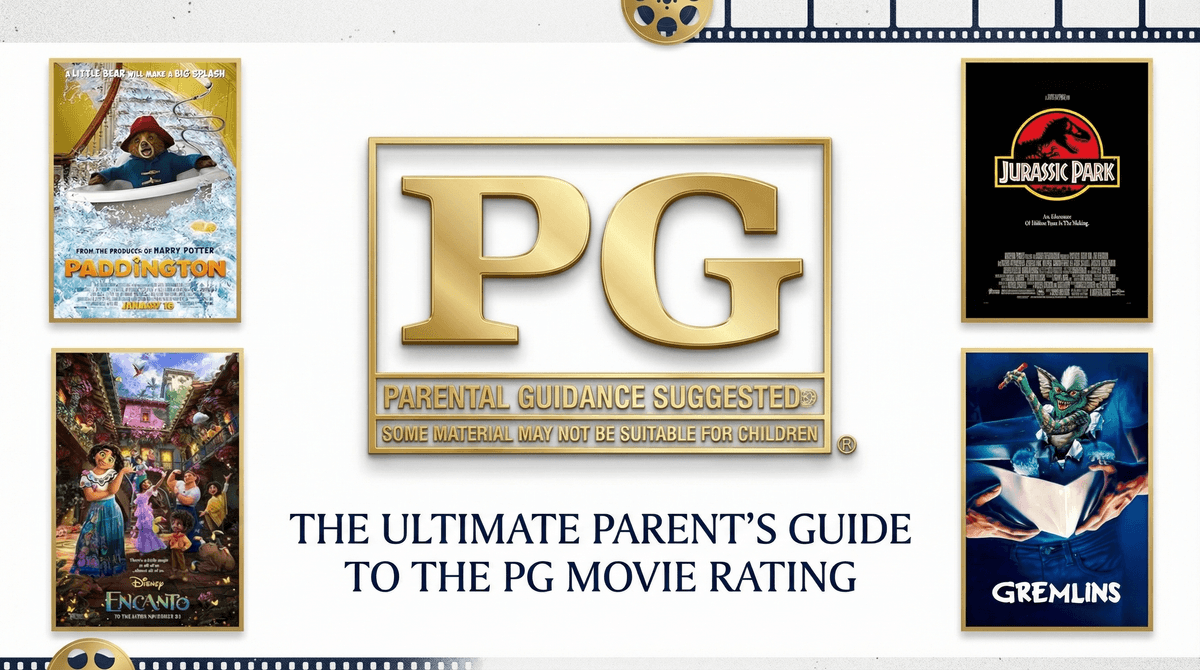
The Ultimate Parent's Guide to the PG Movie Rating
TL;DR: PG means "Parental Guidance Suggested" and covers a massive range—from gentle Paddington to intense Jurassic Park. Unlike G-rated films, PG movies can include mild language, brief scary moments, some action violence, and thematic elements that might need context. This rating is where most family movies land, but "family-friendly" doesn't mean one-size-fits-all. Here's how to actually decode what you're getting into.
The PG rating was created in 1972 (fun fact: it was born because parents were blindsided by the intensity of the G-rated Benji). The MPAA defines it as content that "may not be suitable for children" and suggests parents provide guidance.
But here's the thing: that definition is hilariously vague. PG is the catch-all rating for "not quite G-rated innocence, but definitely not PG-13 territory." It's where you'll find everything from Toy Story to The Goonies, and those are wildly different viewing experiences for a 6-year-old.
Mild Language
This usually means a handful of words like "damn," "hell," or "crap." Sometimes you'll get a single use of something slightly stronger in context (think: a character stubbing their toe). You won't hear the F-word or sexual slang, but you might hear insults, name-calling, or crude humor.
The Bad Guys has some mild insults and bathroom humor. Night at the Museum keeps it pretty clean but has some "shut up" moments that younger kids might repeat endlessly.
Brief Scary or Intense Moments
This is where PG ratings get tricky. "Brief" is subjective, and what scares one kid might not phase another. PG movies can include:
- Jump scares (sudden loud noises, things popping out)
- Peril (characters in danger, chases, near-misses)
- Scary imagery (monsters, dark atmospheres, creepy creatures)
- Suspenseful sequences (hiding from villains, tense music)
Jurassic Park is PG (not even PG-13!) and features genuinely terrifying dinosaur attacks. Coraline is PG and has given nightmares to countless kids with its button-eyed Other Mother. Meanwhile, Paddington is also PG and the scariest thing is a mean taxidermist who never actually succeeds at anything threatening.
Action Violence
PG allows for cartoon violence, slapstick comedy, and action sequences where people get punched, fall from heights, or engage in battles—as long as there's no blood, gore, or realistic injury detail.
Think: The Incredibles with its superhero fights, or How to Train Your Dragon with dragon battles. Nobody's getting realistically maimed, but characters are definitely in danger.
Thematic Elements
This is the most nebulous category. PG movies can deal with:
- Death and loss (Coco, The Lion King)
- Divorce or family conflict (Mrs. Doubtfire)
- Bullying (Wonder)
- Environmental destruction (The Lorax)
- War or historical trauma (in age-appropriate ways)
These themes aren't necessarily scary, but they might prompt big questions or feelings that need processing afterward.
Mild Crude Humor
Fart jokes. Burp gags. Butt jokes. Snot. Vomit. PG movies love bodily function humor, and your 7-year-old will love it even more. Captain Underpants is basically a masterclass in this category.
Here's where it gets interesting: PG ratings from the 1980s hit different than modern PG movies. The rating system has gotten more conservative over time, meaning older PG movies often feel more intense than what gets a PG today.
Gremlins and Indiana Jones and the Temple of Doom were both rated PG, and they're legitimately intense—so much so that they actually prompted the creation of the PG-13 rating in 1984. If you're revisiting classics from your childhood, check the actual content before assuming they're as mild as you remember.
Ages 4-6: Most PG movies will have something that's a bit much for this age group. Look for newer animated PG films, which tend to be gentler. Encanto, Moana, and Paddington work well. Be cautious with anything featuring intense action or scary villains.
Ages 7-9: This is the sweet spot for most PG content. Kids this age can typically handle mild scares, action sequences, and thematic elements with some context. They're also old enough to understand when something is "movie danger" vs. real danger. Still, know your kid—some 9-year-olds breeze through Jurassic Park while others get spooked by The Witches.
Ages 10+: Most PG movies are totally appropriate, though some kids this age start finding PG content "babyish" and push for PG-13. That's fine—PG is often the last rating where you can watch together without worrying about content that's awkward to discuss mid-movie.
PG Doesn't Mean "Educational" or "Good"
A PG rating tells you nothing about quality, values, or whether your kid will actually enjoy it. There are brilliant PG movies (Spider-Man: Into the Spider-Verse) and absolute duds that feel like 90-minute toy commercials.
The Rating Doesn't Account for Your Kid's Specific Sensitivities
If your child is terrified of dogs, Beethoven might be more stressful than a movie with mild cartoon violence. If they're anxious about parents dying, Finding Nemo opens with trauma. You know your kid better than the MPAA does.
Descriptors Matter More Than the Rating
The MPAA includes specific descriptors with ratings: "Rated PG for sci-fi action and peril" is different from "Rated PG for mild thematic elements and brief rude humor." Actually read the descriptors—they're more useful than the letter rating itself.
Common Sense Media Is Your Friend
For any PG movie you're unsure about, check Common Sense Media for detailed breakdowns of language, violence, scary scenes, and positive messages. They also include parent and kid reviews, which often highlight specific scenes that might be issues.
Watch It First If You're Unsure
I know, I know—you don't have time to pre-screen every movie. But for younger kids or particularly sensitive ones, watching the first 20 minutes together lets you gauge whether they're handling it. You can always pause and come back later, or pivot to something else entirely.
PG is less a guarantee of content and more a suggestion that you should actually think about whether this specific movie works for your specific kid. Unlike G-rated films (which are genuinely designed for everyone), PG movies assume parents are making active decisions, not just hitting play.
The rating system isn't perfect, but it's a starting point. Combine it with your knowledge of your kid's maturity, sensitivities, and interests, plus resources like Common Sense Media or quick guide searches, and you'll be able to make confident choices.
And when in doubt? Start with Paddington. It's PG, it's delightful, and the scariest thing about it is how much you'll want a marmalade sandwich afterward.