

The Ultimate Guide to the Best Teen Movies: What to Watch (and What to Skip) in 2026
Teen movies are having a moment—from Mean Girls getting a musical reboot to indie gems like Bottoms redefining what high school comedies can be. Here's what's actually worth your family's time, organized by age and vibe:
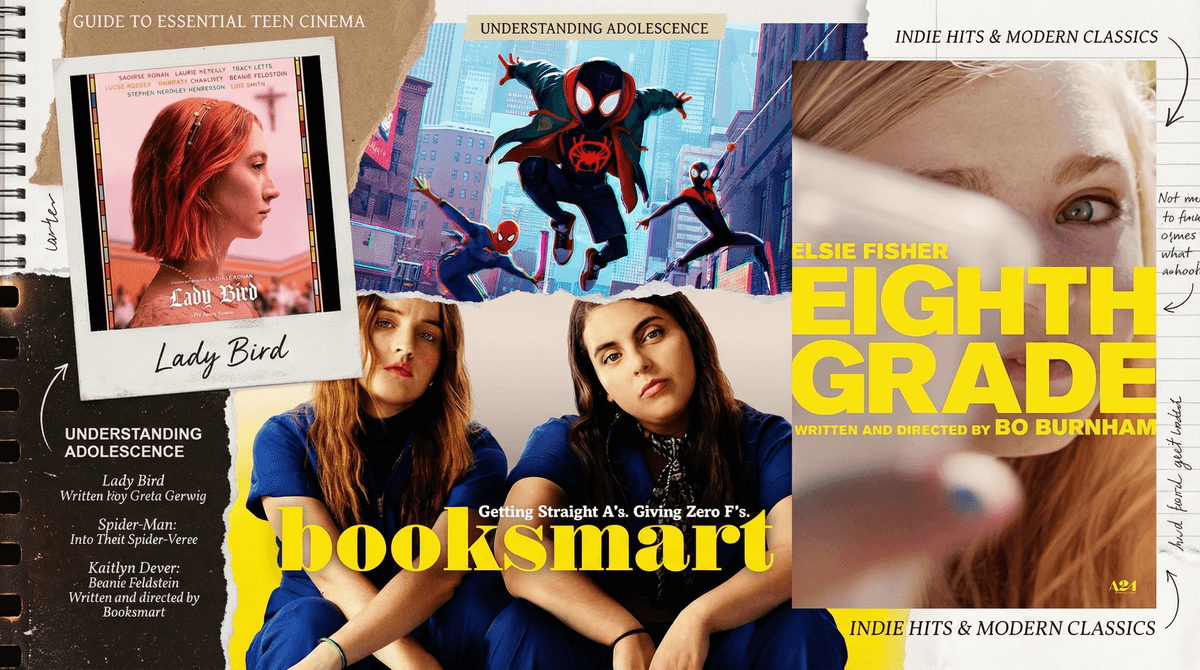
Ages 13+: The Fallout, Eighth Grade, Spider-Man: Into the Spider-Verse
Ages 15+: Lady Bird, The Perks of Being a Wallflower, Booksmart
Ages 17+: Bottoms, Eighth Grade, Aftersun
Skip entirely: After (toxic relationship glorification), 365 Days (just no)
Teen movies used to mean one thing: some version of The Breakfast Club or 10 Things I Hate About You on repeat. But the genre has evolved dramatically in the past decade. We've got everything from nuanced explorations of trauma to raunchy comedies that would make John Hughes blush, and honestly? Some of it is exceptional. Some of it is absolutely unwatchable garbage that somehow has 4 stars on Netflix.
The challenge for parents: teen movies now span an enormous range of maturity, themes, and quality. A PG-13 rating can mean anything from a sweet coming-of-age story to a film dealing with school shootings. Your 14-year-old's friend group might be watching everything from wholesome To All the Boys I've Loved Before to deeply inappropriate content that's technically "for teens" but really, really isn't.
This guide breaks down what's actually good, what's age-appropriate, and what conversations you might want to have before (or after) hitting play.
Age: 15+ | Runtime: 94 min
Greta Gerwig's 2017 masterpiece about a high school senior navigating her complicated relationship with her mother while trying to escape Sacramento. This is the gold standard for modern coming-of-age films. Saoirse Ronan is extraordinary, the mother-daughter dynamic is painfully real, and it captures that specific senior year feeling of simultaneously wanting to leave and being terrified to go.
Content heads-up: Some sexual content (including a realistic first-time scene), drinking, language. But it's all in service of an honest story.
Why it works: Unlike so many teen movies that treat parents as obstacles, Lady Bird treats both the teen and her mom as fully realized people. The conflict feels real, not manufactured.
Age: 13+ (but watch together) | Runtime: 93 min
Bo Burnham's directorial debut is uncomfortably accurate about what it feels like to be 13 in the age of social media. Elsie Fisher plays Kayla, a painfully shy eighth grader who makes motivational YouTube videos that no one watches. This movie GETS the specific anxiety of modern adolescence—the performative confidence online versus the crushing self-doubt in real life.
Content heads-up: Some intense moments including an uncomfortable scene with an older boy in a car (nothing happens, but it's anxiety-inducing). Language throughout.
Why it matters: If you want to understand what your middle schooler is actually experiencing—the constant self-surveillance, the social media pressure, the disconnect between online and offline identity—watch this. Then talk about it .
.
Age: 10+ | Runtime: 117 min
Yes, it's a superhero movie. But it's also one of the best coming-of-age films of the past decade, wrapped in stunning animation. Miles Morales is a Brooklyn teen dealing with a new school, high expectations, and suddenly having superpowers he doesn't know how to control. The metaphor is not subtle, and that's what makes it work.
Why it's on this list: Sometimes teens (and tweens) need their big feelings reflected in big, colorful, action-packed ways. This delivers emotional depth without requiring them to sit through 90 minutes of quiet indie drama.
Age: 14+ | Runtime: 92 min
Jenna Ortega stars as a high school student dealing with trauma after experiencing a school shooting. This is not an easy watch, but it's an important one. The film doesn't show the violence—it focuses entirely on the aftermath and how different students process the same traumatic event in completely different ways.
Content heads-up: Drug use, sexual content, heavy emotional themes. This requires a conversation before and after.
Why it matters: School shooting drills are part of your teen's reality. This film treats that reality with respect and nuance, showing how trauma affects young people without being exploitative. If your teen is ready for this conversation, here's how to approach it.
Age: 15+ | Runtime: 103 min
Based on the beloved novel, this follows Charlie, an introverted freshman who befriends two seniors and experiences the highs and lows of high school friendship, first love, and mental health struggles. Logan Lerman, Emma Watson, and Ezra Miller are all excellent.
Content heads-up: Deals with past sexual abuse (revealed later in the film), suicide, drug use, and LGBTQ+ themes. The tone is ultimately hopeful, but the subject matter is heavy.
Why it resonates: This movie takes teen depression seriously without being maudlin. It shows how friendship can be life-saving, and how trauma affects young people in ways they don't always understand.
Age: 15+ | Runtime: 102 min
Two academic overachievers realize on the eve of graduation that they should have had more fun in high school. So they try to cram four years of partying into one night. Olivia Wilde's directorial debut is genuinely hilarious, surprisingly sweet, and features one of the best female friendships in recent cinema.
Content heads-up: Lots of sexual content, drug use, and language. It's raunchy. But it's also smart and doesn't punish its characters for having sex or experimenting.
Why it works: Unlike most teen comedies, the girls aren't competing for boys or tearing each other down. Their friendship is the core relationship, and it's treated with as much importance as any romance.
Age: 16+ | Runtime: 91 min
Two unpopular queer girls start a fight club to meet cheerleaders. It's absurd, violent, and absolutely hilarious. This is not a realistic portrayal of high school—it's a heightened, satirical take that skewers teen movie tropes while somehow still being genuinely sweet about friendship and first love.
Content heads-up: Violence (comedic but graphic), sexual content, constant profanity. This is rated R for a reason.
Why teens love it: It's chaotic, weird, and treats queer teen experiences as completely normal while also being willing to be ridiculous. It doesn't take itself seriously, which is refreshing.
Mean Girls (2024 Musical Version)
Age: 13+ | Runtime: 112 min
The musical adaptation of the 2004 classic is... fine. It's colorful, the songs are catchy, and Reneé Rapp is excellent as Regina George. But it's also weirdly sanitized compared to the original, and the social media updates feel forced.
The verdict: If your teen loves musicals, they'll enjoy it. But the original Mean Girls (2004) is still superior in every way except the musical numbers.
To All the Boys I've Loved Before (trilogy)
Age: 12+ | Runtime: 99 min (first film)
Lara Jean's secret love letters get mailed out, and chaos ensues. This Netflix trilogy is genuinely charming, features a healthy relationship (fake dating that becomes real), and treats family relationships as important as romantic ones. Plus, Noah Centineo's Peter Kavinsky became the internet's boyfriend for a reason.
Why it works: The relationship develops slowly, consent is clear, and Lara Jean maintains her friendships and family connections throughout. It's a romance that doesn't require the protagonist to lose herself.
Age: 13+ | Runtime: 104 min
A smart but cash-strapped teen helps the school jock write love letters to a girl they both secretly like. It's a queer retelling of Cyrano de Bergerac, and it's lovely. Alice Wu's film is thoughtful, funny, and doesn't tie everything up in a neat bow.
Why it matters: This is a coming-of-age story where the protagonist's queerness is just one aspect of her identity, not the entire plot. It's also about friendship between very different people, and how love isn't always romantic.
After (and all its sequels)
Age: Skip it
Based on Harry Styles fanfiction (yes, really), this franchise romanticizes toxic relationship dynamics, emotional manipulation, and possessive behavior. The "bad boy changes for the good girl" trope is tired, and this version is particularly egregious.
Why it's harmful: It presents jealousy, control, and emotional abuse as signs of passionate love. If your teen is watching this, here's how to talk about healthy relationships.
Age: Absolutely not
This Polish film on Netflix is essentially a kidnapping fantasy dressed up as romance. It's not a teen movie by any stretch, but teens are watching it because it's on Netflix and has a reputation for being "spicy." It's actually just deeply problematic.
The bottom line: If you find out your teen watched this, don't panic, but do have a conversation about consent, coercion, and the difference between fantasy and reality.
Age: 14+ but why though
Okay, this is technically a TV show, not a movie, but it deserves a mention because it's often grouped with teen movies in recommendations. Riverdale started as a dark Archie Comics adaptation and devolved into absolute nonsense—cults, time travel, superpowers, and plot lines that make zero sense.
The verdict: The first season is decent. After that, it's pure chaos. Not harmful, just... bewildering. If your teen is watching it, they're probably hate-watching it or genuinely enjoying the camp. Either way, it's mostly harmless brain candy.
Ages 11-13: Stick with Spider-Man: Into the Spider-Verse, To All the Boys I've Loved Before, and The Half of It. Eighth Grade is appropriate if you watch together and talk about it.
Ages 14-15: Add Lady Bird, The Perks of Being a Wallflower, Booksmart, and The Fallout (with conversation). Pay attention to your individual teen's maturity level—some 14-year-olds can handle heavy themes, others need more time.
Ages 16+: Most of these films are fair game, though Bottoms is really more for older teens who can appreciate the satire. At this age, focus less on whether they can watch something and more on whether they're thinking critically about what they're consuming.
The rating system is broken: PG-13 can mean almost anything. R ratings are often for language rather than truly mature content. Use Common Sense Media ratings as a starting point, but ultimately you know your teen best. A film dealing with mental health might be more appropriate for your anxious 14-year-old than a raunchy comedy, even if the ratings suggest otherwise.
Teen movies have gotten better at representation: The genre now includes authentic LGBTQ+ stories (The Half of It, Love, Simon, Bottoms), diverse casts that feel natural rather than tokenized, and female characters who have goals beyond landing a boyfriend.
But streaming has made everything accessible: Your 13-year-old can easily stumble onto content meant for 17+. Netflix and other platforms are terrible at age-gating. This means you need to be more involved, not less. Check viewing history, have conversations about what they're watching with friends, and make it clear that some content isn't age-appropriate even if it's technically accessible.
The "everyone's watching it" argument: In any given middle school or high school, kids are watching wildly different things. Some 14-year-olds are still watching The Owl House, others are watching horror movies that would give adults nightmares. "Everyone" is never actually everyone. If you're unsure what's normal for your teen's age, check out community viewing data.
Watch together when possible: This sounds obvious, but actually sitting down to watch a teen movie with your teenager can be incredibly valuable. You'll understand their world better, they'll see how you react to different themes, and you'll have natural conversation starters. Yes, they might roll their eyes. Do it anyway.
The conversation is more important than the content: Your teen will encounter mature themes, whether in movies, on social media, or through friends. The goal isn't to shelter them from everything—it's to help them process what they're seeing and develop critical thinking skills. A teen who watches The Fallout and talks about it with a parent is better equipped than a teen who secretly watches After and internalizes its messages about relationships.
Teen movies can be genuinely excellent—thoughtful, funny, and emotionally resonant in ways that help young people process their experiences. They can also be absolute garbage that promotes unhealthy relationships and unrealistic expectations.
Your job isn't to curate a perfect viewing list. It's to help your teen develop the critical thinking skills to tell the difference between Lady Bird's authentic portrayal of mother-daughter conflict and After's romanticization of emotional abuse.
Start with the films on this list that match your teen's age and maturity level. Watch together when you can. Talk about what you're seeing. And remember that sometimes, your teen just wants to watch something fun and dumb—and that's okay too. Not everything needs to be a teaching moment.
- Browse our complete list of teen movies with ratings and reviews
- Check out conversation starters for talking about media with teens
- Explore alternatives to Netflix for family movie nights
- Learn about how to set up viewing restrictions on streaming platforms
The teen movie landscape is vast, sometimes wonderful, sometimes terrible, and always evolving. This guide will help you navigate it without losing your mind—or your relationship with your teenager.