

The Ultimate Guide to the Best PS4 Games for 9-Year-Olds
Nine-year-olds are at that sweet spot where they can handle more complex gameplay but still need games that aren't drowning in violence or mature themes. Here are the top PS4 picks that nail this balance:
Top Picks:
- Astro Bot Rescue Mission - Pure platforming joy (requires PS VR)
- Sackboy: A Big Adventure - Cooperative chaos that actually works
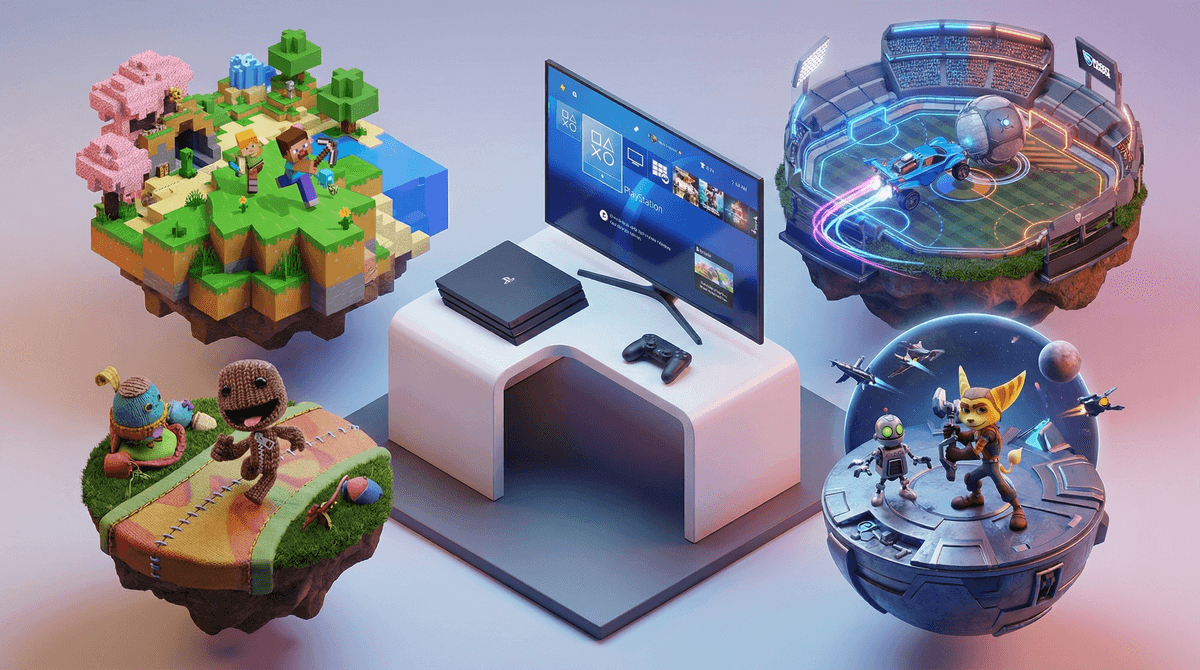
- Minecraft - Still the creativity king
- Rocket League - Soccer with cars, somehow perfect
- LEGO Marvel Super Heroes - Superhero smashing without the blood
Let's dig into why these work and what else is worth your time (and money).
At nine, kids are developing real gaming skills. They can handle multi-button combos, understand basic strategy, and actually want to complete objectives rather than just run around causing chaos (though they still enjoy that too). But they're not ready for the gritty realism of games marketed to teens and adults.
The best games for this age:
- Have clear objectives but room for creativity
- Offer challenge without frustration spirals
- Include cooperative options (because sibling/friend dynamics matter)
- Don't rely on violence as the core mechanic
- Have visual styles that are engaging but not trying to be hyper-realistic
This is the game that makes parents realize cooperative gaming doesn't have to end in tears. Up to four players can work together through incredibly creative levels that feel like jumping through a craft store explosion. The physics are forgiving enough that younger kids won't constantly die, but the challenge ramps up nicely for skilled players.
Why it works: The game literally rewards cooperation with special areas only accessible when playing together. It's teaching teamwork while being genuinely fun for adults too.
Ages: 7-12, honestly works for the whole family
If you have PlayStation VR gathering dust, this is the game that justifies the purchase. It's a platformer that uses VR in clever, non-nauseating ways. Kids at nine are usually old enough for VR sessions (with breaks), and this game is pure delight.
Parent note: VR sessions should be limited to 30-45 minutes for kids this age. The game naturally breaks into levels that make this easy.
Ages: 8-13
Yes, it's on every list. Yes, your kid probably already plays it on another device. But the PS4 version offers split-screen multiplayer on your TV, which is actually a different experience than everyone hunched over tablets. You can play together on the couch, which means you can actually see what they're building and have conversations about it.
Why it still matters: At nine, kids are moving from "I built a house!" to actually planning builds, using redstone for basic circuits, and collaborating on projects. Learn more about why Minecraft remains educational .
.
Ages: 6-adult (it scales with the player)
Soccer with rocket-powered cars. That's it. That's the pitch. And it's brilliant. The skill ceiling is incredibly high (there are professional tournaments), but the skill floor is low enough that a nine-year-old can have fun immediately. Plus, it's one of the few competitive online games where the worst you'll see is "What a save!" spam in chat.
The catch: It's free-to-play, which means there are cosmetic microtransactions. Have the conversation about why a $20 car skin doesn't make you play better Get tips before they ask.
Ages: 8-adult
The LEGO game formula works because it's basically impossible to fail. Characters respawn instantly, there's no real penalty for mistakes, and you're constantly unlocking new characters with different abilities. For nine-year-olds who love Marvel but aren't ready for the actual violence of superhero combat, this is perfect.
Pro tip: Any of the LEGO games work at this age - LEGO Star Wars, LEGO Harry Potter, pick their favorite franchise.
Ages: 6-11
A remaster of classic platformers that still hold up. Spyro is a purple dragon who collects gems, rescues other dragons, and defeats enemies by breathing fire or charging at them. It's colorful, has clear objectives, and teaches exploration and problem-solving.
Why it's great for nine: The levels are designed to be completed in chunks, perfect for "one more level" that actually ends in a reasonable timeframe.
Ages: 7-12
Possibly the most beautiful 2D platformer you'll ever see. The art style is gorgeous, the music levels are legitimately creative, and the difficulty curve is well-tuned. Up to four players can play together, though it can get chaotic (the fun kind, mostly).
Ages: 7-13
A cooking game that will teach your family about communication, time management, and how quickly things can descend into chaos. You work together to prepare and serve meals in increasingly absurd kitchens (on a hot air balloon, in a wizard's tower, etc.).
Warning: This game can create genuine stress. Some families love it, some find it too frantic. The first few levels are a good test of whether your kid will find it fun or overwhelming.
Ages: 8-14 (with patient adults)
A PS4 remake of a PlayStation classic. It's a third-person action game with creative weapons, gorgeous graphics, and humor that lands with kids without being annoying to adults. There's combat, but it's cartoonish - you're fighting robots and aliens, not realistic enemies.
Ages: 8-13
Another remaster of classics, but fair warning: these games are HARD. Like, adults-will-struggle hard. But for kids who want a challenge and don't get frustrated easily, there's something satisfying about mastering these levels.
Ages: 9-14 (with high frustration tolerance)
FIFA, NBA 2K, and Madden are all fine for nine-year-olds if they're into sports. The gameplay is appropriate, but here's what you need to know:
The Ultimate Team problem: All these games have modes where you can spend real money to get better players. It's essentially gambling mechanics for sports fans. You can disable purchases, but the games are designed to make these modes feel essential. Read more about Ultimate Team concerns.
If your kid just wants to play regular matches with their favorite teams, these games are great. If they're interested in Ultimate Team, have a serious conversation about pack odds and spending.
Fortnite: Yes, it's on PS4. Yes, every kid plays it. But at nine, the social dynamics of Fortnite can be intense. If they're playing, make sure you understand the friend dynamics and have conversations about voice chat.
Call of Duty/Battlefield: These are M-rated for a reason. Realistic military violence isn't appropriate at nine, full stop.
GTA V: I shouldn't have to say this, but just in case: no. Not even a little bit. Not even if "all their friends play it."
Spider-Man: This one hurts to put here because it's an incredible game, but the combat and some story elements are better suited for 11+. If your nine-year-old is mature and you're okay with stylized superhero violence, it could work, but it's definitely on the older edge.
At nine, kids are often starting to want to play online with friends. The PS4 requires PlayStation Plus for most online multiplayer ($60/year), which is actually a good natural barrier for parents to control online access.
If you allow online play:
- Use PS4's parental controls to restrict who can contact them
- Start with games that have limited communication (Rocket League only has quick chat)
- Have the PS4 in a common area so you can hear what's happening
- Check in regularly about interactions with other players
Setting up PS4 parental controls is actually straightforward and worth the 15 minutes.
Nine is peak "everyone else has it" age. Here's the thing: they're not entirely wrong. Gaming is genuinely social at this age. Being left out of conversations about games is real.
But you're not a bad parent for saying no to games you're uncomfortable with. And you're not a bad parent for saying yes to games other parents restrict. Every family is different, and that's okay.
What matters:
- Know what your kid is playing
- Understand why they want to play it (social pressure? genuine interest? YouTube influence?)
- Make informed decisions based on your family's values
- Be willing to revisit decisions as they mature
PS4 games are expensive. New releases are $60, and even older games often stay at $40. Here's how to make it work:
Buy physical used games: GameStop, eBay, local game stores. PS4 physical games work exactly like new ones, and you can resell them when your kid moves on.
Watch for sales: The PlayStation Store has sales constantly. Games that are $40 regularly drop to $15-20.
PlayStation Plus free games: If you have PS Plus for online play, you get 2-3 free games monthly. They're not always kid-appropriate, but sometimes you'll score something great.
Trade with friends: If your kid's friends have PS4s, game swapping is free.
This is the age where gaming shifts from "something they do sometimes" to "a legitimate hobby and social connector." That's not inherently bad, but it requires more active parenting than when they were younger.
Watch for:
- Gaming replacing all other activities (sports, reading, outdoor play)
- Mood changes around gaming (anger, frustration that lingers after they stop)
- Secretive behavior about what they're playing or who they're playing with
- Requests for money/gift cards without clear explanation
But also celebrate:
- Problem-solving skills developing through gameplay
- Cooperation and teamwork in multiplayer games
- Creativity in building/creation games like Minecraft
- Following through on completing challenging games
Gaming isn't rotting their brain. But like any hobby, it needs boundaries and balance.
The PS4 has a genuinely great library for nine-year-olds. You don't need to default to the violent games marketed to teens, and you don't need to keep them on "baby games" either. There's a sweet spot of challenging, engaging, age-appropriate content.
Start with Sackboy if you want family co-op, Minecraft if they want creative freedom, or Rocket League if they want competitive play. Branch out from there based on what clicks.
And remember: you're allowed to play too. Some of these games are genuinely fun for adults, and playing together gives you insight into what they're experiencing and creates actual connection time that isn't just sitting next to each other staring at screens.
Next Steps:
- Set up PS4 parental controls if you haven't already
- Ask your kid which of these games interests them and why
- Consider starting with one game and seeing how they handle it before building a library
- Talk about online safety before allowing any online multiplayer
Gaming at nine can be creative, social, and skill-building. It just takes a bit of intentional curation instead of letting them download whatever has the flashiest trailer.