

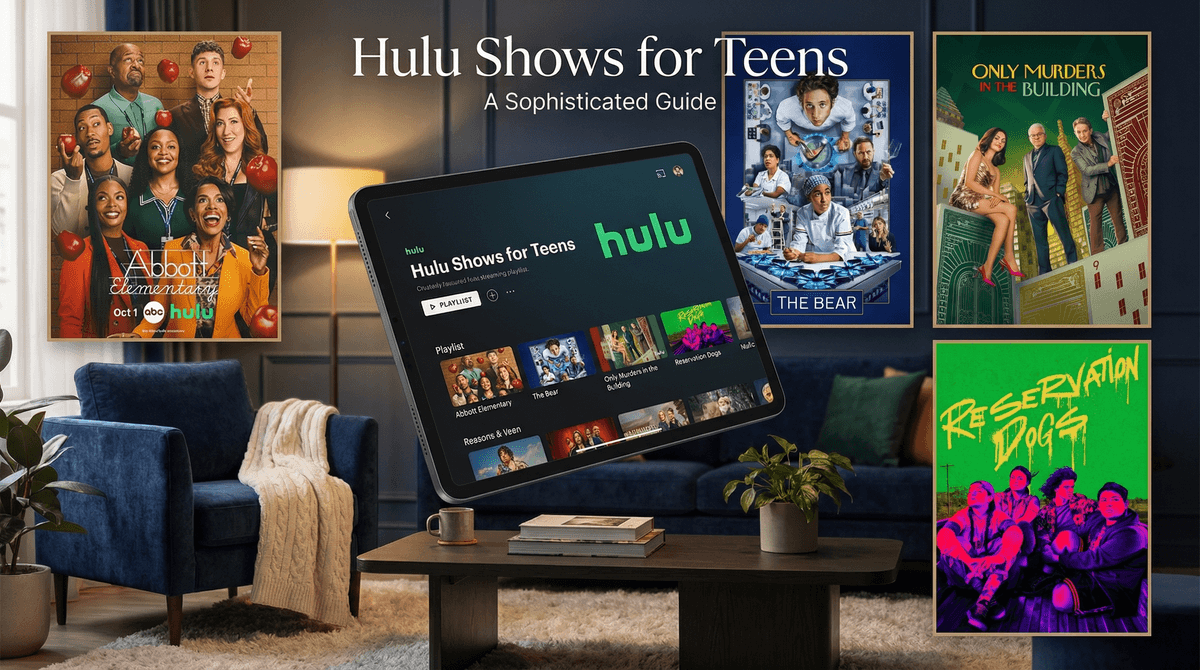
The Ultimate Guide to Must-Watch Hulu Shows for Teens
TL;DR: Hulu's got a weird mix of family-friendly comfort watches and genuinely sophisticated teen content that doesn't talk down to its audience. Here's what's actually worth your family's time, organized by maturity level rather than arbitrary age ratings.
Quick picks by vibe:
- Safe family co-watch: Abbott Elementary, The Bear (with caveats), Bluey
- Thoughtful teen content: The Handmaid's Tale, Only Murders in the Building, Reservation Dogs
- Nostalgic comfort: Bob's Burgers, Futurama
- Edgier picks for older teens: Fleabag, Atlanta
Hulu occupies this interesting middle ground between Netflix's algorithm-driven content factory and HBO's prestige TV approach. It's got FX shows, ABC content, and its own originals—which means the quality and appropriateness vary wildly. Unlike Disney+ (which skews younger) or Netflix (which has better parental controls), Hulu really requires you to be hands-on about what your teen is watching.
The platform doesn't have robust age-gating, and its "Kids Mode" is basically useless for teens. This means you're doing the curation work yourself, which honestly might be better anyway.
This workplace mockumentary about underfunded Philadelphia public schools is genuinely one of the best shows on TV right now. It's funny without being mean, addresses real issues (education inequality, teacher burnout) without being preachy, and has characters your teen will actually care about.
Why it works: The humor is smart but accessible, there's minimal content to worry about (some mild language, adult situations discussed but not shown), and it models adults who genuinely care about making a difference. Plus, Quinta Brunson is hilarious.
Watch with them because: It's a great conversation starter about education, community, and what makes good teaching. Also, you'll actually enjoy it.
Steve Martin, Martin Short, and Selena Gomez solve murders in their New York apartment building while producing a true crime podcast. It's clever, genuinely funny, and treats its mystery plots with respect.
Content notes: There are murders (obviously), but they're handled more like classic whodunits than graphic crime shows. Some mature themes and occasional language, but nothing that would shock a teen who's read The Hunger Games.
Why teens love it: The podcast angle feels authentic, the humor doesn't rely on dated references, and Selena Gomez's character is written as an actual person rather than "how adults think Gen Z talks."
If your family hasn't discovered the Belcher family yet, Hulu's got all the seasons. This animated show about a struggling burger restaurant family is genuinely wholesome while being consistently funny.
What makes it special: The parents actually like each other (revolutionary!), the kids are weird but supported, and the humor comes from character rather than cruelty. It's like if The Simpsons were actually about a functional family.
Perfect for: Family dinner viewing, comfort watching, or when your teen needs something that won't stress them out.
This one requires a conversation first. The Bear follows a fine dining chef who returns to Chicago to run his family's sandwich shop after his brother's death. It's intense, beautifully made, and deals with grief, addiction, and mental health in sophisticated ways.
The language situation: There's a LOT of f-bombs, especially in Season 1. Like, a truly impressive amount. If your family's policy is "no F-word content," this isn't your show. But if you're okay with realistic workplace language in an otherwise thoughtful show, it's worth considering.
Why it's valuable: It's one of the most honest depictions of kitchen culture, small business struggles, and how trauma affects families. The representation of panic attacks is particularly well-done. Plus, it might inspire your teen to actually appreciate cooking.
Co-watch this one. The themes are heavy enough that you'll want to be able to talk through them.
Four Indigenous teenagers in rural Oklahoma try to save money to escape to California. It's funny, heartfelt, and offers perspectives rarely seen in mainstream TV.
What makes it essential: Created by Sterlin Harjo and Taika Waititi, this show features an almost entirely Indigenous cast and creative team. It's not "issue television"—it's just a great coming-of-age story that happens to be set on a reservation.
Content considerations: Some language, teen drinking and marijuana use (shown with consequences), discussions of death and grief. But it's all handled with nuance and heart.
Why teens connect: The friendship dynamics feel real, the humor doesn't rely on stereotypes, and it captures that feeling of being desperate to leave home while also loving where you're from.
All seasons are on Hulu, including the newer episodes. This sci-fi comedy from the creators of The Simpsons is smarter than it has any right to be, with jokes that work on multiple levels.
Educational bonus: There are actual math and science concepts woven throughout. The writers included multiple PhDs, and it shows. Your teen might learn about theoretical physics while laughing at a robot with a drinking problem.
Age appropriateness: Some episodes deal with mature themes (relationships, death, existential dread), but it's all filtered through cartoon absurdity. Probably fine for most 14+ viewers who can handle Rick and Morty (though less graphic).
Based on Margaret Atwood's novel, this dystopian drama is dark, intense, and unfortunately relevant. If your teen is reading it for school (which many are), watching it together can be valuable.
Heavy content warning: Sexual violence (mostly implied but sometimes shown), totalitarian oppression, graphic violence, and deeply disturbing themes about bodily autonomy and religious extremism. This is not casual viewing.
Why it matters: It's a masterclass in adaptation, the performances are incredible, and it generates important conversations about power, resistance, and what happens when rights are taken away. But only for emotionally mature teens who can handle difficult content.
Recommendation: Read our guide to discussing dystopian fiction with teens first. And definitely watch together or at least debrief after episodes.
Phoebe Waller-Bridge's two-season masterpiece about a messy woman navigating grief, family, and relationships in London. It's funny, devastating, and brilliantly structured.
Mature content: Sex (discussed and sometimes shown), language, drinking, complex relationship dynamics. This is firmly adult content that older teens can appreciate.
Why older teens love it: The fourth-wall-breaking feels fresh, the humor is sharp without being cruel, and it treats complicated emotions with honesty. Plus, it's only 12 episodes total—perfect for a weekend binge.
Good for: Teens who appreciate Eighth Grade or Lady Bird—character-driven stories that don't tie everything up neatly.
Donald Glover's surreal comedy-drama about a Princeton dropout managing his cousin's rap career in Atlanta. It's weird, experimental, and unlike anything else on TV.
What to expect: Each episode feels different—some are straightforward comedy, others are basically short films exploring race, class, and identity. Some episodes are genuinely unsettling. Language and mature themes throughout.
Why it's important: It's doing things with TV structure that most shows won't attempt. It's also offering perspectives and conversations about Black experience in America that your teen isn't getting elsewhere.
Best for: Teens who like everything everywhere all at once or appreciate experimental storytelling. This is not background viewing.
Two adult women play versions of their 13-year-old selves in this cringe comedy about middle school in the year 2000. It sounds bizarre, and it is, but it's also painfully accurate about early adolescence.
For ages 15+: There's sexual content (mostly awkward teen exploration), language, and intensely uncomfortable situations. But if your older teen can handle the cringe, it's remarkably insightful about female friendship and growing up.
A first-generation Egyptian-American navigates faith, family, and dating in New Jersey. It's funny and thoughtful about what it means to be Muslim in America without being educational television.
Mature content: Sex, language, and complex discussions about religion and identity. For older teens who can appreciate nuanced storytelling.
Euphoria isn't on Hulu, but if your teen asks why they can't watch it: it's on HBO Max, and while it's beautifully shot and well-acted, it's essentially trauma porn. The graphic content (drugs, sex, violence) overwhelms any message about teen struggles. There are better ways to discuss addiction and mental health.
American Horror Story varies wildly by season, but most are genuinely disturbing rather than scary-fun. The violence and sexual content are extreme, and not in service of particularly meaningful stories.
Family Guy is still on Hulu and still relies on shock humor that aged poorly. If your teen wants animated comedy, Bob's Burgers or Futurama are infinitely better choices.
The TV-MA rating on Hulu covers everything from "some language and adult themes" to "genuinely disturbing content." Don't rely on ratings alone—actually look up what you're getting into.
For 12-13 year olds: Stick with TV-14 and carefully selected TV-PG content. Abbott Elementary, Only Murders in the Building, and Bob's Burgers are your sweet spot.
For 14-15 year olds: You can start exploring some TV-MA content, but be selective. The Bear and Reservation Dogs work for mature 14-year-olds, but preview first.
For 16+: Most content is on the table, but "can watch" doesn't mean "should watch alone." Shows like The Handmaid's Tale benefit from discussion.
Set up profiles: Create separate profiles for each family member. It won't restrict content (Hulu's parental controls are weak), but it'll at least keep recommendations separate.
Use the watch history: Check what your teen is actually watching. Not to spy, but to know what conversations you might need to have.
Co-watch when possible: The best shows on this list are ones you'll actually enjoy too. Make it family time rather than surveillance.
Talk about why certain shows are off-limits: "Because I said so" doesn't work with teens. Explain what content you're concerned about and why. They might actually respect boundaries more when they understand the reasoning.
Consider the "one episode preview" rule: Let your teen watch the first episode of something they're curious about, then discuss whether it's appropriate to continue. This respects their growing autonomy while keeping you in the loop.
Hulu doesn't have the same content variety as Netflix for teens—there's less YA-specific content and more adult shows that teens might want to watch. This means you're making more judgment calls rather than relying on "teen" categories.
The ad-supported tier (which most families have) means your teen is seeing commercials, some of which might be for mature content or products. The ad-free tier is worth it if this bothers you.
Unlike Disney+, Hulu doesn't really care about being family-friendly. It's a grown-up streaming service that happens to have some content teens can watch, not the other way around.
Hulu's best teen content isn't in a "teen" category—it's sophisticated shows that respect young viewers' intelligence. Abbott Elementary, Reservation Dogs, and Only Murders in the Building treat serious topics with humor and heart. The Bear and The Handmaid's Tale offer challenging content worth discussing together.
The platform requires more active parenting than others—you can't just turn on "kids mode" and walk away. But that's not necessarily bad. Curating content together and talking about what makes certain shows appropriate (or not) for your family is actually valuable.
Start with the safer picks like Abbott Elementary or Bob's Burgers, then gradually explore more mature content as your teen grows. And remember: watching together beats restricting alone.
Want more streaming recommendations? Check out our guides to Netflix shows for teens, Disney+ content worth watching, or how to talk to teens about mature content.