

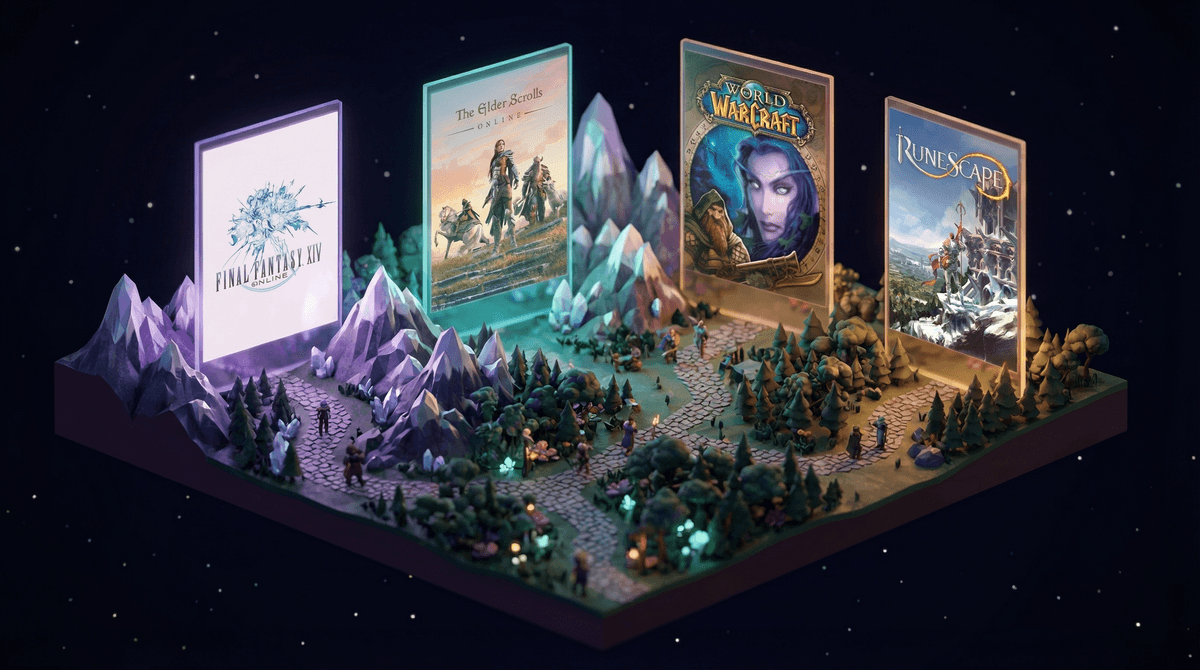
MMO stands for "Massively Multiplayer Online" game, and if your kid is asking to play one, buckle up — because this isn't just downloading another game. MMOs are persistent online worlds where thousands (sometimes millions) of players exist in the same virtual space at the same time. Think of it like a theme park that never closes, where your kid has an avatar, a reputation, and possibly a guild of internet friends who are counting on them to show up for a dragon raid at 8pm on a Tuesday.
The big names you've probably heard of: World of Warcraft (WoW), Final Fantasy XIV (FFXIV), RuneScape, and Elder Scrolls Online. These aren't like Minecraft or Roblox where kids can hop in and out casually. MMOs are designed to keep players engaged through social bonds, progression systems, and content that literally requires coordinating with other humans in real-time.
Here's the thing: MMOs can be genuinely incredible experiences. They offer:
Social connection that feels real. Your kid isn't just playing with people — they're forming actual friendships, joining communities (guilds/clans), and developing social skills like leadership, conflict resolution, and teamwork. Some of the most meaningful online friendships form in MMOs because you're working toward shared goals over months or years.
A sense of achievement and progression. MMOs are masterclasses in dopamine delivery. Every quest completed, every level gained, every rare item earned feels like tangible progress. For kids who struggle with motivation in school or other areas, this can be incredibly satisfying (and yes, sometimes problematic — we'll get there).
Complex problem-solving. High-level MMO content requires strategy, coordination, and quick thinking. Raid bosses in FFXIV or WoW aren't just "hit the thing until it dies" — they're intricate puzzles requiring 8-24 players to execute perfectly choreographed mechanics. It's honestly impressive to watch.
Escapism and identity exploration. MMOs let kids try on different identities, roles, and personalities in a relatively safe space. Your shy kid might become a confident guild leader. Your anxious kid might find calm in the predictable structure of daily quests.
Let's not sugarcoat it: MMOs are designed to be habit-forming, and they come with unique challenges that other games don't have.
Time commitment is REAL. This isn't a 20-minute Fortnite match. MMO content — especially group activities — can require 2-4 hour blocks of uninterrupted time. And because you're playing with real people who are depending on you, there's social pressure to stay online. "I can't leave, Mom, my guild is counting on me!" is not manipulation — it's often true. Learn more about how MMO time commitment differs from other games .
.
Subscription costs and microtransactions. Most MMOs require a monthly subscription ($12-15/month), plus the cost of expansions ($40-60 every 1-2 years). And that's before cosmetic items, character boosts, or other in-game purchases. A "free" MMO like RuneScape or Guild Wars 2 still has premium memberships and cash shops. Budget accordingly.
The social dynamics are complex. Your kid isn't just playing a game — they're navigating a social ecosystem with drama, politics, and sometimes toxic behavior. Guild leadership conflicts, loot distribution arguments, and social exclusion happen. On the flip side, they might also find mentors, lifelong friends, and genuine community support.
Exposure to strangers and chat. MMOs have robust chat systems (text and often voice), and your kid will be interacting with adults and teens from around the world. Most MMO communities are actually pretty positive, but there's always risk of inappropriate content, grooming attempts, or just garden-variety internet toxicity.
The "just one more quest" trap. MMOs use every psychological trick in the book: daily login rewards, limited-time events, FOMO-inducing content, and progression systems that always dangle the next carrot. It's not your kid lacking willpower — it's billion-dollar game design working exactly as intended.
Ages 8-11: Honestly? Most traditional MMOs aren't great for this age group. The time commitment, social complexity, and reading requirements are typically too much. If your kid is interested in the MMO concept, consider stepping stones like Animal Crossing: New Horizons (social, persistent world, but single-player) or Roblox MMO-style games (shorter sessions, more age-appropriate). Check out alternatives to traditional MMOs for younger kids.
Ages 12-14: This is when MMOs start becoming feasible, but with heavy parental involvement. Consider games like FFXIV (which has a notably positive, welcoming community) or Guild Wars 2 over WoW (which can be more toxic). Set strict time limits, require them to play in shared spaces, and have regular check-ins about who they're playing with. Consider playing together — seriously, parent-kid MMO time can be amazing bonding.
Ages 15+: Teens can handle the complexity and social dynamics better, but time management becomes the bigger concern. This is where you're negotiating around homework, sleep, and other responsibilities. The key is helping them recognize when the game is serving them vs. when they're serving the game.
Start with a trial period. Most MMOs offer free trials (FFXIV has a generous free trial up to level 60, which is dozens of hours of content). Use this to assess whether your kid can handle the time commitment and social aspects before committing to a subscription.
Set boundaries BEFORE they start playing. Decide together: How many hours per week? Which days? What happens if grades slip or other responsibilities are neglected? When they join a guild, what time commitments are acceptable? Having these conversations upfront prevents the "but you never said I couldn't!" arguments later.
Understand the guild/clan dynamics. If your kid joins a guild, ask about it like you'd ask about any friend group: Who's in it? What do they do together? How old are the other members? Most guilds have Discord servers — consider asking to see it (while respecting their privacy and autonomy).
Watch for warning signs. Is your kid losing sleep for raids? Skipping meals? Becoming irritable when they can't play? Losing interest in other activities? These are red flags that the game is becoming problematic. Learn more about gaming addiction warning signs.
The community matters more than the game. FFXIV has a reputation for being welcoming and positive. WoW's community can be more hardcore and sometimes toxic (though it varies by server and guild). RuneScape's Old School community skews older and more nostalgic. Research the specific game's culture.
Consider playing together. I'm serious about this. If you have the time and interest, playing an MMO with your kid gives you insight into their social world, creates shared experiences, and lets you model healthy gaming habits. Plus, some of these games are legitimately great.
MMOs aren't inherently good or bad — they're powerful social platforms disguised as games. They can teach leadership, teamwork, persistence, and problem-solving. They can also consume unhealthy amounts of time, money, and mental energy.
The question isn't "should my kid play MMOs?" — it's "can my kid (and our family) handle the unique demands of MMOs right now?" That requires honest assessment of your kid's self-regulation skills, your family's time and financial resources, and your ability to stay involved and set boundaries.
If you decide to move forward, start small, stay involved, and keep communication open. And hey, if you find yourself getting hooked on FFXIV while "supervising" your kid's playtime? Welcome to the club. Those cat people (Miqo'te) are adorable, and the story is genuinely good.