

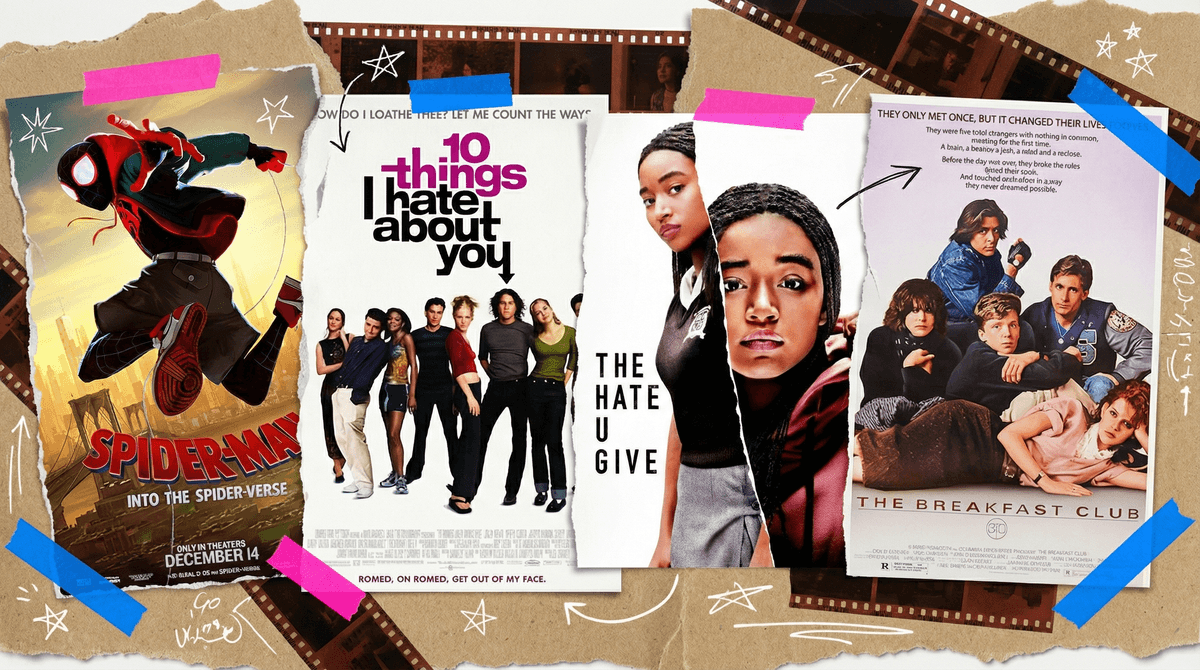
Let's be honest: the term "teen movie" can mean anything from deeply moving coming-of-age films to absolute garbage that makes you question humanity. We're talking about a genre that includes both The Breakfast Club and After We Collided. The range is... vast.
So what makes a teen movie "good"? For our purposes, we're looking for films that:
- Actually respect teenage intelligence and emotional complexity
- Deal with real issues without being preachy or cringe
- Entertain without rotting brains
- Give you something to talk about afterward (the real test)
This isn't about finding "educational" movies your teen will hate-watch while scrolling TikTok. It's about films that are genuinely worth their time—and maybe yours too.
Here's the thing: movies are one of the few pieces of media teens will still sometimes watch with you. They won't tell you about their day, they're definitely not explaining their BeReal strategy, but they might sit on the couch for a two-hour movie.
Good teen movies do a few things that matter:
- They normalize talking about hard stuff (mental health, identity, relationships, failure)
- They show different perspectives and life experiences
- They're a shared cultural language—your teen's friends are watching these too
- They're honestly better conversation starters than "how was school?"
Plus, let's be real: the alternative is them watching whatever YouTube algorithm nightmare or poorly written Netflix series with storylines that make Riverdale look coherent.
Some movies just work, even decades later:
The Breakfast Club (Ages 13+) — Yes, it's from 1985. Yes, some parts are dated. But the core idea—that people are more complex than their labels—still resonates. Plus, it's genuinely funny and gives you a window into how teen social hierarchies have (and haven't) changed.
10 Things I Hate About You (Ages 13+) — Peak late-90s teen rom-com that's actually smart. It's based on Shakespeare's Taming of the Shrew, has genuinely good dialogue, and Heath Ledger singing on the bleachers is still iconic.
Ferris Bueller's Day Off (Ages 11+) — Pure fun. Sometimes teens just need to watch someone break rules in harmless, creative ways. The whole "life moves pretty fast" speech? Still hits.
Clueless (Ages 12+) — Another Shakespeare adaptation (Emma this time), but make it 90s Beverly Hills. It's dated in the best way—fun to watch teens discover fashion and slang from another era.
The Edge of Seventeen (Ages 14+) — This is the gold standard for modern teen movies. Nadine is awkward, says the wrong things, makes bad decisions, and is completely relatable. It deals with depression, family dynamics, and friendship breakups without being after-school-special about it.
Eighth Grade (Ages 13+) — Bo Burnham somehow captured what it's like to be 13 in the age of social media with painful accuracy. Warning: it's uncomfortable to watch (in a good way). The anxiety is real, the cringe is real, and it's probably the most honest depiction of that age you'll find.
Spider-Man: Into the Spider-Verse (Ages 10+) — Yes, it's a superhero movie, but it's also a brilliant coming-of-age story about finding your own path and dealing with expectations. Plus it's visually stunning and actually funny.
The Hate U Give (Ages 14+) — Based on Angie Thomas's book, this film tackles police violence, code-switching, and activism without simplifying anything. It's heavy but important, and it treats teens like they can handle complex issues (because they can).
Booksmart (Ages 15+) — Two academic overachievers realize they missed out on fun and try to cram four years of parties into one night. It's hilarious, the friendship feels real, and it flips a lot of teen movie tropes on their head.
Teen rom-coms get a bad rap (often deservedly), but some are genuinely good:
To All the Boys I've Loved Before (Ages 12+) — The Netflix trilogy that proved teen rom-coms could be sweet without being stupid. Lara Jean is likable, the family dynamics are actually healthy (what a concept), and it doesn't rely on mean-girl tropes.
Love, Simon (Ages 13+) — A coming-out story that's also just a really solid teen movie. It normalizes LGBTQ+ storylines without making them trauma porn, and Simon is a regular kid dealing with regular stuff (plus the whole closet thing).
Not everything deserves your time:
The After series — Just no. Toxic relationships packaged as romance. If your teen is into these, that's actually a conversation worth having .
.
Most Netflix teen originals — The Kissing Booth, Tall Girl, etc. They're not harmful, just aggressively mediocre. Fine for background noise, but you can do better.
Sierra Burgess Is a Loser — Catfishing as a rom-com plot? Hard pass.
Ages 11-13: Stick with PG-13 films that deal with friendship, school dynamics, and identity. Ferris Bueller, Spider-Verse, and To All the Boys work well here.
Ages 14-15: They can handle more mature themes—mental health, sexuality, social issues. Eighth Grade, The Edge of Seventeen, and Love, Simon are perfect.
Ages 16+: Pretty much everything on this list is fair game. They can handle R-rated content if it's substantive (though you might want to watch together first).
The real guidance: Know your kid. Some 13-year-olds can handle The Hate U Give, others aren't ready at 15. You know what they can process.
Co-watching is the goal, not the requirement. Some teens will watch with you, others won't. Both are fine.
Ask open-ended questions afterward:
- "What did you think of how they handled [situation]?"
- "Did any of that feel familiar?"
- "Would you have done anything differently?"
Don't force the conversation. Sometimes just watching together is enough. They're processing even if they're not talking.
Let them pick sometimes. They might choose something you think is terrible. Watch it anyway (or at least try). Understanding what they're drawn to tells you something.
Good teen movies aren't just entertainment—they're a way into your teen's world and a mirror for their experiences. They normalize conversations about stuff that's hard to bring up directly and show different ways of being a teenager.
The best part? Unlike most of their screen time, movies have a beginning, middle, and end. They're contained, shareable experiences in a digital landscape that's usually fragmented and isolating.
So yeah, suggesting movie night might get an eye roll. But it might also get a "sure" followed by two hours where you're both engaged with the same story. In the world of teen parenting, that's actually a win.
Start with one: Pick a movie from this list that matches your teen's interests and suggest it casually. Don't make it a big thing.
Build a list together: Ask your teen which movies their friends are talking about. Add them to a shared watchlist (most streaming services have this feature).
Check ratings first: Common Sense Media has detailed reviews if you want specifics on language, sexual content, or violence before committing.
Make it easy: Have snacks, don't insist on deep discussions, and put your phone away (yes, you too). The point is presence, not perfection.
And if they say no? Try again next week. Or next month. Eventually, they'll be in the mood, and you'll be ready with something actually worth watching.