

The Ultimate Guide to Apple TV+ Educational Shows for Kids
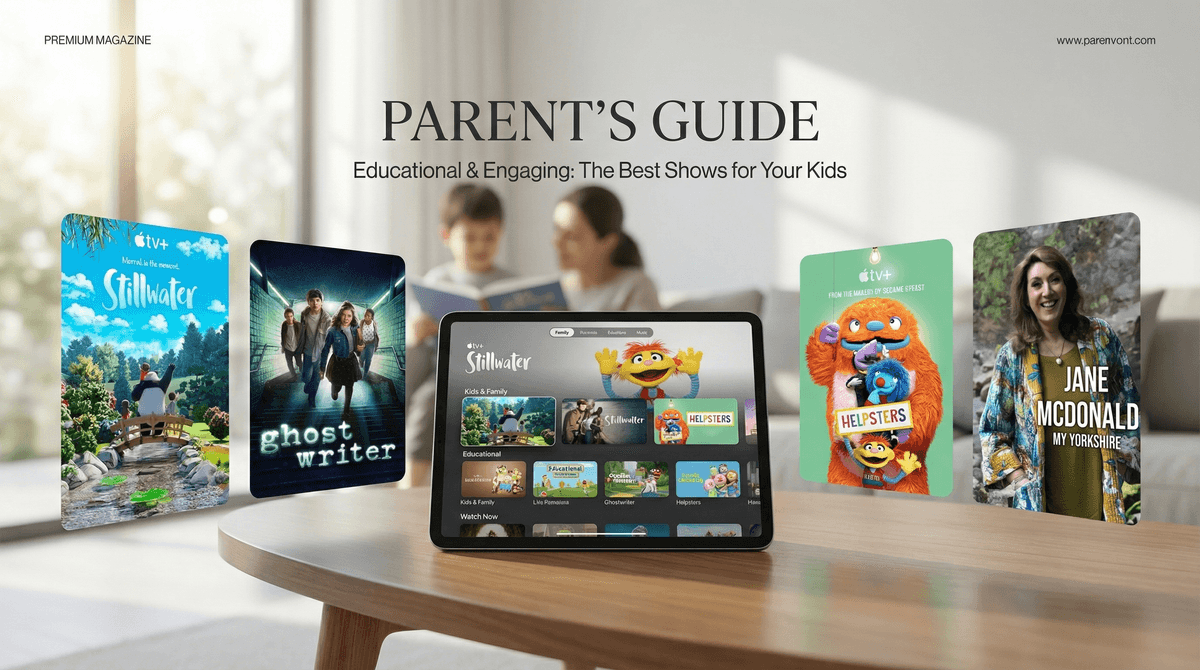
Apple TV+ has quietly become one of the best streaming services for actually educational kids' content. Unlike the algorithm-driven chaos of YouTube or the hit-or-miss nature of Netflix, nearly every kids show on Apple TV+ has genuine learning value. Here are the standouts:
- Ghostwriter (Ages 6-10): Literacy and storytelling
- Helpsters (Ages 3-6): Problem-solving and computational thinking
- Sago Mini Friends (Ages 2-5): Social-emotional learning
- Jane (Ages 4-8): Wildlife conservation and scientific observation
- Doug Unplugs (Ages 4-8): Curiosity and real-world exploration
- Stillwater (Ages 5-10): Mindfulness and emotional regulation
The real question isn't whether Apple TV+ has good educational content—it's whether you're leveraging it properly for your kids' specific learning needs.
Apple TV+ doesn't have the massive library of Disney+ or the endless scroll of Netflix. What it has is curation. Nearly every kids show feels intentionally designed with learning objectives in mind, not just engineered to maximize watch time.
This matters because the average kid ages 8-12 is consuming 4-6 hours of screen time daily, and most of it is low-value content. If your kid is going to watch TV anyway, Apple TV+ gives you a fighting chance at making it count.
For Early Literacy: Ghostwriter
Ages: 6-10
This reboot of the '90s classic follows four kids who discover a ghost that communicates through words and stories. Each episode tackles a literary mystery that requires reading comprehension, vocabulary building, and narrative structure.
What makes it work: Unlike most "educational" shows that awkwardly shoehorn in lessons, Ghostwriter makes literacy the engine of the plot. Kids aren't learning about reading—they're using reading to solve problems. Episodes reference real books and authors, creating natural on-ramps to independent reading.
Parent tip: Keep a notebook nearby. Kids often want to write their own stories after watching, and that impulse is gold. Strike while the iron's hot.
For Computational Thinking: Helpsters
Ages: 3-6
From the Sesame Workshop team, Helpsters follows a group of monsters who solve problems using a step-by-step process. It's essentially coding logic without screens—breaking big problems into smaller steps, testing solutions, and iterating when things don't work.
What makes it work: The show explicitly teaches the problem-solving framework that underlies programming: define the problem, brainstorm solutions, make a plan, test it, adjust. These are the same skills your kid will need for Scratch or Minecraft later.
Parent tip: After an episode, try the "Helpsters method" on a real household problem. "We need to get ready for school faster in the morning—what's our plan?" It sounds corny, but it works.
For Social-Emotional Learning: Sago Mini Friends
Ages: 2-5
Based on the beloved app series, this show follows four animal friends through everyday social situations—sharing toys, managing disappointment, navigating friendships.
What makes it work: The pacing is slow. Like, actually appropriate for toddler attention spans and emotional processing. Each episode gives kids time to observe emotions, predict outcomes, and see characters work through feelings in real time. It's the anti-Cocomelon.
Parent tip: This is one of the few shows where co-viewing genuinely adds value for young kids. Pause and ask "How do you think Harvey feels right now?" or "What would you do?" It turns passive watching into active emotional learning.
For Scientific Thinking: Jane
Ages: 4-8
Inspired by Jane Goodall, this show follows a girl and her chimpanzee friend as they observe wildlife and solve problems using scientific methods.
What makes it work: Jane models actual scientific observation—making hypotheses, gathering evidence, adjusting theories. The show treats kids like capable thinkers, not passive recipients of facts. Plus, the wildlife animation is genuinely beautiful, which matters more than we admit for holding attention.
Parent tip: Pair this with backyard nature observation. Seriously, just sit outside for 15 minutes and watch birds or bugs together. Jane makes kids want to do this, so capitalize on it.
For Curiosity About the Real World: Doug Unplugs
Ages: 4-8
Doug is a young robot who "unplugs" from his digital world to explore the real world with his human friend Emma. Each episode tackles a question about how things work or why humans do what they do.
What makes it work: The meta-commentary is perfect for our moment. Doug literally has to step away from screens to learn about the real world. The show gently advocates for curiosity-driven exploration over algorithm-fed information.
Parent tip: Use Doug as a conversation starter about screen time balance. "Doug unplugs to learn new things—what could we learn if we unplugged for an hour?"
For Mindfulness and Emotional Regulation: Stillwater
Ages: 5-10
Based on Jon J. Muth's Zen-inspired books, Stillwater follows a wise panda who helps neighborhood kids navigate frustration, disappointment, jealousy, and other big feelings through gentle storytelling and mindfulness.
What makes it work: This show is calm. No frenetic pacing, no manufactured drama, no cheap emotional manipulation. Stillwater teaches actual mindfulness techniques—breathing exercises, perspective-taking, sitting with uncomfortable feelings—in ways kids can understand and practice.
Parent tip: This is the show to turn on when your kid is already dysregulated or anxious. The pacing itself is regulating. Also, read the original Stillwater books—they're even better.
Ages: 4-10
Classic Peanuts content with no dialogue—which means kids practice visual literacy and inference. Plus, it's genuinely funny without being mean-spirited, which is rarer than it should be.
Ages: 3-6
A little tractor who helps his farm friends solve problems. Sweet, gentle, and teaches persistence and creative problem-solving without hitting you over the head with it.
Ages: 3-6
From the same team as Daniel Tiger, this show tackles social-emotional skills with the same explicit, song-based approach that makes Daniel Tiger so effective for young kids.
Ages 2-4: Stick with Sago Mini Friends, Get Rolling With Otis, and Pretzel and the Puppies. These shows have the slow pacing and emotional clarity that toddlers need.
Ages 4-6: Add Helpsters, Doug Unplugs, and Jane. These introduce more complex problem-solving and scientific thinking.
Ages 6-10: Ghostwriter and Stillwater hit the sweet spot for early elementary. They respect kids' intelligence and tackle genuinely complex emotional and cognitive challenges.
Ages 8+: Honestly, most kids this age will find the Apple TV+ kids lineup too young. This is where you transition to documentaries and nature content or age-appropriate narrative shows.
The good news: Apple TV+ has virtually no ads, no algorithm-driven autoplay chaos, and no comment sections or social features. It's a genuinely safer streaming environment than YouTube or even YouTube Kids.
The reality check: "Educational" doesn't mean your kid will suddenly love learning or stop asking for Roblox time. These shows are higher quality than most kids' content, but they're still passive screen time. The learning happens when you extend the show's concepts into real life—conversations, activities, books.
The practical tip: Use Apple TV+ as your default streaming option for young kids. When they ask for screen time, these shows should be the path of least resistance. Save Disney+ and Netflix for family movie night or special occasions.
Here's what separates educational TV from just TV with educational branding:
1. Co-viewing matters for young kids (under 6). Ask questions, pause to discuss, connect concepts to their life. A 4-year-old watching Helpsters alone gets entertainment. A 4-year-old watching with a parent who says "Hey, that's like when we made a plan for your birthday party!" gets learning.
2. Follow their interests. If your kid loves Jane, get them books about animals, visit a zoo, watch nature documentaries. The show is the spark, not the destination.
3. Set it and forget it isn't the goal. The Apple TV+ model is better than YouTube's dopamine slot machine, but it's still designed to keep kids watching. Set time limits, use it intentionally, and don't let "educational" become an excuse for unlimited screen time.
Apple TV+ won't solve your screen time struggles or magically make your kid love reading. But if your family uses streaming services—and let's be real, most do—Apple TV+ gives you the highest concentration of genuinely worthwhile kids' content available right now.
The shows are well-made, thoughtfully designed, and respect kids' intelligence. They're not perfect, and they're not a substitute for play, books, or real-world exploration. But they're a hell of a lot better than the algorithmic chaos dominating most kids' screens.
Next steps:
- Start with one show that matches your kid's age and interests
- Watch the first episode together and gauge their engagement
- If they're into it, set up a routine: "After dinner, we can watch one episode of Ghostwriter"
- Use the show as a jumping-off point for related activities, books, or conversations
- Learn more about balancing educational and entertainment screen time

And if your kid still prefers Minecraft or Bluey? That's fine too. Not every minute needs to be optimized for learning. Sometimes a panda teaching mindfulness is exactly what everyone needs, and sometimes it's not. You know your kid.