

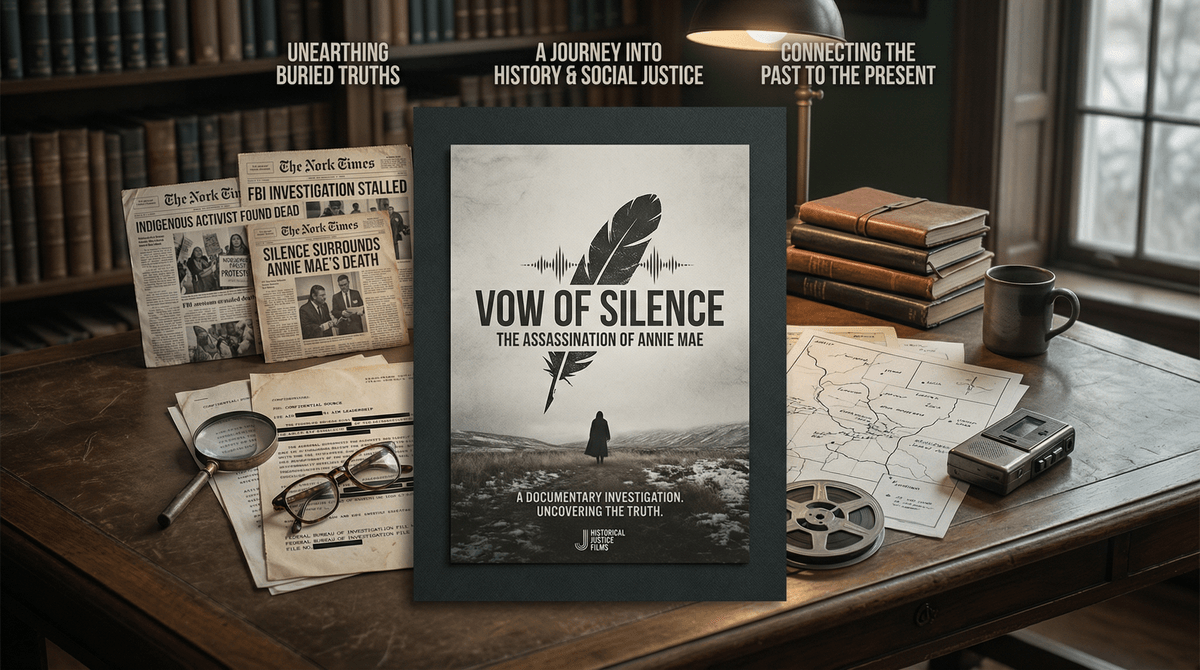
Vow of Silence: The Assassination of Annie Mae
TL;DR: This 2024 documentary investigates the 1975 murder of Indigenous activist Annie Mae Aquash during the American Indian Movement era. It's a serious, mature true-crime documentary best suited for ages 16+ who can handle discussions of political violence, systemic injustice, and the complexities of activism. Not appropriate for younger teens due to the heavy subject matter and graphic discussion of murder.
Vow of Silence examines one of the most controversial unsolved cases in Indigenous activism history: the 1975 murder of Annie Mae Aquash, a Mi'kmaq woman who was a prominent member of the American Indian Movement (AIM). The documentary explores the FBI's COINTELPRO operations, internal movement conflicts, and the decades-long quest for justice.
This isn't your typical true-crime entertainment. It's a deeply political documentary that interrogates government surveillance, Indigenous sovereignty, and what happens when revolutionary movements are infiltrated and torn apart from within.
Indigenous activism is having a cultural moment with younger generations—from Land Back movements to #NativeTwitter to increased visibility of Indigenous creators on TikTok. Your teen might be encountering references to AIM, Wounded Knee, or Indigenous resistance movements in their social studies classes or online spaces.
This documentary provides crucial historical context that's often missing from mainstream education. It's also a masterclass in media literacy: how to examine conspiracy theories versus actual conspiracies, how government agencies have historically targeted activists of color, and how movements navigate internal conflict.
This documentary includes:
- Discussion of murder and political assassination (not graphic footage, but detailed descriptions)
- FBI surveillance and COINTELPRO tactics
- Allegations of sexual violence
- Discussions of alcoholism and substance abuse
- Complex accusations within activist communities
- Archival footage of violent confrontations between activists and law enforcement
It does NOT include:
- Graphic crime scene photos or autopsy footage
- Gratuitous violence or exploitation
- Sensationalized true-crime tropes
The filmmakers treat the subject with respect and seriousness. This is investigative journalism, not entertainment.
Ages 16+: The right age for most teens who have demonstrated interest in social justice, history, or activism. They should be mature enough to:
- Understand political complexity and moral ambiguity
- Process discussions of violence without sensationalizing it
- Engage with the idea that movements can be both righteous AND flawed
- Recognize the difference between conspiracy theories and documented government operations
Ages 13-15: Only with significant parental involvement and discussion. The subject matter is heavy, and younger teens may struggle with the moral complexity—the documentary doesn't offer easy answers about who to trust or what really happened.
Ages 12 and under: Not appropriate. The political complexity and violence are too mature.
If your teen is:
- Taking ethnic studies or US history classes covering the 1960s-70s
- Interested in Indigenous rights or activism
- Following current social justice movements
- Drawn to investigative journalism or true crime
- Questioning authority and government narratives (in that very teen way)
This documentary meets them where they are. It doesn't talk down to viewers or provide simple answers. It respects the intelligence of its audience while acknowledging that some questions may never be fully answered.
This is absolutely a watch-together documentary, not background viewing while scrolling phones. Here's how to approach it:
Before watching:
- Provide context about the American Indian Movement and the 1970s political climate
- Explain COINTELPRO and the FBI's documented history of infiltrating activist groups
- Discuss the difference between documented government operations and unfounded conspiracy theories
During watching:
- Pause to check understanding of complex political dynamics
- Discuss the reliability of different sources and witnesses
- Note how the filmmakers present conflicting narratives
After watching:
- Process the emotional weight together
- Discuss what justice looks like when it's delayed for decades
- Talk about how movements today might learn from this history
- Explore documentaries about Indigenous history for more context
Unlike the true-crime industrial complex that treats murder as entertainment (looking at you, most of Netflix's true crime content), this documentary centers Indigenous voices and perspectives. It's made by filmmakers who understand that Annie Mae Aquash was a real person with a family, not just a mysterious case to be solved.
The documentary also doesn't shy away from uncomfortable truths: that the FBI targeted Indigenous activists, AND that AIM had serious internal problems. It holds both truths simultaneously, which is sophisticated storytelling.
This documentary offers legitimate educational content about:
- Indigenous sovereignty movements and their ongoing relevance
- How government agencies have historically suppressed dissent
- The complexity of activist movements and community organizing
- Media literacy and evaluating conflicting narratives
- The long-term impacts of political violence on communities
If your teen is interested in journalism, law, political science, or Indigenous studies, this is valuable viewing that goes beyond what most high school curricula cover.
After watching, try these discussion questions:
- "What surprised you most about how the FBI operated during this period?"
- "How do you think this history connects to current Indigenous activism?"
- "What did you think about how the documentary presented conflicting accounts?"
- "How would you define justice in a case like this?"
- "What responsibility do movements have to their members?"
If this documentary resonates, check out:
- Rez Ball - A more accessible (and fictional) entry point for younger teens interested in contemporary Indigenous life
- Reservation Dogs - Excellent dramedy that deals with Indigenous identity and community
- Podcasts about Indigenous history for ongoing learning
Vow of Silence is serious, mature content that treats its subject with respect. It's not appropriate for younger kids, but for older teens who are ready to engage with complex political history and moral ambiguity, it's valuable viewing.
This isn't passive entertainment—it's the kind of documentary that demands engagement and discussion. If your teen is ready for that level of engagement, it's worth watching together.
The documentary doesn't provide easy answers, which might frustrate some viewers. But that's also its strength: it models how to sit with uncertainty while still demanding accountability and justice.
Watch it if: Your teen is mature enough for serious political content and you're ready to have substantive conversations about activism, justice, and Indigenous history.
Skip it if: Your teen isn't ready for discussions of political violence or if you're looking for lighter true-crime content.
- Check your streaming service's parental controls to ensure content ratings align with your family's values
- Consider reading books about the American Indian Movement together for additional context
- Follow Indigenous creators and journalists to continue learning beyond this documentary
- Talk to your teen about media literacy
 and evaluating sources in true crime content