

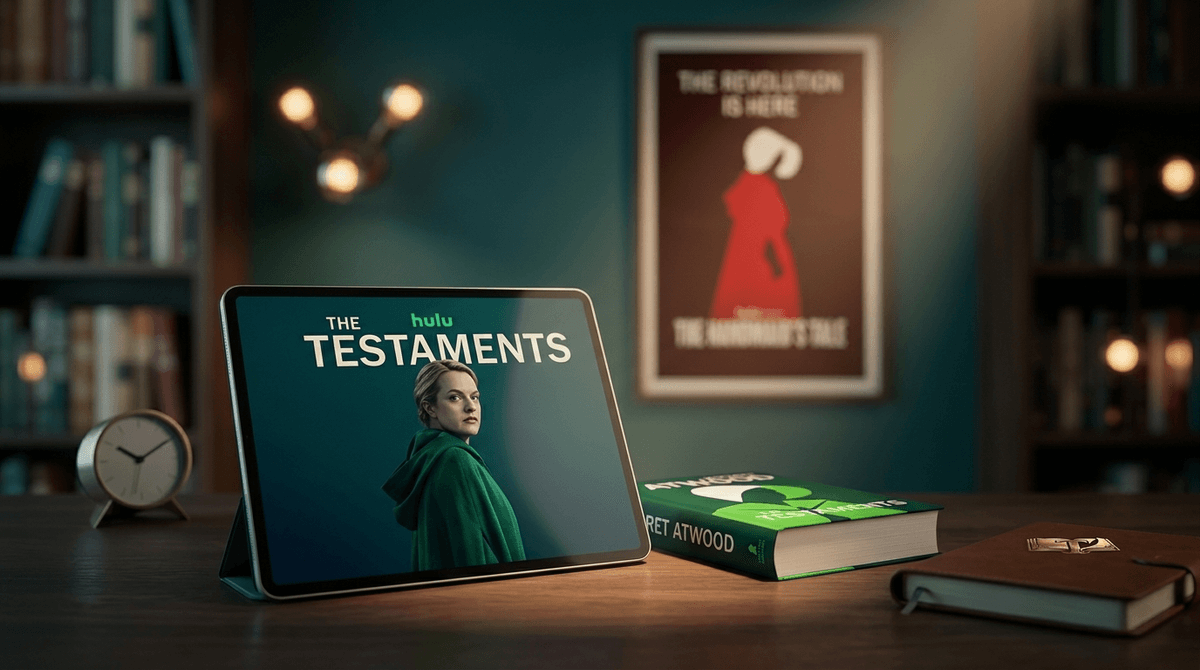
If you’re wondering if The Testaments on Hulu is the "teen-friendly" version of The Handmaid’s Tale just because it features younger protagonists, the short answer is a hard no—it’s still Gilead, it’s still brutal, and while it’s a masterclass in storytelling, it’s definitely not for your middle schooler.
TL;DR: The Testaments is a high-stakes, TV-MA sequel to The Handmaid’s Tale that follows two young women on opposite sides of the Gilead border and the complicated Aunt Lydia. While it leans into coming-of-age themes of identity and resistance, Screenwise rates it for ages 16+ due to graphic violence, psychological trauma, and mature themes of systemic abuse. For younger teens interested in dystopian resistance, consider The Hunger Games or The Giver instead.
Set about fifteen years after the final events of The Handmaid’s Tale, this series is based on Margaret Atwood’s 2019 novel. It shifts the perspective away from June Osborne and onto three different women: Agnes, a young woman raised within the elite "Commander" circles of Gilead; Daisy (later revealed as Nicole), a teenager in Canada who discovers her entire life has been a lie; and the infamous Aunt Lydia, who is playing a much longer, more dangerous game than anyone realized.
Unlike the original series, which often felt like a relentless descent into despair, The Testaments is structured more like a thriller. It’s about the cracks in the foundation of a regime and the explosive moment when those cracks finally give way.
If your high schooler is hovering around the remote when this is on, it’s likely because of the "YA crossover" appeal. Because two of the three leads are young women navigating their own identities, the marketing and the buzz often feel more aligned with shows like Yellowjackets or even The Hunger Games.
There is also the "prestige TV" factor. In 2026, we’re seeing a massive trend of "literary TV"—teens who loved the book in English class or saw it trending on TikTok are naturally going to want to see how Hulu handles the adaptation. It’s "smart" TV, and for a generation that is increasingly politically active, the themes of resisting an oppressive government are incredibly relevant.
Let’s be real: Hulu didn’t water this down for a younger audience. If you’re familiar with the original show, you know the vibe. The Testaments maintains that same level of intensity, though the type of trauma shifts slightly.
Violence and Gore
Gilead is a place that uses fear as a tool. You can expect scenes of public executions, physical "discipline" of the girls in the Supplicant program, and the visceral reality of a crumbling state. It’s not "slasher" violence, but it is heavy, lingering, and designed to make the viewer feel uncomfortable.
Sexual Themes and Systemic Abuse
While the show moves away from the specific "Ceremony" scenes that defined the early seasons of The Handmaid's Tale, the threat of forced marriage and the commodification of women’s bodies are the central plot drivers. For Agnes, the "coming of age" process in Gilead is essentially a countdown to being handed over to a Commander. It’s a heavy topic that requires a high level of emotional maturity to process.
Psychological Indoctrination
This is perhaps the most fascinating—and disturbing—part of the show. We see how Gilead brainwashes its youth. Watching Agnes struggle to reconcile what she’s been taught about "piety" with the corruption she sees around her is powerful, but it can be triggering for anyone who has experienced religious trauma or high-control environments.
If your older teen is watching, this is a prime opportunity for some deep-dive conversations. Screenwise is all about using media as a bridge rather than a barrier.
- The Power of Information: Daisy/Nicole grows up in Canada with access to the internet and a free press, while Agnes is forbidden from even learning to read. Talk about how the control of information is the first step in any "brain rot" or propaganda-filled society.
- Moral Ambiguity: Aunt Lydia is a villain, but in The Testaments, she’s also a protagonist. Ask your teen: "Does doing bad things for a 'good' end goal make you a hero or just a different kind of villain?"
- Performative Compliance: A lot of the characters in Gilead are just "playing the part" to survive. This is a great parallel to digital life—how much of what we post online is "performative" versus who we actually are?
If your kid is 12-14 and dying for a "resistance" story but isn't ready for the grimness of Gilead, there are plenty of options that hit those same notes without the TV-MA trauma.
- The Hunger Games: The Ballad of Songbirds and Snakes: Still intense, but firmly in the YA lane. It deals with the origins of a dictator in a way that is accessible.
- Uglies: The Netflix adaptation of the classic Scott Westerfeld book is a great entry point for younger teens to think about societal beauty standards and government control.
- Shadow and Bone: For a fantasy spin on "young people fighting a corrupt system," this is a winner.
Check out our guide on the best dystopian stories for middle schoolers
Q: Is The Testaments as graphic as The Handmaid's Tale?
It is slightly less focused on sexual violence than the early seasons of the original show, but it remains very graphic in terms of psychological abuse and physical violence. It maintains a TV-MA rating and is intended for adult audiences.
Q: Do you need to watch The Handmaid's Tale before watching The Testaments?
While the show is designed to stand on its own, having the context of the original series (or the book) makes the stakes much clearer. Screenwise recommends at least reading a summary of the original series so the world-building makes sense.
Q: What age is The Testaments appropriate for?
Screenwise recommends The Testaments for ages 16 and up. The themes of systemic oppression, forced marriage, and state-sanctioned violence require a level of maturity that most younger teens haven't developed yet.
Q: Is the book better for teens than the show?
Often, yes. Margaret Atwood’s The Testaments book is classified as adult fiction but is frequently read by older teens. The "violence" on the page is often easier to process than the visceral, high-budget imagery of the Hulu series.
The Testaments is brilliant, but it’s a heavy lift. It’s the kind of show that stays with you long after the credits roll—which is exactly why it’s great for older teens who are ready for it, and potentially damaging for younger kids who aren't.
If you decide to let your 15 or 16-year-old watch, maybe watch the first couple of episodes with them. Not to "monitor" them, but to be the person they can turn to when the show inevitably asks some really hard questions about the world we live in.
Learn more about navigating mature themes in streaming media