

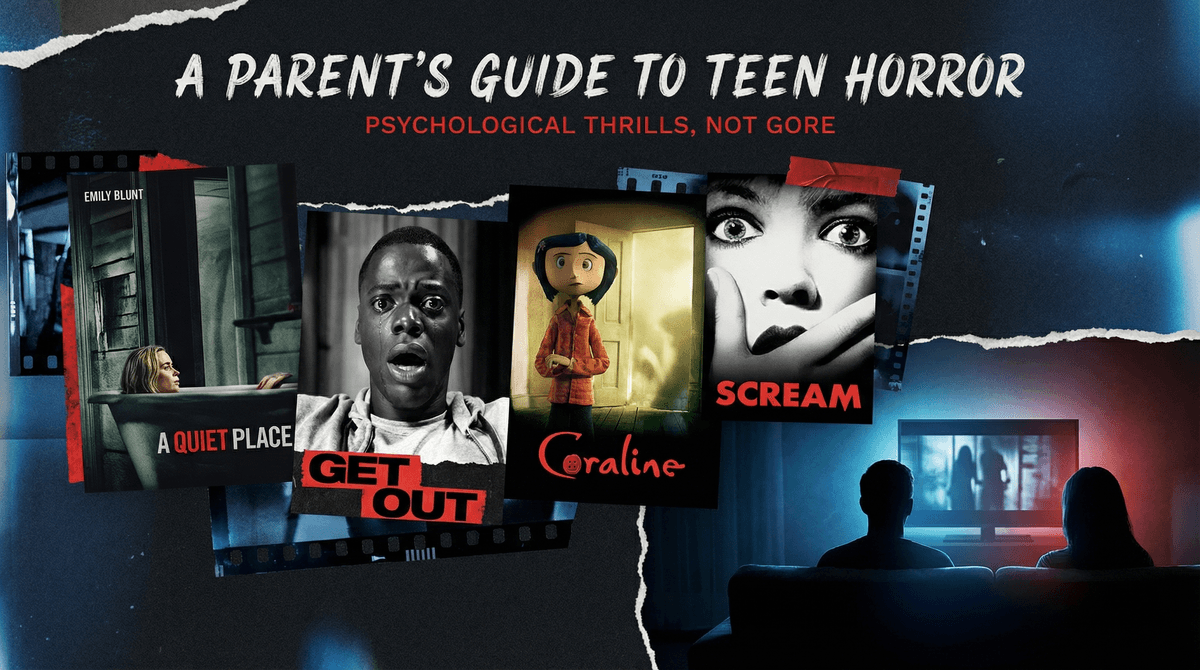
The Scariest Horror Movies Teens Can Actually Handle
TL;DR: Horror movies hit differently for teens—they're testing boundaries, processing real anxieties, and honestly, bonding over shared terror. Here's what's genuinely scary but age-appropriate: A Quiet Place (13+), Get Out (15+), The Sixth Sense (13+), and Happy Death Day (14+). Skip the torture porn, embrace the psychological thrillers, and remember: what scares a 13-year-old is wildly different from what disturbs a 17-year-old.
Let's be real: teens are actively seeking out horror content. It's not rebellion—it's developmental. They're practicing emotional regulation in a safe environment, exploring mortality and danger from the couch, and yeah, proving they can handle it. The group watch of a scary movie has replaced campfire ghost stories as a social bonding ritual.
The difference between 2025 and when we were kids? They're seeing horror content everywhere—TikTok edits of the scariest scenes, YouTube deep dives into horror lore, friends discussing Five Nights at Freddy's theories at lunch. Pretending they're not consuming this genre is like pretending they don't know what Snapchat is.
Here's the framework that actually matters:
Psychological over gore. Jump scares and suspense? Fine. Lingering shots of torture and dismemberment? Hard pass until they're older.
Themes they can process. Teens can handle movies about grief (The Others), social commentary (Get Out), even existential dread. What they struggle with: sexual violence, extreme nihilism, and "humans are the real monsters" torture scenarios.
Context matters more than rating. Some PG-13 movies (Insidious) are genuinely terrifying. Some R-rated films earn that rating for language and brief violence but aren't traumatizing. Learn more about how movie ratings actually work .
.
Why it works: Suspense-driven, minimal gore, and honestly—it's about family protection. The horror comes from the threat of violence, not graphic scenes. Plus, it's basically a masterclass in tension-building that even film-averse teens find compelling.
What to know: One intense birth scene (not graphic, but stressful), creature jump scares, and a genuinely sad death. Good conversation starter about sacrifice and family.
Age sweet spot: 13+
Why it works: More sad than scary, honestly. Yes, there are ghosts, but the real story is about a kid dealing with isolation and an adult dealing with failure. The "scary" moments are brief and the film is fundamentally about empathy and connection.
What to know: A few disturbing ghost visuals (the kitchen ghost, the hanging ghosts), but nothing gratuitous. The twist ending makes it worth a rewatch.
Age sweet spot: 13+
Why it works: It's Groundhog Day meets slasher film, but with a PG-13 sensibility. The deaths reset, so there's no lingering on violence. It's actually funny, has a likeable protagonist who grows, and the mystery is engaging.
What to know: Repeated death scenes (stabbing, but not graphic), college party setting with drinking references. The sequel is equally solid.
Age sweet spot: 14+
Why it works: Wait, is this a kids' movie or a horror film? Yes. The button eyes, the Other Mother's transformation, the trapped children—this is genuinely unsettling stop-motion that works for younger teens who aren't ready for live-action horror.
What to know: Rated PG but psychologically creepy. Some kids find it more disturbing than teens do. Great for 13-year-olds who want to dip their toes in.
Age sweet spot: 12-14
Why it works: This is smart horror. Social commentary wrapped in psychological thriller wrapped in body horror. It's scary, but it's also sparking conversations about race, privilege, and autonomy. Teens are analyzing this in film classes for a reason.
What to know: Rated R for violence and language. The "sunken place" concept is disturbing but not graphic. One particularly brutal fight scene near the end. Absolutely worth discussing afterward.
Age sweet spot: 15+
Why it works: Old-school haunted house horror done right. Jump scares, creepy atmosphere, but grounded in (supposedly) real paranormal investigators. The scares are earned, not cheap.
What to know: Rated R, genuinely scary, but no gore. The possessed doll, the clapping game, the witch reveal—these are nightmare fuel, but not traumatizing. Skip the sequels until they're older (they get progressively more intense).
Age sweet spot: 15+
Okay, real talk: This is where we need to pump the brakes. Yes, it's critically acclaimed. Yes, teens are watching it. But this is grief horror with extremely disturbing imagery and a scene involving a teenager that is genuinely traumatic.
The verdict: Wait until 17+ and even then, know your kid. If they've handled everything else on this list fine, maybe. But this isn't a group sleepover movie—it's a "watch with the lights on and process afterward" film.
Why it works: Meta-horror that's both scary and satirical. Teens love the self-awareness, the mystery of "who's the killer," and honestly—it holds up. The rules of horror movies are explicitly discussed, which makes it almost educational.
What to know: Rated R for strong violence and language. The opening scene is intense, but the film is more suspenseful than graphic. Great for teens who appreciate clever writing.
Age sweet spot: 16+
Why it works: Slow-burn, atmospheric, period horror. This is for teens who appreciate mood and dread over jump scares. The horror is existential and religious, not gory.
What to know: Rated R but the rating is more for thematic elements and brief disturbing images than violence. It's slow—teens raised on TikTok might bounce off it. But for patient viewers, it's masterful.
Age sweet spot: 16+
Why it works: High-concept horror with a metaphor teens immediately understand (STI anxiety, loss of innocence). The monster is terrifying because it's slow and inevitable. Gorgeous cinematography, synth score, and genuine dread.
What to know: Rated R for disturbing content and sexuality. The sexual element is integral to the plot but not gratuitous. One particularly disturbing scene with a naked figure. Better for older teens.
Age sweet spot: 16+
The Saw/Hostel franchise: Torture porn isn't horror, it's just misery. There's no psychological payoff, just escalating gore. Hard pass until they're adults and even then, why?
The Human Centipede: If you have to ask, the answer is no. This isn't horror, it's shock value masquerading as cinema.
Midsommar: Ari Aster's follow-up to Hereditary is beautiful, disturbing, and absolutely not for teens. Graphic violence, sexual content, and psychological devastation. Wait until college.
Most 80s slashers: Friday the 13th, A Nightmare on Elm Street—these are cultural touchstones, but they're also dated and more violent than teens need. If they're curious, start with Scream which deconstructs the genre first.
Ages 13-14: Stick with PG-13 supernatural thrillers. They're testing the waters. A Quiet Place, The Sixth Sense, Coraline. Watch together, keep it light afterward.
Ages 15-16: R-rated psychological horror is on the table if they're mature. Get Out, The Conjuring, Happy Death Day. Discuss themes afterward—this is when horror gets interesting.
Ages 17+: Most mainstream horror is fair game. Scream, It Follows, The Witch. Still skip extreme violence and torture porn, but trust they can handle complex themes.
They're probably seeing clips already. TikTok and YouTube are full of horror content. Your 14-year-old has likely seen the scariest scenes from films they haven't watched. Learn more about horror content on social media.
Watching together is underrated. You don't have to love horror, but watching with them means you can gauge their reaction in real-time and talk through scary moments. Plus, it's bonding.
Some kids genuinely can't handle it. If your teen is anxious, has nightmares easily, or just doesn't like being scared—don't push it. Horror isn't a developmental milestone. There are teens who've never seen a scary movie and they're fine.
The "based on a true story" thing is marketing. The Conjuring, The Amityville Horror—these are inspired by claims that are widely disputed. Don't let that angle make it scarier than it needs to be.
Before watching: "This is rated R for [specific reasons]. There are [number] scenes that might be intense. We can pause or stop anytime."
During: Don't mock them if they're scared, but also don't make it a bigger deal than it is. Humor helps: "That was so fake" or "The CGI there was rough" can break tension.
After: "What did you think?" is better than "Were you scared?" Some teens want to analyze, some want to joke, some want to immediately watch a comedy. Follow their lead.
If they're rattled: "That got me too" normalizes the reaction. Remind them it's fiction, the actors are fine, and sometimes our brains need time to reset. A funny YouTube video or cozy game can help.
Horror movies aren't corrupting your teen—they're giving them a framework to process fear in a controlled environment. The goal isn't to shield them from all scary content; it's to help them build up to age-appropriate intensity at their own pace.
Start with psychological thrillers, avoid torture porn entirely, and remember that the "right" scary movie is the one that scares them just enough without causing genuine distress. A Quiet Place at 13, Get Out at 15, Scream at 16—this isn't a rigid timeline, it's a starting point.
And if they want to watch Hereditary at 15? That's a "let's wait a year and revisit" conversation, not a hard no forever. You know your kid better than any guide.
Check Common Sense Media ratings before committing to a watch—they break down every potentially scary element by category.
Ask what their friends are watching. You don't have to match peer pressure, but knowing what's circulating helps you stay ahead of requests.
Build a watch list together. Let them pick from pre-approved options. Here's a guide to horror movies by age that breaks down even more titles.
Trust your gut. If a movie feels too intense for your family's values or your teen's temperament, it probably is. There's no award for watching the scariest thing earliest.