

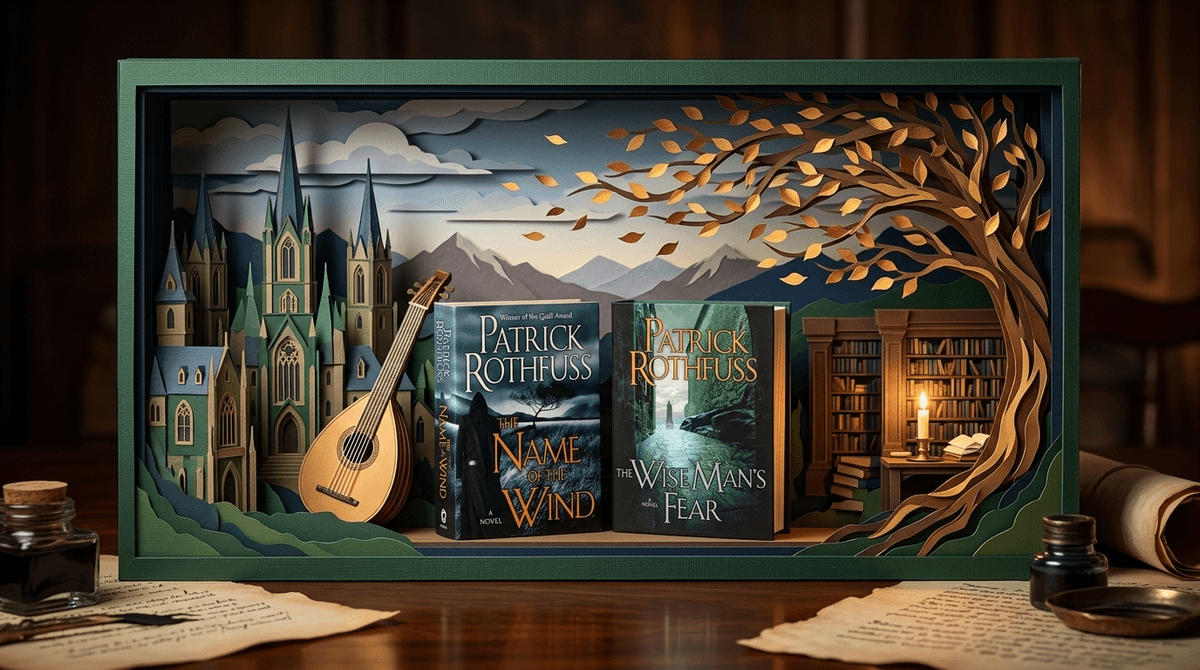
TL;DR: The Name of the Wind is a beautifully written, high-level fantasy novel that serves as the ultimate bridge for teens moving from YA hits like Percy Jackson into serious adult fiction. It’s heavy on atmosphere, trauma, and "hard" magic systems, but relatively light on graphic content compared to something like Game of Thrones. Just be warned: the trilogy isn’t finished, and the wait for book three is a decade-long meme at this point.
If your kid has reached the end of the "Middle Grade" shelf and is looking for something that feels "smarter" or "more real," you’ve probably seen the name Patrick Rothfuss popping up on their bedside table.
The Name of the Wind (The Kingkiller Chronicle, Day One) is often cited as one of the best fantasy novels of the 21st century. But as a parent, "Adult Fantasy" can be a scary label. Does that mean "Adult" as in complex themes and vocabulary, or "Adult" as in I need to have a very awkward conversation about Chapter 15?
Here’s the breakdown of what’s actually inside these pages and whether your teen is ready for the journey of Kvothe.
The story is a "frame narrative." We start with an unremarkable innkeeper named Kote. We quickly find out he’s actually Kvothe—a legendary, world-renowned wizard, musician, and hero who has gone into hiding. A traveling chronicler finds him and convinces him to tell his actual life story.
The book then shifts to Kvothe’s perspective as a young boy. We follow him from his life in a traveling troupe of performers to a horrific tragedy that leaves him a homeless orphan on the streets, and eventually to his hard-fought admission into a prestigious university for magic.
It’s not a fast-paced "quest" book. It’s a "growth" book. It’s about how a smart-aleck kid with more talent than sense survives in a world that is often cruel, unfair, and expensive.
Learn more about the differences between YA and Adult Fantasy
If your teen is into Minecraft or Roblox because they love mastering complex systems, they will likely obsess over the magic in this book.
Rothfuss uses a system called "Sympathy." It’s not "point a wand and say a word" magic. It’s essentially magical physics. It requires energy, belief, and a deep understanding of how things are connected. It feels "real" in a way that Harry Potter magic doesn't.
Beyond the magic, Kvothe is a deeply relatable protagonist for high-achieving or "gifted" kids. He’s incredibly smart, but he’s also arrogant, makes terrible social decisions, and is constantly broke. The struggle to pay tuition at the University is just as tense as the scenes involving monsters.
Recommended Age: 14+
While some precocious 12-year-olds read this, the themes are heavy. This isn't a "fun" adventure. It’s a story about grief, extreme poverty, and the weight of reputation.
The Name of the Wind (Book 1)
The first book is surprisingly "clean" for an adult fantasy novel. There is some swearing and some "fade-to-black" moments or references to sex, but nothing graphic. The violence is the main thing to watch out for—specifically the aftermath of a massacre early in the book which can be quite haunting.
The Wise Man's Fear (Book 2)
If your kid finishes the first one, they will immediately want the second. Heads up for parents: Book two ramps up the "Adult" content significantly. There is a long sequence involving a "sex goddess" (Felurian) where the protagonist essentially learns the "arts of love." It’s stylized and more "mythical" than "trashy," but it’s definitely a jump in maturity from the first book.
- Trauma and Loss: The inciting incident involves the brutal murder of the protagonist’s entire family and community. It’s not gratuitous, but it is emotionally heavy.
- Poverty and Survival: There are chapters where young Kvothe is living on the streets, being beaten by guards, and nearly starving to death. For sensitive kids, this can be more upsetting than the magical monsters.
- Alcohol and Drugs: Being a "university" setting, there is drinking. There is also a fictional drug called "denner resin" that plays a role in the plot, showing the darker side of addiction.
- The "Incomplete" Problem: This is a meta-safety warning. Patrick Rothfuss published book two in 2011. We are still waiting for book three. If your child hates unfinished stories, this will cause them genuine psychological distress for the next decade.
One of the best things about The Name of the Wind is that it respects the reader's intelligence. It’s a great book to read with your teen because there is so much to discuss regarding reputation vs. reality.
Kvothe is an "unreliable narrator." He is telling his own story, and he’s a performer by trade. He likes to make himself look good. This opens up a great door to talk to your kids about how people curate their "stories" on social media like Instagram or TikTok.
Is Kvothe as cool as he says he is? Or is he just a guy who knows how to spin a yarn? It’s a perfect metaphor for the digital age.
If they’ve already read Rothfuss or if you think they aren't quite ready for the "Adult Fantasy" shelf, here are some solid pivots:
Often the "other" big recommendation for this age group. It has a fantastic "hard" magic system based on burning metals and a much faster-moving plot. Plus, Sanderson actually finishes his books (usually ahead of schedule).
If they liked the "school for wizards" and the philosophical side of The Name of the Wind, this is the classic that started it all. It’s shorter, poetic, and deeply profound.
If they haven't gone back to the basics yet, now is the time. It’s the ultimate "comfort food" fantasy after the heavy trauma of the Kingkiller Chronicle.
Check out our guide on the best fantasy books for teens transitioning to adult fiction
If your teen is reading this, try asking these questions over dinner:
- "So, how does the magic system (Sympathy) actually work? Is it like science or just 'poof' magic?"
- "Do you think Kvothe is actually as talented as he says, or is he just lucky?"
- "The University sounds intense—how does it compare to what you think college will be like (minus the dragons)?"
The Name of the Wind is a "prestige" book. It’s the kind of book that turns kids into lifelong readers. It’s not "brain rot." It’s dense, lyrical, and challenging.
As long as your teen is 14+ and can handle some heavy themes of loss and the occasional "adult" situation, this is one of the best gifts you can give a young fantasy fan. Just maybe buy them a stress ball for when they realize the third book might not come out until they’re in their 30s.
- Grab the book: If they’re a physical book fan, the 10th Anniversary Edition has some great illustrations.
- Audiobook it: Nick Podehl’s narration of the The Name of the Wind is legendary. It’s a 28-hour listen, perfect for long road trips.
- Screenwise Survey: If you're wondering how this book fits into your child's overall media diet, take our survey to get a personalized look at your family's digital habits.