

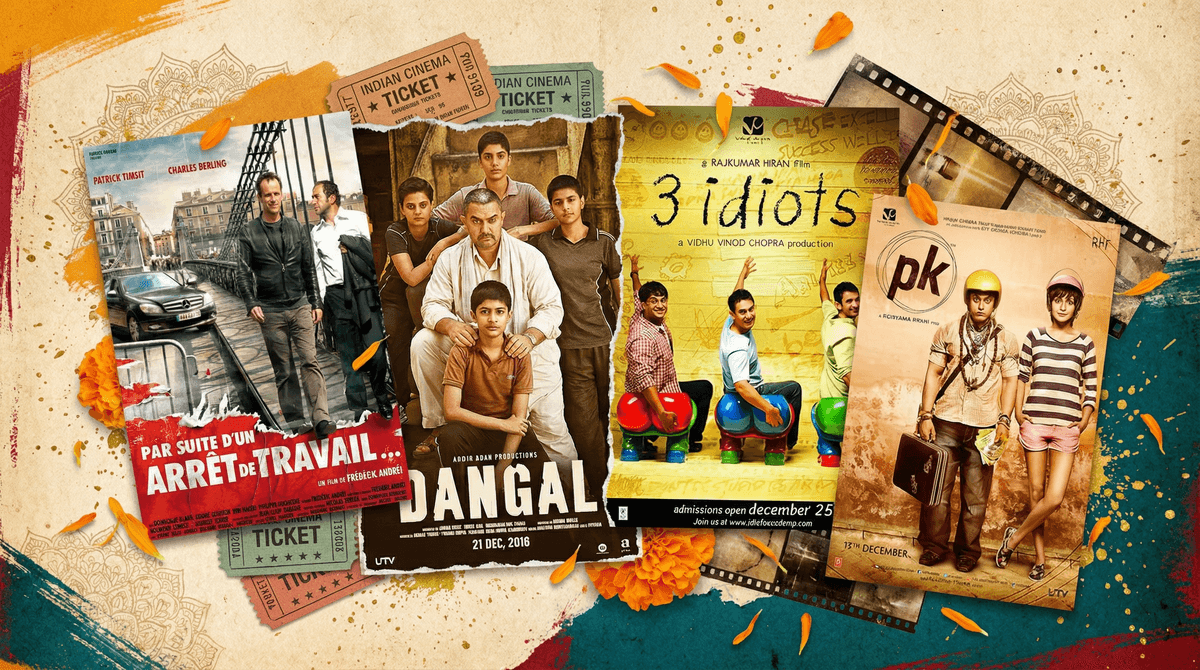
The Must-Watch Bollywood Family Movies for Your Next Movie Night
TL;DR: Bollywood has some genuinely fantastic family films that combine spectacular visuals, infectious music, and stories that'll have your kids asking big questions. Here are the essentials:
- 3 Idiots (Ages 10+) - Education system critique wrapped in comedy gold
- Taare Zameen Par (Ages 8+) - The dyslexia film that makes everyone cry
- Chhichhore (Ages 12+) - College flashbacks meet mental health conversation
- Dangal (Ages 10+) - Father trains daughters to be wrestling champions
- PK (Ages 11+) - Alien questions everything about religion and society
If you've been defaulting to Disney for family movie night, Bollywood offers something refreshingly different: films that don't talk down to kids, stories that celebrate family while questioning tradition, and musical numbers that are actually... good? Plus, three-hour runtimes mean you're getting serious value per viewing session.
Bollywood family films tend to tackle heavier themes than typical American family movies. We're talking academic pressure, learning differences, religious hypocrisy, gender discrimination, mental health, and suicide prevention—all while maintaining that signature Bollywood energy with dance sequences and comedy.
The best ones manage to entertain kids with the spectacle while giving parents material for actual conversations afterward. Not the forced "what did we learn today?" kind, but genuine "wait, that coach was kind of terrible, right?" discussions that happen naturally.
The runtime thing: Yes, most of these clock in at 2.5-3 hours. But they're structured with natural break points (intermission was built into the theatrical experience), so pausing halfway through for snacks or bathroom breaks actually works. Think of it as a two-episode commitment rather than a single movie.
Ages 10+ | 2009 | 2h 50m
This is the gateway drug to Bollywood for most families, and for good reason. Three engineering students navigate an oppressive education system under a tyrannical dean who measures success purely by grades and job placements.
Why it works: The comedy is legitimately funny (the "All is Well" running gag will become a family thing), but underneath it's asking whether our education system actually serves kids or just processes them. One character's storyline deals with parental pressure and suicide in a way that's heavy but important.
The catch: There's a childbirth scene that's played for comedy but is pretty intense, and some bathroom humor that younger kids will find hilarious while you cringe. The suicide subplot is handled thoughtfully but needs context for younger viewers.
Conversation starters: "Do you ever feel like school cares more about grades than learning?" and "What would you do if your parents wanted you to be something you're not?"
Ages 8+ | 2007 | 2h 45m
An 8-year-old boy struggling with undiagnosed dyslexia is labeled lazy and troublesome until an art teacher recognizes what's actually happening. This is Aamir Khan's directorial debut, and he clearly decided to make parents cry.
Why it works: It's the rare film that actually shows what learning differences look like from the kid's perspective—the letters swimming on the page, the constant shame, the feeling of being fundamentally broken. The art teacher character is basically every teacher we wish our kids could have.
The catch: The first half is rough. Watching this kid get yelled at, punished, and sent away to boarding school is genuinely painful. The parents are portrayed as well-meaning but harmful, which might hit close to home. Have tissues ready.
For neurodivergent families: This is essential viewing, but be ready for big feelings. Kids with ADHD, dyslexia, or other learning differences often see themselves in Ishaan, sometimes for the first time.
Ages 10+ | 2016 | 2h 41m
Based on a true story: A former wrestler trains his daughters to become wrestling champions in a culture that expects girls to learn cooking, not combat sports. It's basically a sports movie meets feminist manifesto meets complicated father-daughter relationship study.
Why it works: The wrestling sequences are genuinely exciting, and watching these girls literally fight against gender expectations is powerful. The father character is complex—he's breaking gender barriers but also imposing his dreams on his kids. That nuance makes for good discussion.
The catch: The father is pretty authoritarian (extreme training regimens, cutting his daughter's hair without consent), which the film both celebrates and questions. Younger kids might miss that complexity. Also, it's a sports movie, so if your family finds those boring, this won't convert you.
What makes it special: It doesn't present a simple "girl power" narrative. The daughters struggle with whether they're wrestling for themselves or their father, and that tension feels real.
Ages 12+ | 2019 | 2h 23m
A group of middle-aged friends reunite when one of their children attempts suicide after failing an entrance exam. The film alternates between their present-day crisis and flashbacks to their own college days as lovable losers.
Why it works: It directly confronts the academic pressure cooker that drives kids to suicide, while the college flashbacks provide levity and show that "losers" can have amazing lives. The message—that failure isn't the end—is delivered without being preachy.
The catch: It opens with a suicide attempt, which is intense. The film handles mental health thoughtfully, but you'll want to gauge whether your kids are ready for that conversation. Also, some college-era drinking and mild romance.
For high-achievers: If you've got a kid who spirals over grades or feels like college admissions define their worth, this film offers a different perspective. Just be prepared to talk through the heavy stuff.
Ages 11+ | 2014 | 2h 33m
An alien lands on Earth, gets his return device stolen, and while trying to get it back, starts questioning why humans follow religious rules that don't make sense. It's a religious satire wrapped in a sci-fi comedy.
Why it works: Using an alien's perspective to question religious practices is clever, and the film takes shots at all religions equally. It's about blind faith versus actual spirituality, which is a surprisingly nuanced conversation to have with kids.
The catch: Some families will find the religious criticism offensive. The film is specifically critiquing religious exploitation and superstition, not faith itself, but that distinction matters to your family's beliefs. Also, there's a subplot involving a sex tape that's handled tastefully but exists.
Cultural context: This was hugely controversial in India, with protests and calls for bans. That controversy itself is worth discussing with older kids.
Taare Zameen Par aside, here are a few more that didn't make the main list but are solid options:
-
Zindagi Na Milegi Dobara (Ages 13+) - Three friends on a bachelor trip road trip through Spain, dealing with family expectations and fear. Gorgeous visuals, but more teen-appropriate.
-
Stanley Ka Dabba (Ages 7+) - A fourth-grader who never brings lunch to school. Sweet, short (96 minutes!), and surprisingly moving.
-
Chillar Party (Ages 7+) - Kids band together to save a street dog. Pure fun with a side of class consciousness.
Language: Most of these are in Hindi with English subtitles. Yes, your kids can handle subtitles—it's actually good for literacy. Younger kids might need help keeping up at first, but they adapt quickly.
Content ratings: Indian film ratings don't map directly to American ones. A "U" (Universal) rating in India might still have content you'd expect in a PG or PG-13 film here. Always check Common Sense Media or watch trailers first.
Cultural context: Some jokes, references, or social dynamics might need explanation. That's actually a feature, not a bug—it's a chance to talk about different cultures and perspectives.
Music: The songs aren't just filler—they often advance the plot or express emotions characters can't say directly. Don't skip them (your kids won't want to anyway; these songs are genuinely catchy).
Where to watch: Most are on Netflix, Amazon Prime, or Disney+ Hotstar. Quality varies by region, so check your local streaming options.
Ages 7-9: Start with Stanley Ka Dabba or Chillar Party. They're gentler entry points with kid protagonists and shorter runtimes.
Ages 10-12: 3 Idiots, Taare Zameen Par, and Dangal are perfect. They'll get the humor and be ready for the heavier themes with some guidance.
Ages 13+: Everything's on the table, including Chhichhore and PK. Teens will appreciate the more complex themes and might actually want to discuss them.
Bollywood family films offer something American family movies often don't: they trust kids to handle complexity. They're not afraid to show flawed parents, broken systems, or difficult emotions, all while delivering spectacular entertainment.
The best part? These films give you actual conversation material. Not forced "teachable moments," but natural discussions about education, gender roles, mental health, faith, and what success actually means. Plus, you'll all be singing "All is Well" for weeks.
Start with 3 Idiots or Taare Zameen Par—they're the most universally beloved for good reason. And if your family gets hooked, there's a whole world of Bollywood films worth exploring beyond these five.
Just remember: three-hour runtime means you're committing to the evening. Make popcorn, get comfortable, and embrace the intermission pause. Your family movie night just got an upgrade.