

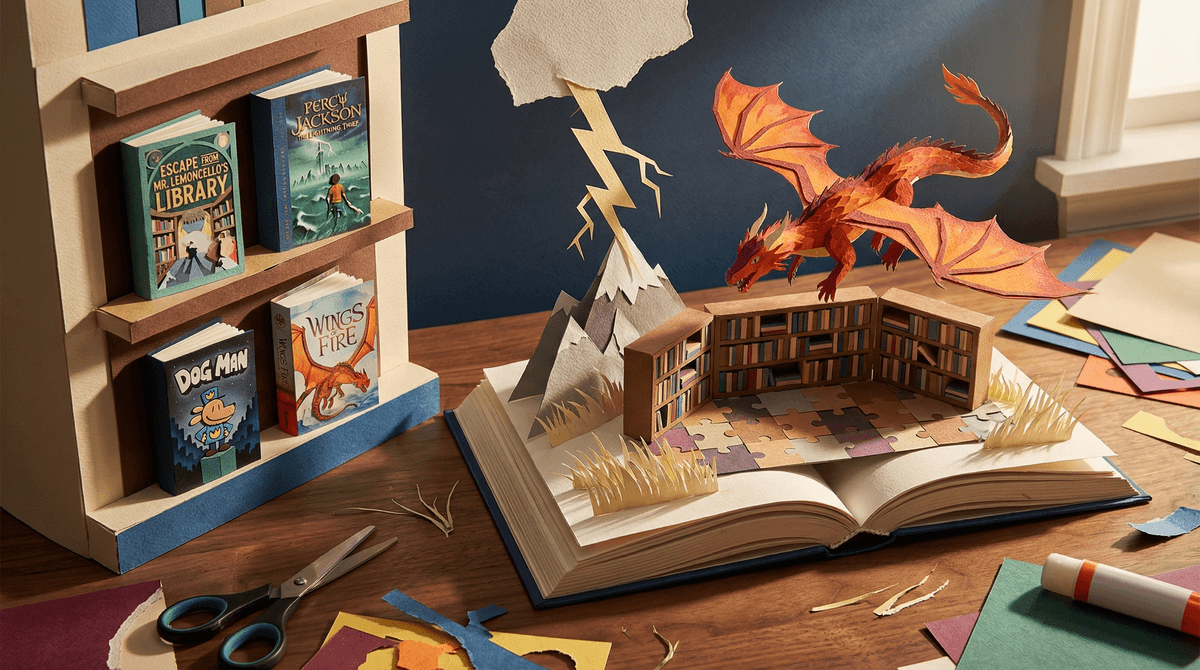
The Must-Read Book Series for 5th Graders in 2026
Fifth grade is the sweet spot where kids can handle complex plots, appreciate character development, and actually want to read—if you get the right book in their hands. Here are the series that work:
For reluctant readers: Dog Man, Diary of a Wimpy Kid, The Bad Guys
Screenwise Parents
See allFor mythology lovers: Percy Jackson, Tristan Strong
For mystery fans: The 39 Clues, Escape from Mr. Lemoncello's Library
For fantasy readers: Wings of Fire, Keeper of the Lost Cities
For realistic fiction: Wonder, The Vanderbeekers
Fifth grade is when reading either clicks or becomes "that thing I have to do for school." The difference? Finding a series that hooks them hard enough that they're reading under the covers with a flashlight (or, let's be real, their phone flashlight).
The good news: there are more genuinely excellent middle-grade series right now than ever before. The challenge: figuring out which one will work for your kid.
Ages: 9-13
This is the gateway drug. If your kid hasn't read Percy Jackson yet, start here. The series follows Percy, a 12-year-old with ADHD and dyslexia who discovers he's the son of Poseidon and gets thrown into a world where Greek gods are real and really annoying.
Why it works: Riordan makes kids with learning differences the heroes. Percy's ADHD isn't a problem to overcome—it's his battle reflexes. His dyslexia? That's because his brain is hardwired for Ancient Greek. It's representation that doesn't feel like a Very Special Episode.
The humor is legitimately funny (not "funny for a kids' book"), the action moves fast, and there are five books in the main series plus multiple spin-offs (Heroes of Olympus, Trials of Apollo) that can keep a kid reading for months.
Fair warning: Once they finish Percy Jackson, they'll want to devour everything Riordan has written, which is actually great because he's also written excellent series based on Egyptian mythology and Norse mythology.
Ages: 8-12
If your kid is into dragons, this series is basically crack. Fifteen books (and counting) about warring dragon tribes, prophecies, and political intrigue—all from the dragons' perspective. No humans, just dragons with distinct personalities, complex societies, and serious problems to solve.
What makes it special: Each book switches to a different dragon's POV, so readers get multiple perspectives on the same events. The world-building is intricate, the plots are genuinely surprising, and the dragons feel like real characters, not just cool reptiles who breathe fire.
This series has a massive following among 5th graders. Like, kids draw fan art, write fan fiction, and have heated debates about which dragon tribe they'd belong to. If your kid gets into Wings of Fire, they've found their people.
The reading level is accessible enough for strong 3rd-grade readers but complex enough to challenge 7th graders. That's rare.
Ages: 9-14
Think Harry Potter meets X-Men. Sophie discovers she's an elf with special abilities and gets whisked away to a hidden world of other elves who have perfect memories, live for thousands of years, and are dealing with a dangerous rebel group.
This series is long—we're talking 9+ books, each around 600-800 pages. But kids who love it absolutely devour them. The fan base is intense (in a good way), and there's enough mystery, romance, and plot twists to keep even reluctant readers turning pages.
Why 5th graders love it: Sophie is smart and capable but still makes mistakes. The friend dynamics feel real. And there's just enough will-they-won't-they romance to be interesting without being the main focus.
Parent note: These books are thicc. If your kid finishes one, you'll know they're genuinely hooked.
Ages: 8-12
Willy Wonka meets escape room meets library. Eccentric game-maker Luigi Lemoncello invites 12 kids to spend the night in his new library for the ultimate escape-room challenge. The catch? The library is filled with puzzles, riddles, and games that require actual knowledge to solve.
This series is perfect for kids who like Minecraft, Roblox, or any kind of puzzle-solving game. It's also sneaky-educational—kids are learning about library systems, famous authors, and classic books while thinking they're just reading a fun mystery.
The humor is goofy in the best way, and the puzzles are solvable enough that kids feel smart when they figure things out before the characters do.
Ages: 8-12
This series is wild. It's written by multiple authors (including Rick Riordan, Gordon Korman, and others), and it follows siblings Amy and Dan Cahill as they compete in a global scavenger hunt against other branches of their powerful family.
Each book takes place in a different country, involves historical figures and events, and includes actual codes and puzzles readers can solve. There used to be an online game component (RIP), but the books still hold up as fast-paced adventure mysteries.
Why it works: Short chapters, cliffhangers, and enough action that kids who "don't like reading" forget they're reading. Plus, there are 11 books in the main series and multiple spin-off series, so there's a lot of runway.
Ages: 6-10
Yes, this is technically below 5th-grade reading level. But hear me out: if you have a reluctant reader, this series is magic. It's part comic, part novel, with tons of visual humor and bathroom jokes that kids find hilarious.
The creator of Captain Underpants knows exactly what makes kids laugh, and more importantly, what makes them want to keep reading. Dog Man is a police officer who's part dog, part man (due to a surgical mishap), and the stories are surprisingly clever despite the silly premise.
For kids who are "behind" in reading or who have given up on books, Dog Man can be the thing that reminds them reading can be fun. Once they burn through Dog Man, they often graduate to longer series on their own.
Ages: 8-12
This series is now a rite of passage. Greg Heffley's illustrated diary entries about surviving middle school are funny, relatable, and easy to read—which is exactly what some 5th graders need.
The format (half text, half cartoon illustrations) makes these books feel less intimidating than traditional novels. Kids can finish one in a sitting and feel accomplished. There are 18+ books in the series, so once they're hooked, they're set for a while.
Parent real talk: Greg is not always a great role model. He's self-centered, makes bad choices, and sometimes treats his best friend poorly. But that's also what makes him realistic. These books can actually spark good conversations about friendship, consequences, and why Greg's decisions often backfire.
Ages: 8-12
If Percy Jackson is Greek mythology, Tristan Strong is African and African American folklore. Tristan accidentally opens a portal to the world of African gods, tricksters, and legendary heroes—and has to fix the chaos he's unleashed.
The world-building is incredible. You get John Henry, Brer Rabbit, Anansi the spider, and gods from West African mythology all in the same story. It's action-packed, funny, and introduces kids to stories they probably haven't heard before.
This series (currently three books) is perfect for kids who loved Percy Jackson and want something with similar energy but different mythology. The representation is authentic and joyful, not preachy.
Ages: 6-10
Another "below grade level" series that's worth mentioning for reluctant readers. It's heavily illustrated, genuinely funny, and features a crew of villains (Mr. Wolf, Mr. Snake, Mr. Shark, Mr. Piranha) trying to become good guys.
These books are short, fast, and visually engaging. They're perfect for kids who are intimidated by thick novels or who just need a win. The humor is silly but smart, and the friendship dynamics are actually kind of sweet.
Ages: 8-12
For kids who want realistic fiction about family, friendship, and community, this series is gold. The Vanderbeekers are a multiracial family of five kids living in Harlem, and each book follows their adventures, challenges, and relationships.
These books are warm without being sappy, diverse without being performative, and genuinely well-written. They're perfect for kids who don't want dragons or magic—just good stories about real kids navigating real life.
The family dynamics are chaotic and loving in a way that feels authentic. If your kid loved Ramona Quimby when they were younger, this is the next step up.
Ages: 8-12
Technically this is one book, not a series, but there are multiple companion books (Auggie & Me, White Bird) that expand the universe.
Wonder follows Auggie, a kid with facial differences starting 5th grade for the first time. It's told from multiple perspectives, which helps kids understand how the same events can look different depending on who's experiencing them.
This book is required reading in many schools, and for good reason. It's empathetic without being preachy, emotional without being manipulative, and it sparks important conversations about kindness, inclusion, and what it means to be a good friend.
Fair warning: kids (and parents) cry. But in a good way.
Reading level vs. interest level: Just because a book is "at grade level" doesn't mean it's the right book for your kid right now. A struggling 5th grader might thrive with Dog Man, while an advanced reader might be ready for Harry Potter or even The Hunger Games.
Content considerations: Most of these series are pretty safe for 5th grade, but a few things to know:
- Percy Jackson and Keeper of the Lost Cities have mild violence (monster battles, fight scenes)
- Wings of Fire has dragon violence that can be surprisingly intense
- The 39 Clues involves some peril and historical violence
- Wonder deals with bullying and can be emotionally heavy
If you're unsure about a specific book, check out our detailed media pages where parents share their experiences.
The "too easy" trap: If your kid is a strong reader, you might be tempted to push them toward more challenging books. But sometimes "easy" books are exactly what they need to enjoy reading. A kid who devours 20 Wimpy Kid books is building a reading habit. A kid who struggles through one "appropriate" book might decide reading sucks.
Series are strategic: Once a kid is hooked on a series, half your battle is won. They're invested in the characters, they understand the world, and they want to know what happens next. That momentum is powerful.
Let them reread: If your kid wants to reread Percy Jackson for the third time instead of trying something new, that's fine. Rereading builds fluency, comprehension, and confidence. Plus, they catch things they missed the first time.
Graphic novels count: Books like Dog Man, The Bad Guys, and Amulet are real reading. The visual literacy kids develop from graphic novels actually supports their overall reading comprehension.
Use the library: These series add up fast. Most libraries have robust digital collections through apps like Libby or Hoopla, so kids can borrow ebooks and audiobooks for free. Here's how to set that up.
The best book series for your 5th grader is the one they'll actually read. Not the one their teacher recommends, not the one that won awards, not the one you loved at their age—the one that makes them excited to turn off Roblox and pick up a book.
Start with what they're already interested in:
- Obsessed with Minecraft? Try Mr. Lemoncello's Library
- Love mythology? Percy Jackson or Tristan Strong
- Into dragons and fantasy? Wings of Fire
- Need something quick and funny? Dog Man or Wimpy Kid
And if the first series doesn't stick? Try another one. The goal isn't to create a literary scholar—it's to help your kid discover that reading can be just as engaging as any screen.
Next Steps:
- Ask your kid's teacher or librarian what's popular in their class right now
- Check out our guide to building a reading habit
- Set up a library card and show them how to browse digital books
- Consider audiobooks for long car rides—hearing a good story can inspire kids to read the next book in the series
Need help figuring out which series might work for your specific kid? Find the right book series for a 5th grader about their interests and reading level.