

Look, we all know the feeling. You put on a documentary thinking "I'll just watch one episode" and suddenly it's 1 AM and you've consumed an entire series about a cult/scam/murder/adorable animal. Apple TV+ has quietly built one of the most compelling documentary libraries out there, and unlike some streaming services that shall remain unnamed (cough Netflix cough), they're not padding their catalog with filler content.
But here's the thing about bingeable documentaries: they're designed to keep you watching. The cliffhangers, the pacing, the "just one more episode" structure—it's all very intentional. And when your kids see you glued to the screen for hours, they're learning something about media consumption whether we like it or not.
So let's talk about which Apple TV+ documentaries are actually worth the binge, which ones are appropriate for family viewing, and how to approach them without accidentally traumatizing your 10-year-old or modeling the exact behavior you're trying to discourage.
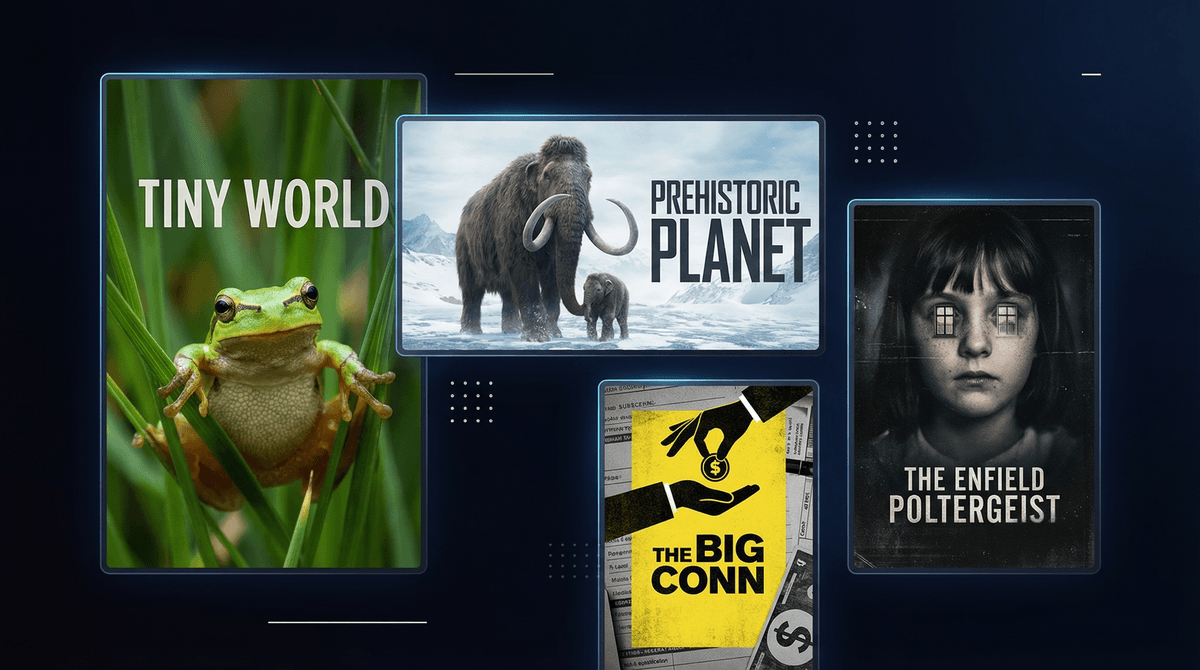
The Enfield Poltergeist - This four-part series about a 1970s haunting in London is absolutely gripping, but it's also genuinely unsettling. Even if you don't believe in ghosts, the archival footage and interviews will mess with your head. Ages 16+ only, and honestly, maybe not right before bed.
The Big Conn - A social security lawyer steals half a billion dollars in Kentucky. It sounds like it should be boring, but holy hell is it not. The characters are wild, the scam is audacious, and you'll be yelling at your TV. Ages 14+ if your teen is interested in true crime and can handle discussions about disability fraud and systemic corruption.
Boom! Boom! The World vs. Boris Becker - Even if you don't care about tennis, this two-part doc about Becker's rise, fall, and recent imprisonment is fascinating. It's about fame, money, bad decisions, and consequences. Ages 13+ for mature teens who can handle discussions about infidelity, financial crimes, and the dark side of celebrity.
Prehistoric Planet - Okay, this is the one you can actually watch with your kids without worrying. Narrated by David Attenborough (obviously), it uses cutting-edge CGI to show dinosaurs in their natural habitats with the production quality of Planet Earth. Ages 6+ easily, though some predator scenes might be intense for sensitive younger kids.
Tiny World - Paul Rudd narrates this series about small creatures in big environments, and it's genuinely delightful. The cinematography is stunning, and unlike some nature docs, it doesn't dwell on the brutal "circle of life" stuff. Ages 5+ and perfect for short attention spans since episodes are only 30 minutes.
The Elephant Queen - This feature-length documentary follows an elephant matriarch and her herd. It's beautiful, emotional, and yes, there are some sad moments (nature is nature), but it's handled thoughtfully. Ages 7+, and maybe have tissues ready.
They Call Me Magic - This four-part series about Magic Johnson's life and career is inspiring and well-made, but it doesn't shy away from his HIV diagnosis announcement and the stigma around it. Ages 11+ if your kid is mature enough for conversations about HIV/AIDS, sexuality, and 1990s-era discrimination. Actually, this could be a great conversation starter.
The Dynasty Series (about sports teams) - Apple has several of these covering different teams and eras. They're generally ages 10+, but watch for language and some adult themes depending on which one you're watching. The competitive drama is catnip for sports-obsessed kids, though.
Here's the real talk: documentaries feel educational, so we give ourselves permission to binge them in ways we might not with scripted TV. "It's learning!" we tell ourselves at midnight. But the binge-watching behavior is the same whether you're watching true crime or reality TV.
If your kids see you unable to stop watching something—even something "good"—they're learning that this is normal media consumption. And when you tell them to turn off Roblox or YouTube after 30 minutes, they're going to remember that you watched four hours of documentary content last Saturday.
This isn't about being perfect. It's about being intentional. Understanding how streaming platforms design content to keep us watching helps us make better choices for ourselves and model better behavior for our kids.
Autoplay is your enemy - Apple TV+ will automatically start the next episode after a few seconds. Turn this off in settings. The friction of having to actively choose to continue watching is surprisingly effective.
The "one more episode" trap - Documentaries are structured with cliffhangers just like scripted shows. If you find yourself saying "just one more" repeatedly, that's by design, not because you lack willpower.
Age ratings aren't always accurate - Apple's ratings are pretty good, but they can't account for your specific kid's sensitivities. A 12+ documentary about financial fraud might be fine for your money-curious 11-year-old but completely boring or confusing for your 13-year-old who couldn't care less.
Co-watch when possible - Especially with the family-friendly options, watching together gives you a chance to discuss what you're seeing, answer questions, and model pausing when needed.
Set episode limits upfront - "We're watching two episodes tonight" is way more effective than trying to stop mid-binge. This works for you too, by the way.
Use documentaries as conversation starters - The good ones raise questions about ethics, choices, consequences, and how the world works. Don't waste that opportunity by just passively consuming.
Be honest about your own viewing habits - If your kid catches you on episode six of something when you told them screen time limits are important, own it. "You're right, I got sucked in. Let me turn this off" teaches more than pretending you had it under control.
Apple TV+ has some genuinely excellent documentaries that are worth your time. Prehistoric Planet and Tiny World are fantastic for family viewing. The true crime and sports docs are engaging but require more careful age consideration.
But remember: the goal isn't to find "educational" content that justifies unlimited screen time. It's to find quality content that's worth watching intentionally, with awareness of how it's designed to keep you hooked, and with clear boundaries around consumption.
Your kids are watching how you watch. Make it count.
- Check your Apple TV+ autoplay settings and turn them off
- Browse documentaries appropriate for your kids' ages
- Set a "maximum episodes per session" rule for yourself and your family
- Consider which documentaries might spark meaningful conversations with your teens
And if you find yourself four episodes deep into a true crime series at midnight? No judgment. Just maybe don't do it the night before you have to lecture your kid about screen time balance.