

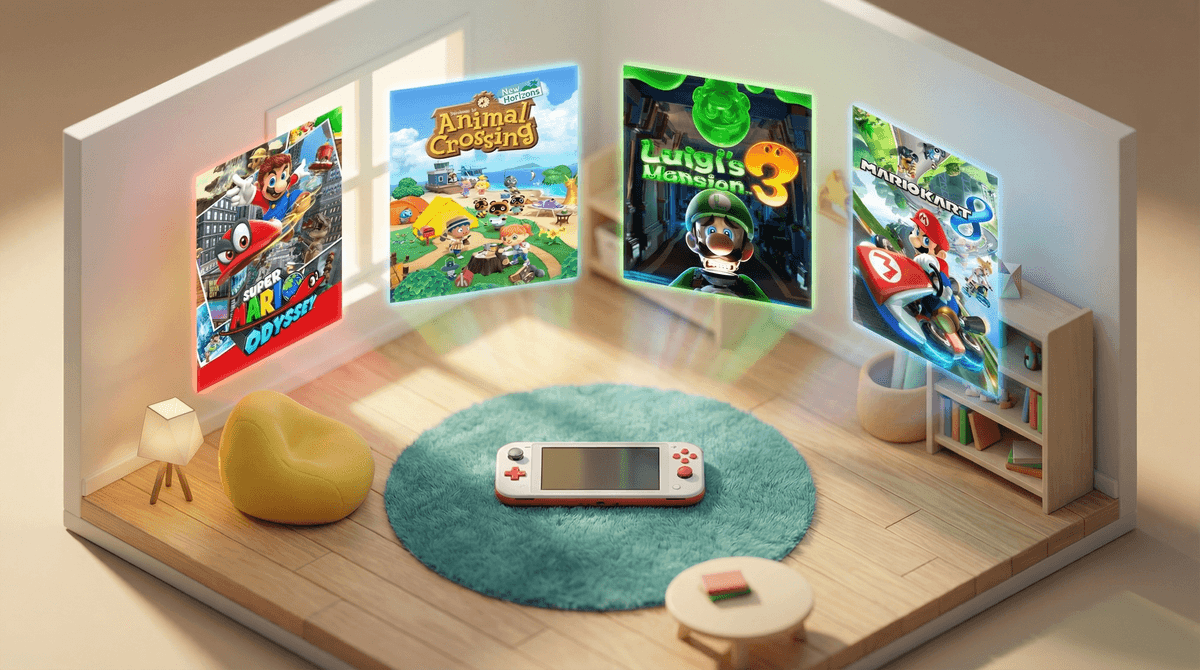
The Nintendo Switch is that tablet-looking gaming console that transforms into a TV-connected system and somehow manages to be both the most kid-friendly and most adult-beloved gaming device on the market. Released in 2017, it's become the default "first console" for millions of families because it's portable, has actual parental controls that work, and—here's the kicker—has a genuinely excellent library of games that won't make you want to throw the device out the window.
Unlike the endless dopamine slot machines of mobile gaming or the chaotic social dynamics of Roblox, the Switch offers contained gaming experiences with clear beginnings, middles, and ends. Your kid plays, progresses, maybe gets frustrated at a boss battle, and then... it's over. No loot boxes, no constant friend requests, no chat features trying to connect your 6-year-old to strangers in Moldova.
But here's the thing: not all Switch games are created equal for young kids. The console has everything from cozy farming sims to intense action games, and knowing which ones are actually appropriate (and won't lead to rage-throwing the controller) makes all the difference.
It's theirs. Unlike the family iPad that everyone fights over, the Switch feels like a personal gaming device. Kids can take it in the car, play in bed (yes, we're all doing that), or dock it to the TV for the full experience.
The games are genuinely good. Nintendo has been making games for kids since 1985, and they've figured out how to make experiences that are challenging without being punishing, colorful without being overstimulating, and engaging without being exploitative.
No reading required (mostly). Many of the best Switch games for young kids are either completely visual or have voice acting, which means your pre-reader can actually play independently.
Look, I'm not going to pretend this is a masterpiece of game design, but if you have a Paw Patrol-obsessed preschooler, this racing game is shockingly competent. It's basically Mario Kart with Chase and Marshall, and it has an auto-accelerate option that lets tiny humans actually finish races. Ages 3+
This is the sweet spot for young gamers. Kirby is an adorable pink blob who inhales enemies and copies their powers, and this 3D adventure is forgiving enough for beginners while still being genuinely fun. The co-op mode lets you play alongside your kid, which means you can subtly help them through tricky parts without taking over completely. Ages 4+
This might be a tiny bit advanced for the youngest kids, but the "Assist Mode" makes it much more accessible. Mario throws his hat (named Cappy, because of course) to possess enemies and objects, which is weird but delightful. The game is gorgeous, imaginative, and has that Nintendo magic where even watching someone else play is entertaining. Ages 5+
This is the game that justifies the entire console purchase. Mario Kart is accessible enough for a 6-year-old to play (with steering assist and auto-accelerate on) while being competitive enough that you won't be bored playing with them. It's also the rare video game that grandparents can actually enjoy at family gatherings. Fair warning: the blue shell will cause tears. Yours and theirs. Ages 6+
If you want your kid to experience the cozy joy of decorating a virtual island, befriending anthropomorphic animals, and getting into debt with a capitalist raccoon, this is your game. There's no violence, no time pressure, and no way to "lose." It's also a great way to teach basic money management—though whether Tom Nook is teaching entrepreneurship or predatory lending is up for debate . Ages 6+
This is Pokémon simplified for younger players—you catch creatures, battle trainers, and collect badges, but without the complexity of the mainline games. If your kid is already into Pokémon cards or the show, this is the perfect entry point into the games. Plus, the catching mechanic uses motion controls, which makes kids feel like they're actually throwing Pokéballs. Ages 6+
Yes, Minecraft is on the Switch, and it's basically the same creative sandbox experience as every other platform. The Switch version is great because it's portable and doesn't require an internet connection for solo play. Creative mode is perfect for young kids who just want to build without worrying about monsters, while Survival mode adds challenge for older players. Check out our guide to Minecraft parental controls if you're worried about online play. Ages 6+
Not sure which Zelda fits your kid? See the whole series by age and play style. This is one of the greatest video games ever made, full stop. It's an open-world adventure where you explore, solve puzzles, fight monsters, and save Princess Zelda. It's challenging but not impossible, and the sense of discovery is genuinely magical. Some combat sequences might be intense for sensitive kids, but there's no gore or inappropriate content. Ages 9+
It's a fighting game featuring every Nintendo character ever (plus some random additions like Solid Snake and Sora from Kingdom Hearts). The violence is cartoonish—characters get knocked off platforms rather than bloodied—and it's incredibly fun for both kids and adults. Great for teaching good sportsmanship... or destroying sibling relationships, depending on your family dynamics. Ages 9+
This is Nintendo's take on team-based shooters, except instead of guns, you have paint weapons, and instead of killing opponents, you're covering the map in your team's color. It's fast-paced, creative, and has a surprisingly deep single-player campaign. The online multiplayer is generally positive and non-toxic compared to other competitive games. Ages 10+
The Switch has actual parental controls. Download the Nintendo Switch Parental Controls app on your phone, and you can set time limits, restrict games by rating, disable screenshots/social media sharing, and get reports on what your kid is playing. It's not perfect, but it's lightyears ahead of most gaming platforms.
Physical games can be shared and resold. Unlike digital games that are locked to your account forever, physical cartridges can be traded with friends, sold when your kid outgrows them, or passed down to younger siblings. The downside is they're tiny and easy to lose.
Nintendo Switch Online costs money. If your kid wants to play online multiplayer or access classic NES/SNES games, you'll need a subscription ($20/year for individual, $35/year for family plan). Most single-player games don't require it.
"Free to play" games aren't really free. Fortnite and Rocket League are available on Switch, and while they're technically free to download, they're designed to extract money through cosmetic purchases. If you're going to allow these games, have a clear conversation about in-game purchases first—here's how to talk about microtransactions with kids.
Co-op games are bonding opportunities. Games like Luigi's Mansion 3, Kirby and the Forgotten Land, and Minecraft let you play alongside your kid. It's a chance to be in their world, help them problem-solve, and actually understand what they're talking about at dinner.
The ESRB ratings on Switch games are generally reliable, but here's the real breakdown:
E for Everyone (Ages 6+): These games have minimal violence (think cartoon bonking) and no inappropriate content. Most Nintendo first-party games fall here.
E10+ (Ages 10+): Slightly more intense action or mild cartoon violence. Games like The Legend of Zelda: Breath of the Wild and Splatoon 3 are in this category.
T for Teen (Ages 13+): More realistic violence, mild language, or suggestive themes. Most families with 10-12 year olds find T-rated games acceptable, but preview them first.
That said, you know your kid better than any rating system. Some 7-year-olds can handle the intensity of Zelda, while some 10-year-olds get overwhelmed by Mario Kart's competitive chaos.
The Nintendo Switch is probably the best gaming console for young kids, and that's not just nostalgia talking. The combination of portability, excellent parental controls, and a library full of age-appropriate games makes it a solid choice for families trying to navigate gaming without losing their minds.
Start with games that match your kid's interests and skill level. If they love animals, try Animal Crossing. If they're into racing, grab Mario Kart. If they want adventure, go with Kirby or Mario Odyssey.
And here's the thing nobody tells you: playing video games with your kids is actually... fun? Revolutionary concept, I know. But there's something genuinely delightful about watching your 6-year-old figure out a puzzle in Zelda or celebrating when they finally beat that boss in Kirby.
The Switch isn't going to raise your kids or teach them everything they need to know, but it can be a tool for fun, problem-solving, and family bonding—as long as you're intentional about how it fits into your family's digital life.
Set up parental controls before handing over the Switch. Seriously, do this first. Download the app, set time limits, and restrict online features until you're ready to navigate that complexity.
Start with one or two games. Don't overwhelm your kid (or your wallet) with a dozen games at once. Pick one or two that match their interests and skill level, and see how it goes.
Play together. At least initially, sit with your kid and play alongside them. You'll learn what they're into, help them through frustrating parts, and actually understand what they're talking about when they explain the plot of Mario Odyssey at dinner.
Check out our guide to video game time limits for strategies on managing screen time without constant battles.
And if you're wondering whether the Switch is worth it compared to other gaming options, explore our comparison of gaming consoles for families. Spoiler: the Switch probably wins, but every family is different.