

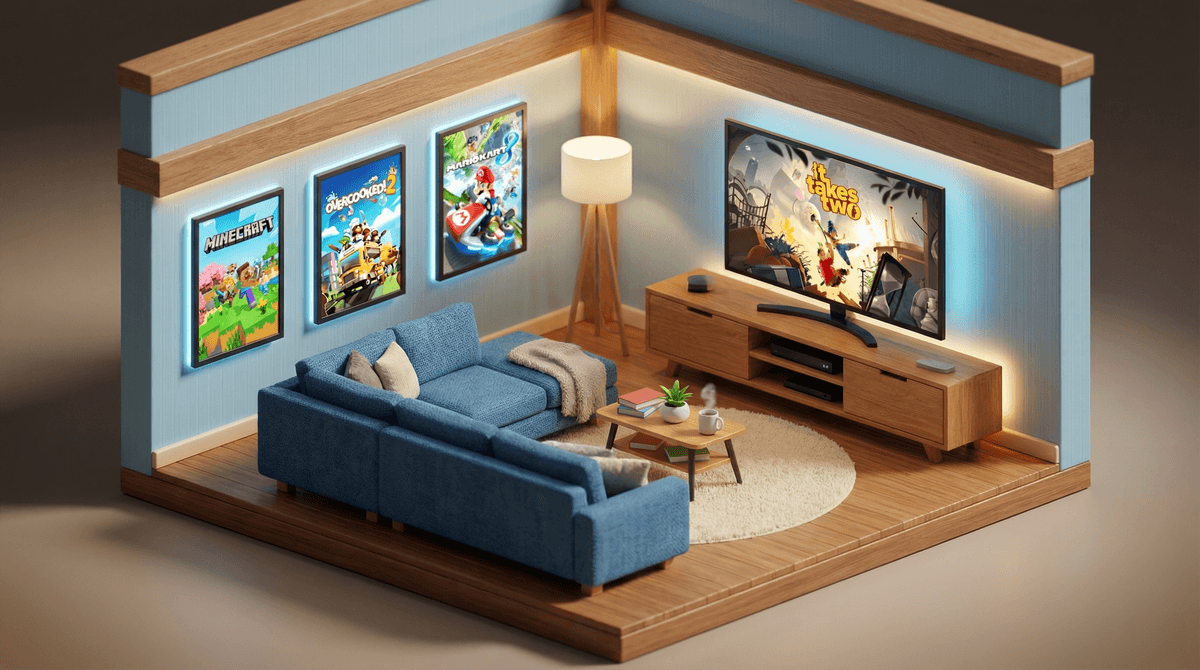
Look, we've all been there: trying to find something the whole family can actually play together that doesn't end in tears, rage-quitting, or the 6-year-old getting absolutely demolished by their teenage sibling. Multiplayer family games are the sweet spot where everyone from your kindergartner to your middle schooler (and yes, you) can actually have fun together.
These aren't just "games the whole family can tolerate." We're talking about games designed with different skill levels in mind, where cooperation matters more than reflexes, or where the chaos is the point so nobody feels bad about losing. Think couch co-op classics, party games that reward creativity over speed, and online adventures where everyone has a role that actually matters.
Family game time is one of those rare moments where everyone's looking at the same screen (or board) instead of their own devices. It's also where kids learn crucial stuff like taking turns, handling defeat without throwing controllers, and that yes, Mom can absolutely wreck you at Mario Kart.
But here's the thing: not all "family" games are created equal. Some are just adult games dumbed down. Others are kid games that bore parents to tears. The best ones? They're genuinely engaging for everyone, with built-in ways to level the playing field so your 7-year-old isn't just along for the ride.
Couch Co-Op Champions
Overcooked 2 (Ages 6+)
This cooking chaos simulator is perfect because everyone's equally bad at it. You're running a kitchen together, chopping vegetables, dodging fires, and yelling instructions while the clock ticks down. The beauty? A 6-year-old washing dishes is just as valuable as a teen manning the stove. Fair warning: this game WILL test your family's communication skills. In a good way. Mostly.
Mario Kart 8 Deluxe (Ages 5+)
The auto-accelerate and steering assist features mean even your youngest can compete without being lapped twelve times. Meanwhile, the chaos of items and shortcuts keeps skilled players engaged. It's the rare racing game where skill matters but luck can still let anyone win. Pro tip: Turn on teams mode for less competitive families.
It Takes Two (Ages 10+)
This one requires two players working together—no option to go solo. Each player has unique abilities, so you're genuinely dependent on each other. It's more story-driven and has some emotional beats (it's about parents going through a divorce, though handled thoughtfully), so better for older kids and teens. But the cooperative gameplay is chef's kiss.
Party Game Gold
Jackbox Party Packs (Ages 8-13+ depending on pack)
Everyone plays using their phones as controllers, which means no fighting over who gets the good controller. Games like Drawful, Quiplash, and Fibbage are perfect because they reward creativity and humor over reflexes. Important: Some packs skew older (Pack 3 and 7 are safest for younger kids), and you'll want to use family-friendly mode and moderate the content. Here's how to choose the right Jackbox pack for your family.
Just Dance (Ages 5+)
Look, it's goofy. Everyone looks ridiculous. That's the point. The game tracks your movements and scores you, but honestly, nobody cares about the score when your dad is attempting the Meghan Trainor choreography. Great for burning energy on rainy days, and the song selection spans generations.
Adventure Games That Don't Require Twitch Reflexes
Minecraft (Ages 7+)
In Creative or Peaceful mode, this becomes a collaborative building experience. You can work together on massive projects, explore, and create without the pressure of combat. The best part? Kids often know more than parents, which flips the usual dynamic in a fun way. Set up a family realm so you control who can join.
Animal Crossing: New Horizons (Ages 6+)
This is "multiplayer" in a chill, take-turns way. You're building an island together, decorating, fishing, catching bugs. It's low-stakes, peaceful, and genuinely delightful. Perfect for families who find competitive games stressful. Only downside: you need one Switch per player for the full experience, or you're sharing an island on one console (which can get territorial).
LEGO Games (Ages 6+)
Any of them. LEGO Star Wars, LEGO Harry Potter, LEGO Marvel—they're all built for co-op play. The humor is genuinely funny, players can't really die (you just respawn), and there's always something for different skill levels to do. Plus, the drop-in/drop-out co-op means people can join or leave without disrupting the game.
Don't Sleep on Board Games
Real talk: sometimes the best "multiplayer family game" isn't digital at all.
Ticket to Ride (Ages 8+) is strategic but simple enough for elementary schoolers. Sushi Go Party (Ages 7+) is fast and adorable. Codenames (Ages 10+) is perfect for families who love wordplay. Azul (Ages 8+) is beautiful and strategic without being cutthroat.
The advantage? No screen time guilt, everyone's engaged, and you can actually see each other's faces.
Ages 5-7: Look for games with assist modes (Mario Kart, Mario Party), simple mechanics (Just Dance, Animal Crossing), or where chaos is the point (Overcooked, Fall Guys). They need to feel like they're genuinely contributing, not just mashing buttons.
Ages 8-12: This is the golden age for family gaming. They can handle more complex mechanics, follow storylines, and have the attention span for longer sessions. LEGO games, Minecraft, Jackbox, and most party games hit perfectly here.
Ages 13+: Teens can handle everything adults can, but they're also the most likely to get bored with "baby games." Games like It Takes Two, more complex Jackbox packs, or even cooperative survival games like Raft can keep them engaged. The key is respecting their skill level while still making it accessible for younger siblings.
About skill gaps: The best family games have built-in handicaps or ways to help struggling players without making it obvious. Mario Kart's assist features, Overcooked's role variety, and Jackbox's creativity-over-speed approach all do this well.
About screen time: Yes, this is screen time. But it's social screen time, which research shows is fundamentally different from solo scrolling. You're talking, laughing, strategizing together. That said, set time limits just like you would for solo play—maybe 60-90 minutes for a family game session.
About competition: Some families thrive on competition. Others find it toxic. Know your kids. If someone's a sore loser, lean toward cooperative games (Overcooked, It Takes Two, Minecraft) rather than competitive ones (Mario Kart, Just Dance). There's no shame in avoiding games that end in tears.
About online multiplayer: Most of these games work best locally (everyone in the same room). If you're playing online with extended family or friends, make sure you understand the privacy settings and who can communicate with your kids. Private lobbies are your friend.
About cost: Many of these games are $30-60, which feels steep until you realize you're getting dozens of hours of family entertainment. That's cheaper than one movie outing for four people. Jackbox packs go on sale frequently. Nintendo games rarely do (but also hold their value if you want to resell).
The best family games aren't the ones with "Family" in the title—they're the ones where everyone's actually having fun, where skill gaps don't feel insurmountable, and where you're creating those "remember when Dad fell off Rainbow Road for the third time" memories.
Start with one or two games that match your family's vibe. Competitive? Try Mario Kart. Cooperative? Overcooked or It Takes Two. Creative? Jackbox or Minecraft. Chill? Animal Crossing or a good board game.
And remember: the goal isn't perfect gameplay. It's time together where everyone's engaged, laughing, and occasionally yelling about who took the last tomato in Overcooked. That's the win.
Not sure which game fits your family? Find the right multiplayer family game about your kids' ages, interests, and whether your family leans competitive or cooperative.
Already playing these? Check out our guide to setting healthy gaming boundaries that don't feel like punishment, or explore alternatives to popular games when everyone's burned out on the same old titles.