

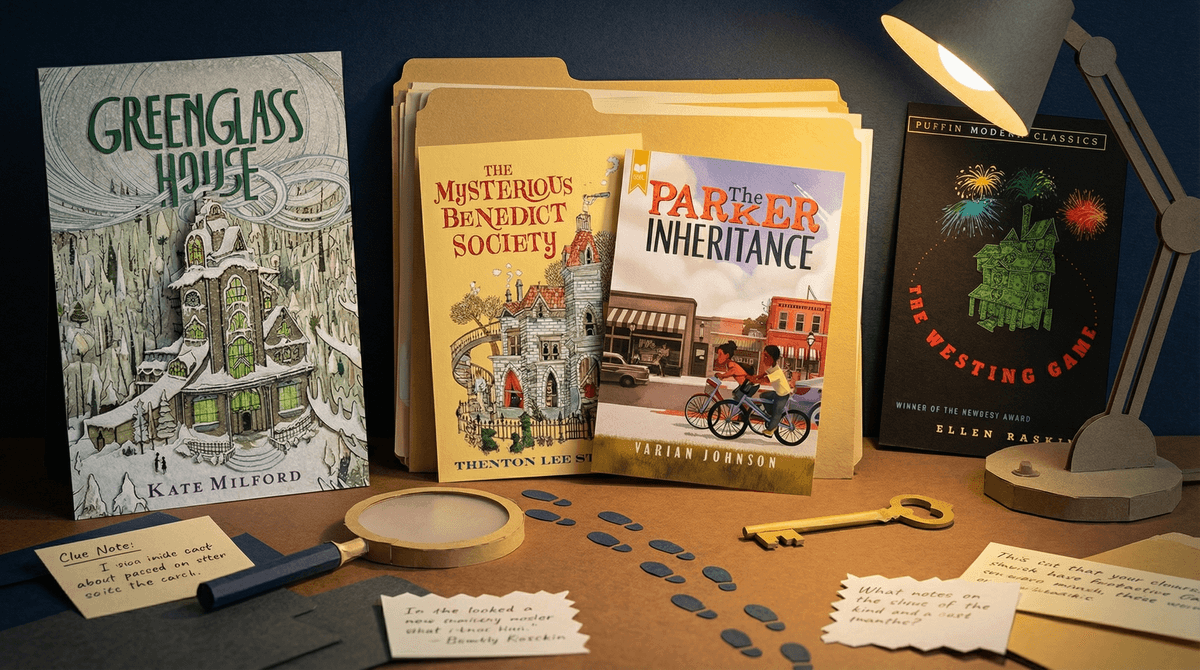
Middle grade mysteries are books written for kids roughly ages 8-12 that center around solving a puzzle, uncovering secrets, or cracking a case. Think Nancy Drew for the modern era—but with way more diversity, nuance, and genuinely clever plotting than those old-school chapter books.
These aren't just "whodunits" anymore. Today's middle grade mysteries tackle everything from stolen artifacts to missing pets to family secrets to actual cold cases. They feature kid detectives who use logic, observation, and teamwork to solve problems—skills that translate directly to critical thinking in real life.
And here's the thing: mystery books are gateway drugs to reading. Kids who say they "don't like reading" will often devour a good mystery because the format creates natural momentum. You have to know what happens next. The cliffhangers, the red herrings, the satisfaction of piecing together clues—it's all incredibly compelling, even for reluctant readers.
Mystery books hit different than other genres because they invite active participation. Your kid isn't just passively consuming a story—they're gathering evidence, forming theories, and trying to outsmart the author. It's like a puzzle that unfolds over 200 pages.
The appeal breaks down like this:
- Agency and empowerment: Kid characters are the heroes who solve adult-sized problems using their brains
- Pattern recognition: Mysteries teach kids to notice details, connect dots, and think systematically
- Safe suspense: The thrill of danger without actual risk—perfect for this age group
- Satisfaction of resolution: Unlike real life (or middle school drama), mysteries provide clear answers and closure
Plus, mysteries naturally build reading stamina. Once a kid is hooked, they'll blow through a 300-page book in days because they need to know who did it.
Ages 10+
This Coretta Scott King Award winner is a masterclass in layered storytelling. It's a mystery within a mystery—a present-day puzzle about a historical injustice in a small South Carolina town. The book tackles race, community history, and what it means to uncover uncomfortable truths. It's smart, moving, and genuinely surprising. Start here if your kid is ready for something with depth.
Ages 9+
A classic for a reason. Sixteen heirs gather to solve the mystery of who killed eccentric millionaire Samuel Westing, and the winner gets his fortune. It's clever, funny, and rewards careful reading—there are clues embedded throughout that you can actually solve before the reveal. This book has been hooking kids for decades because it respects their intelligence.
Ages 8+
Two siblings run away to live in the Metropolitan Museum of Art and stumble into an art mystery. It's cozy, clever, and full of that specific middle-grade fantasy of being independent and competent in an adult world. The mystery itself—is a statue a real Michelangelo?—introduces kids to art history without being preachy about it.
Ages 9+
Set in a smuggler's inn during winter break, this atmospheric mystery has serious Knives Out vibes for the middle grade set. Guests arrive with secrets, strange things happen, and the innkeeper's adopted son has to figure out what's going on. It's got role-playing game elements woven in, which makes it especially appealing to kids who love Dungeons & Dragons or fantasy world-building.
Ages 12+
For your older middle schoolers, this series is addictive. A true crime-obsessed teen attends an elite Vermont academy where an unsolved 1930s murder took place—and then a new mystery unfolds in the present. It's smart, twisty, and features a protagonist with anxiety who's still completely capable and brilliant. Think Only Murders in the Building but YA.
Ages 9+
Four gifted orphans are recruited for a secret mission to infiltrate a mysterious institution. It's part mystery, part adventure, part found family story. The puzzles and codes throughout are genuinely fun to solve, and the themes about intelligence, loyalty, and what makes a family resonate deeply. There's also a Netflix adaptation if your kid wants to see the story come to life after reading.
Ages 9+
Sherlock Holmes's younger sister strikes out on her own in Victorian London to solve mysteries and find her missing mother. These books are fast-paced, feminist without being heavy-handed, and introduce kids to deductive reasoning in an accessible way. The Netflix movies with Millie Bobby Brown are also excellent and might hook reluctant readers into trying the books.
Ages 8+
These aren't traditional mysteries, but each book involves the Vanderbeeker siblings solving problems and uncovering secrets in their Harlem neighborhood. They're warm, diverse, community-focused stories that show problem-solving and investigation in everyday contexts. Perfect for kids who find darker mysteries too intense.
If your kid is on the younger end (ages 7-9) or still building reading confidence, try these more accessible series:
- Cam Jansen series: Short chapter books about a girl with a photographic memory who solves mysteries
- Nate the Great series: A pint-sized detective solves neighborhood mysteries with his dog Sludge
- The 39 Clues series: Fast-paced, globe-trotting adventure mysteries with short chapters and lots of action
Here's what's actually happening when your kid reads mysteries:
They're learning to evaluate evidence. Which clues matter? Which are red herrings? What's the difference between correlation and causation? These are analytical skills that transfer to everything from science class to navigating social dynamics to spotting misinformation online .
.
They're practicing perspective-taking. Good mysteries require understanding different characters' motivations, biases, and secrets. That's empathy training disguised as entertainment.
They're building frustration tolerance. Not everything makes sense immediately. Sometimes you have to sit with confusion, gather more information, and revise your theories. That's a crucial life skill, especially in our instant-gratification digital world.
They're experiencing the satisfaction of intellectual work. Solving a mystery—or even just following along as the protagonist does—creates a sense of accomplishment that's different from leveling up in Fortnite or getting likes on a video. It's slower, deeper, and more lasting.
Reading level vs. interest level: Some of these books have higher reading levels but lower maturity content, or vice versa. The Westing Game has complex vocabulary but very little scary content. Truly Devious has easier prose but deals with death, murder, and teen relationships. Know your kid.
Mystery books can be intense: Some kids find suspense stressful rather than exciting. If your child is sensitive to tension or has anxiety, start with lighter mysteries like The Vanderbeekers or From the Mixed-Up Files where the stakes are lower.
Representation matters: Modern middle grade mysteries feature way more diverse protagonists than the Nancy Drew era. The Parker Inheritance centers Black characters and history. Greenglass House has an adopted Asian protagonist. Enola Holmes challenges gender norms. Kids see themselves—and learn to see others—in these stories.
Series are your friend: Once a kid finds a mystery series they love, they'll often binge the entire thing. This is good. Let them ride that momentum. Reading stamina builds through volume.
Talk about the mysteries together: Ask your kid who they think did it and why. Discuss the clues. Make it a game. This kind of conversation builds analytical thinking and makes reading a shared experience rather than a solitary one.
Mystery books are genuinely one of the best tools we have for building critical thinking, reading stamina, and analytical skills in kids—and they're fun, which means kids will actually engage with them voluntarily. In a world where we're constantly worried about screen time and attention spans, mysteries offer page-turning momentum that can compete with YouTube and TikTok.
Start with one book from this list based on your kid's age and interests. See what sticks. And then watch them become the kid who brings a book to restaurants, reads under the covers with a flashlight, and actually gets mad when you interrupt them because they're "right in the middle of figuring something out."
That's the magic of a good mystery.
Not sure where to start? Get a mystery book recommendation for your kid based on your child's age, interests, and reading level.
Want to explore more book options? Check out our guides on the best chapter books for reluctant readers and building a reading habit in the age of screens.
Already have a mystery lover? Help them branch out into podcasts like Wow in the World that scratch the same curiosity itch, or logic games and puzzle apps that build similar skills.