

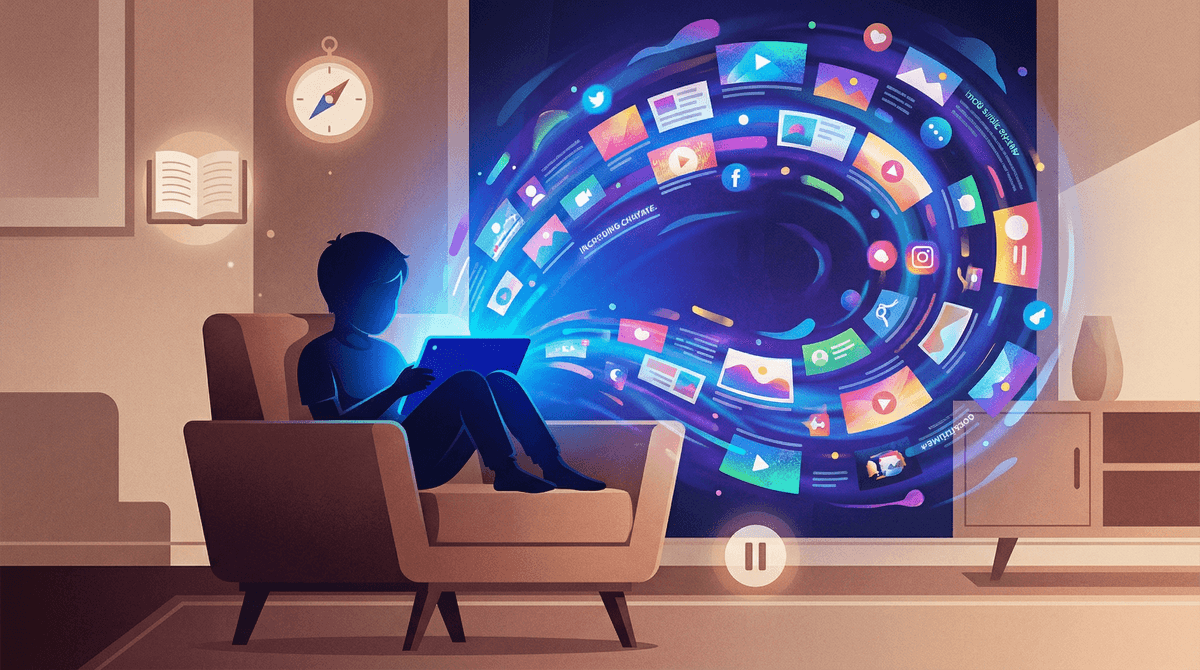
TL;DR: Algorithms aren't just "suggesting" content; they are actively shaping your child’s worldview by prioritizing engagement over quality. To break the cycle of "brainrot" content like Skibidi Toilet, parents need to shift from passive consumption to active curation.
Quick Links for the Algorithm Detox:
- For the "Brainrot" antidote: Bluey (Ages 3-8) or The Wild Robot by Peter Brown (Ages 8-12).
- For active play over passive scrolling: Minecraft (Ages 7+) or Toca Life World (Ages 4-10).
- For high-quality audio alternatives: Wow in the World or Brains On!.
If you’ve heard your ten-year-old say something is "so Ohio" or mention "Sigma Rizz" while watching a video of a head popping out of a toilet, you aren’t losing your mind. You’re just witnessing the output of the most sophisticated persuasion machines ever built.
In 2026, the "algorithmic rabbit hole" isn't just a tech buzzword; it’s the primary way our kids experience the world. Whether it’s YouTube, TikTok, or the "Discover" tab on Roblox, these platforms use recommendation engines designed to do one thing: keep the eyes on the screen.
At its core, a recommendation algorithm is a mathematical prediction. It looks at what your child just watched, how long they watched it, and what millions of other kids watched next. Then, it serves up a "better" version of that content to keep them hooked.
The problem? "Better" to an algorithm doesn’t mean "more educational" or "more inspiring." It means more stimulating. This is how a kid starts by watching a simple Minecraft tutorial and, three hours later, is deep in a conspiracy theory rabbit hole or watching "unboxing" videos that are essentially psychological slot machines.
Learn more about how persuasive design affects a child's brain
We use the term "brainrot" to describe the hyper-stimulating, nonsensical, and often low-quality content that dominates feeds. The king of this right now is Skibidi Toilet. If you haven't seen it, it's a series of YouTube Shorts involving toilets with heads and camera-headed men in suits fighting a war. It’s weird, it’s loud, and it’s fast.
Kids love it because:
- It’s Fast: The pacing matches the dopamine-seeking nature of a developing brain.
- It’s Social Currency: Knowing the "lore" of these weird videos is how kids connect at recess.
- It’s "Theirs": It’s confusing to adults, which makes it feel like an exclusive club for kids.
The danger isn’t necessarily the content itself (though some of it is objectively terrible). The danger is the algorithmic narrowing. When the engine sees a kid likes Skibidi Toilet, it stops showing them anything else. Their digital world shrinks until it’s just a loop of the same loud, bright, and ultimately empty content.
Platform designers use several "tricks" to keep the rabbit hole deep:
- Autoplay: Removing the "stop and think" moment between videos.
- Variable Rewards: The "pull-to-refresh" mechanism on Instagram or TikTok is identical to a Vegas slot machine. You don't know if the next video will be boring or hilarious, so you keep scrolling to find out.
- The "For You" Feed: By removing the need to search for content, platforms take away a child’s agency. They aren't making choices; choices are being made for them.
Check out our guide on the differences between YouTube and YouTube Kids
If you want to pull your child out of the rabbit hole, you can’t just take the phone away and expect them to be happy. You have to offer "High-WISE" content—media that is intentional, creative, and respects their intelligence.
Ages 3-8 While it’s often touted for toddlers, Bluey is the gold standard for intentional media. It’s slow-paced, focuses on imaginative play, and doesn't use the frantic editing styles that trigger "brainrot" behavior. It’s the ultimate algorithm detox.
Ages 7+ Unlike passive scrolling, Minecraft (specifically Creative Mode) requires planning, spatial reasoning, and problem-solving. It’s the difference between eating a pre-packaged snack and cooking a meal. It puts the child in the driver's seat.
Ages 8-12 If your kid is stuck in a loop of 15-second videos, their attention span needs a workout. The Wild Robot is a fantastic bridge. It’s compelling, high-stakes, and deals with complex themes of nature vs. technology—perfect for a generation growing up in the AI age.
Ages 5-12 Audio content is a secret weapon. Because there are no visuals, kids have to use their "internal GPU" to visualize the story. Wow in the World is high-energy enough to compete with YouTube but is grounded in actual science and curiosity.
- Ages 0-5: Keep them away from algorithmic feeds entirely. Use "walled gardens" like the PBS Kids Video app where the content is curated by humans, not bots.
- Ages 6-10: Co-viewing is key. When the algorithm suggests something weird, ask, "Why do you think the computer picked that for you?" Start teaching them that the "For You" page isn't actually for them—it's for the platform’s bottom line.
- Ages 11+: This is the age of "Algorithm Training." Teach them to "dislike" or "not interested" content that feels like trash. Show them how to reset their recommendations if the feed gets too toxic.
Ask our chatbot for a personalized list of cozy games for your 10-year-old
When your child starts using slang like "Ohio" (meaning weird/cringe) or "Rizz" (charisma), don't roll your eyes too hard. This is how they signal belonging in a digital-first world.
However, be aware that these memes often originate in corners of the internet that aren't moderated for kids. A "funny meme" can quickly lead to a "toxic community." If your child is spending a lot of time on Roblox, check which "experiences" they are actually playing. Some are brilliant examples of entrepreneurship and game design, while others are just gambling simulators designed to drain your bank account through Robux.
Don't make it a lecture. Make it a "behind the scenes" tour.
Try saying: "You know how Netflix always suggests another show right after one ends? That’s because they’re afraid if you have five seconds to think, you might decide to go outside instead. They’re trying to win a battle for your attention. Do you want them to win, or do you want to choose what you do next?"
Framing it as a "hack" or a "battle" often works better with older kids than telling them something is "bad for their brain."
The algorithm is a tool, but right now, for most kids, it’s a master. Our job as intentional parents isn't to ban the technology—that’s a losing battle in 2026. Our job is to provide the "counter-programming."
Fill their physical and digital lives with enough "High-WISE" content—books like Percy Jackson, games like Zelda: Tears of the Kingdom, and podcasts like Brains On!—that the "brainrot" loses its luster.
- Check the settings: Turn off "Autoplay" on every single app your child uses.
- Audit the feed: Sit with your child for 10 minutes and scroll through their YouTube or TikTok with them. No judgment, just observe.
- Diversify the "Media Diet": Introduce one new non-algorithmic hobby this week—a board game or a new book series.
Take the Screenwise Survey to see how your family's habits compare to your community