

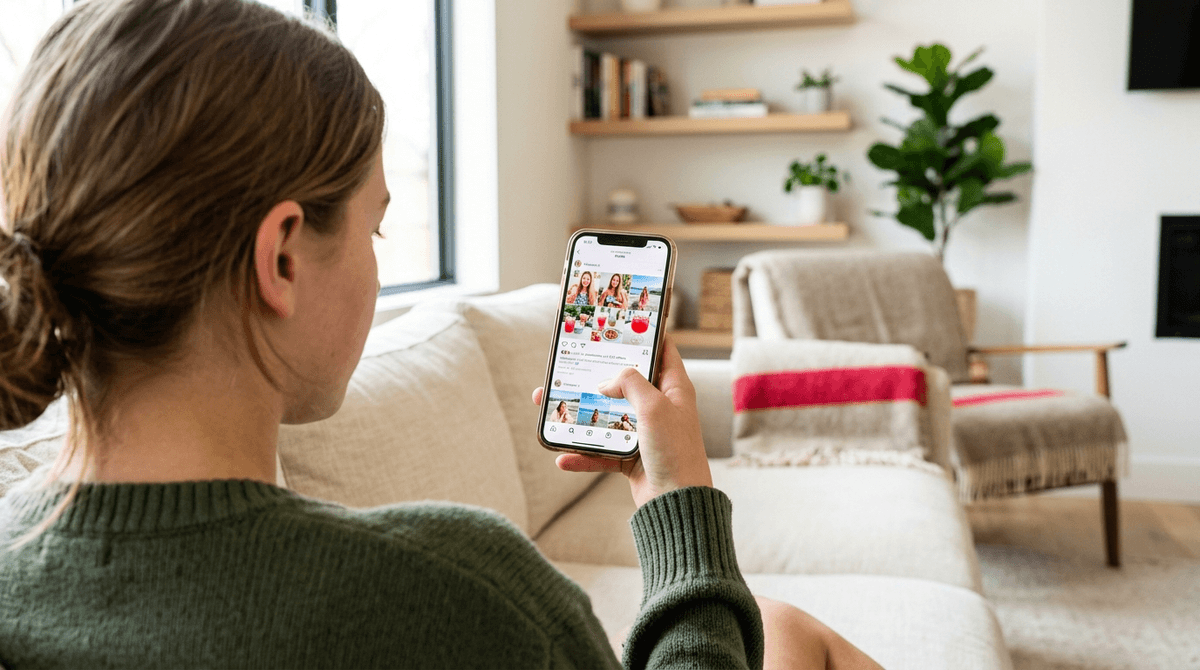
High school students are encountering alcohol-related content nearly every time they open their phones, driven largely by influencer lifestyle posts and industry-sponsored content on Instagram and TikTok.
Teenagers encounter alcohol-related media almost constantly, with virtually every student in the study seeing drinking content on their devices during the two-month period.
Alcohol marketing has moved from the Super Bowl commercial to the teenager's pocket. Because content is often delivered by influencers rather than traditional brands, the distinction between "advertising" and "real life" is increasingly blurred for adolescents. This study suggests that the volume of exposure is so high that parents can no longer rely on "avoidance" as a strategy; instead, the focus must shift to how kids interpret what they see.
Researchers wanted to move beyond old-fashioned surveys that ask "how much TV do you watch?" and instead capture the actual, "in vivo" experience of being a teen today. By using real-time smartphone reports (ecological momentary assessment), they could see exactly what content pops up during a typical day. They were specifically looking to see if the source of the content—a friend, a celebrity, or a brand—changed how a teen felt about drinking.
The data shows that alcohol is an inescapable part of the digital landscape for the modern high schooler.
- Exposure is universal. Over 99% of teens in the study saw alcohol content during the study window.
- Instagram and TikTok are the primary vectors. Instagram alone accounted for about a third of all exposures, followed by TikTok at nearly 20%.
- Influencers are the new advertisers. Roughly one-third of alcohol posts came from influencers. On YouTube and Instagram, nearly half of the content originated directly from alcohol brands.
- Music is the most "pro-alcohol" medium. Exposure through music was uniquely tied to teens having more favorable views of drinking and thinking their peers drink more than they actually do.
- TV and movies are the "anti-alcohol" outliers. Unlike social media, teens generally perceived depictions of alcohol in traditional media as discouraging use, likely because those formats often show the "downside" or consequences of drinking.
The "like" button is more than just a social signal; it’s a cognitive rehearsal. While only about a quarter of teens "liked" alcohol posts, that simple action creates a feedback loop. When a teen engages with a post, they aren't just telling an algorithm they like the content; they are internally signaling that this behavior is part of their "world." Influencers are particularly effective here because they feel like "friends," making their drinking look like a lifestyle choice rather than a paid promotion.
The participants in this study were not a random cross-section of all teens. They were specifically recruited because they already drank or had close friends who did. This means the findings represent a "higher-risk" group. Additionally, students reported less frequently in the evenings, meaning the data likely undercounts alcohol exposure during peak social hours when they are most likely to be on their phones or out with friends.
- If your teen follows major lifestyle influencers... explain that "candid" posts featuring alcohol are often calculated brand partnerships designed to look like personal choices rather than ads.
- If you are choosing between media types... lean toward movies and TV shows for family night, as these formats are more likely to depict the negative consequences of drinking compared to the glamorized snippets on social media.
- If your teen uses Spotify or YouTube Music... discuss how lyrics often romanticize drinking without showing the "day after," as music is the only medium in this study linked to more positive personal attitudes toward alcohol.
- If you see your teen "liking" alcohol-related posts... talk about how that one tap tells the algorithm to show them more of the same, creating a digital environment where drinking seems more common than it actually is.
Alcohol exposure is no longer a localized event like a billboard or a commercial; it is a persistent background hum of teenage digital life. Parents should focus their energy on media literacy—specifically regarding influencers and music lyrics—rather than trying to block the content entirely.
Jackson KM, Gabrielli J, Colby SM et al. (2026). Characterizing In Vivo Exposure to Alcohol Content in the Media: Media Platform, Engagement, and Associations With Attitudes. Alcohol, clinical & experimental research. doi:10.1111/acer.70311 — pubmed.ncbi.nlm.nih.gov