

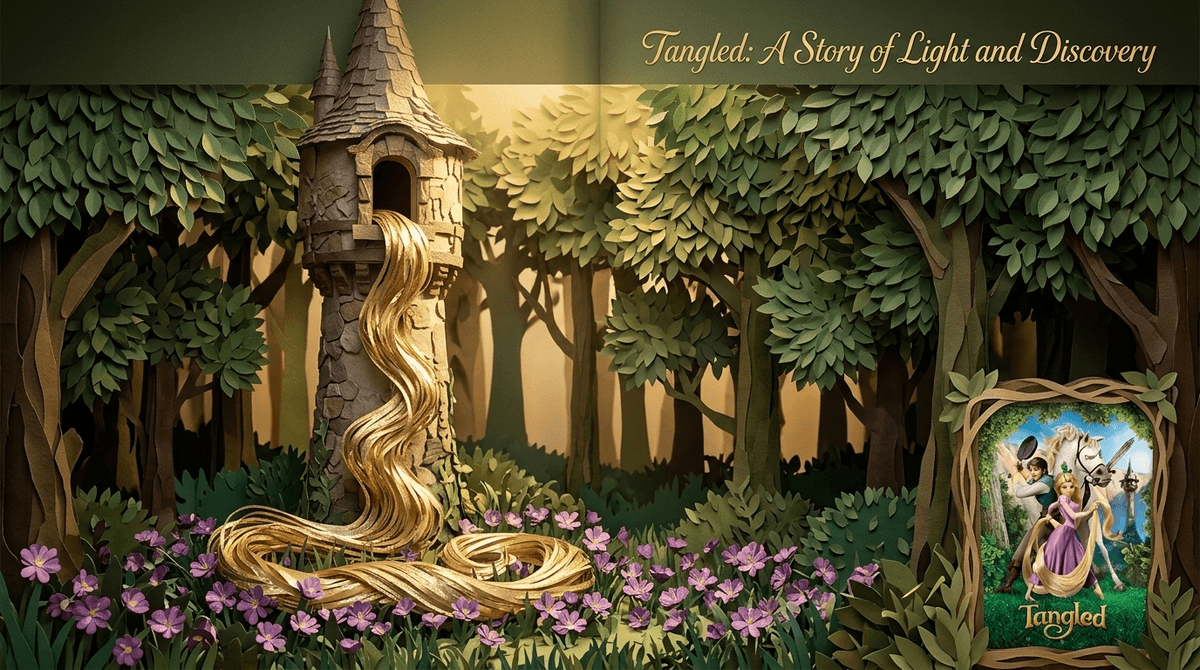
TL;DR: Tangled is arguably the best movie of the "Disney Revival" era because it swaps the "wait for a prince" trope for a nuanced look at emotional abuse, boundaries, and the terrifying first steps of independence. It’s a must-watch for families navigating the transition from "little kid" to "person with their own opinions."
Quick Links:
We’ve all seen the Disney Princess formula, but Tangled did something different. It didn't just give us a girl with magic hair; it gave us a girl who was being systematically manipulated by the person she trusted most.
In a world where our kids are navigating complex social hierarchies on Roblox or dealing with "mean girl" dynamics on TikTok, the lessons in Tangled are more relevant than ever. This isn't just a movie about a tower; it’s a movie about the internal psychological "towers" kids build when they’re told they aren't capable of handling the real world.
The Mother Gothel Masterclass in Gaslighting
Let’s be real: Mother Gothel is a terrifying villain because she doesn't have a magic staff or a dragon form. She has words.
When she sings "Mother Knows Best," she’s doing a "greatest hits" of emotional manipulation. She uses "negging" (insulting Rapunzel’s appearance under the guise of "just being honest"), she weaponizes Rapunzel’s guilt, and she frames the entire outside world as a place of pure danger.
For parents, this is a great opening to talk about boundaries.
- How do you know if a friend is actually being nice or just controlling you?
- What does it look like when someone uses "love" to make you feel small?
Learn more about talking to kids about toxic friendships
The Messy Path to Independence
There is a specific sequence in Tangled that every parent of a pre-teen needs to pay attention to: the "Mood Swing" montage.
Right after Rapunzel leaves the tower, she cycles through "This is the best day ever!" and "I am a horrible daughter, I’m going to kill my mother with grief."
It is the most accurate depiction of the adolescent brain ever put on film. That push-and-pull between wanting freedom and feeling the crushing weight of responsibility (or guilt) is exactly what happens when kids start wanting more autonomy. Whether it's asking for their first phone or wanting to go to the mall alone, that internal conflict is real.
If your family loved the themes in Tangled, these are the logical next steps for your Friday night movie rotation.
If Tangled is about a toxic mother-daughter relationship, Brave is about a complicated one. It’s a great companion piece for talking about how to disagree with parents without "breaking" the relationship. It's refreshing because there is no "love interest"—the core relationship is between Merida and her mom.
This is the modern, more literal version of "leaving the tower." It deals with puberty, parental expectations, and the "red panda" of big emotions. Some parents find the "rebellion" a bit much, but it’s a fantastic conversation starter about how kids' interests might change as they grow up.
While Rapunzel is escaping a villain, Moana is following a calling. Both involve leaving the safety of "home" to find out who they really are. Moana is great for younger kids who might find Mother Gothel a little too creepy.
If you want to talk about family pressure and the roles we get "stuck" in (the perfect one, the strong one, the weird one), Encanto is the gold standard. It’s less about one "villain" and more about how family systems can accidentally hurt people.
Ages 5-7: They’ll love the slapstick humor, the frying pan fights, and Maximus the horse. You might need to explain that Mother Gothel isn't Rapunzel's "real" mom, as the kidnapping plot can be a little confusing or scary for the literal-minded set.
Ages 8-12: This is the sweet spot. They’ll start to pick up on the emotional stakes. This is the age where they’re starting to navigate their own social towers, and Rapunzel’s bravery in the face of "not knowing what to do" is a great model.
Safety Considerations:
- The Stabbing: There is a scene toward the end where a character is stabbed with a shard of glass/knife. It’s not gory, but it’s high-stakes and emotional.
- Gothel’s End: Mother Gothel’s "death" involves her rapidly aging into dust and falling out of a window. It’s thematic and satisfying, but might be "nightmare fuel" for very sensitive kids.
Check out our full safety breakdown for Tangled
Don't turn movie night into a lecture, but if you’re looking for a way to dive deeper, try these "pickup line" style questions:
- "Why do you think Mother Gothel kept telling Rapunzel she was 'too weak' to leave?" (Helps kids identify how people use insults to keep others dependent).
- "Maximus and Pascal don't talk, but we always know what they’re thinking. How do they show their feelings?" (Great for younger kids to work on emotional literacy).
- "Rapunzel had a 'new dream' at the end. Is it okay to change your mind about what you want?" (Validates that growth is a moving target).
Tangled is a rare 10/10 for Disney. It’s funny enough for the kids, smart enough for the parents, and features a soundtrack that won't make you want to pull your hair out (unlike some other "frozen" options).
It’s a reminder that "growing up" isn't just about getting older; it’s about learning to trust your own eyes over the voices telling you that you aren't ready. Whether your kid is 5 or 15, there’s a little bit of that "leaving the tower" energy in all of them.
Next Steps:
- Watch Tangled on Disney+.
- If your kids are obsessed with the lore, check out Tangled: The Series which actually does a great job of expanding the world.
- Find movies like Tangled with strong female leads