

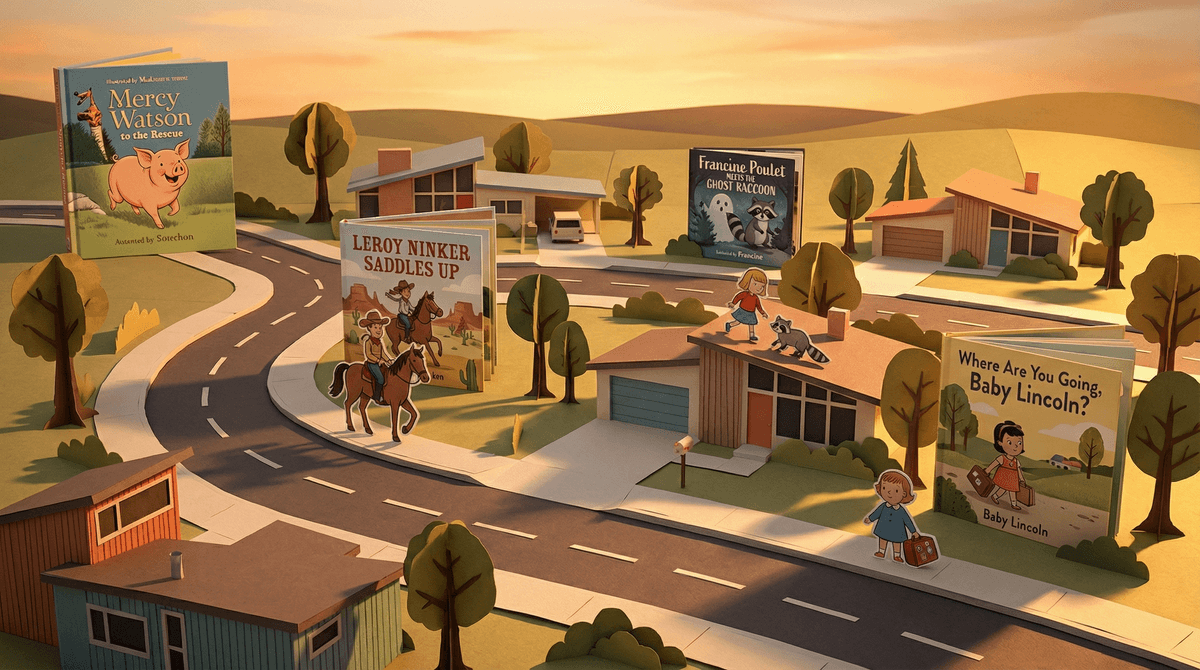
TL;DR: If your kid is aging out of the "I can read about a pig eating toast" phase of Mercy Watson but isn't quite ready to tackle the emotional weight of The Miraculous Journey of Edward Tulane or the complexity of Harry Potter, the Tales from Deckawoo Drive series is your best friend. It’s the perfect "bridge" series that combines quirky humor with actual character development.
Quick Links to the Series:
We’ve all been there. You’re trying to move your 7-year-old away from the high-octane "brain rot" of certain YouTube Kids channels or the endless dopamine loop of Roblox "obby" games. You want them to love reading, but the jump from picture books to "real" novels feels like trying to teach a toddler to play Elden Ring. It’s too much, too fast.
Enter Kate DiCamillo’s Tales from Deckawoo Drive.
If Mercy Watson is the "gateway drug" to reading—short, slapstick, and full of buttered toast—then Deckawoo Drive is the sophisticated follow-up. It’s still funny, still features Chris Van Dusen’s iconic mid-century modern illustrations, but it starts asking bigger questions about what it means to be a person (or a cowboy, or an animal control officer).
This series is a collection of "transitional" chapter books. Each book focuses on a different supporting character from the original Mercy Watson universe.
While the Mercy books are basically 80-page sitcoms, the Deckawoo Drive books are character studies. They’re longer, have more text per page, and deal with internal struggles—fear, loneliness, the desire for adventure—in a way that feels incredibly accessible to a 2nd or 3rd grader.
In a world of "Ohio" memes and Skibidi Toilet (yes, we have to talk about it), Deckawoo Drive feels like a breath of fresh air because it doesn’t talk down to kids.
- The Quirk Factor: The characters are weird in a way kids recognize. Leroy Ninker is a tiny man who wants to be a cowboy but has no horse. Eugenia Lincoln is the world’s most intense rule-follower. Kids relate to these "big" personalities because they see them in their own classrooms (and sometimes in their parents).
- Vocabulary that Slaps: DiCamillo uses words like "surplus," "precarious," and "melancholy." She doesn't simplify the language; she uses the context to teach it. It’s the literacy version of hiding spinach in a smoothie.
- The Art: Chris Van Dusen’s illustrations are bright and cinematic. For a kid who is used to the visual stimulation of Minecraft, having high-quality art on every few pages helps keep them engaged when the text gets dense.
You don’t necessarily have to read these in order, but starting with Leroy Ninker is usually the best bet.
Leroy Ninker has a hat, boots, and a lasso, but he’s missing the horse. When he finally gets one (Maybelline), he realizes that being a cowboy is less about looking cool and more about the terrifying responsibility of caring for another creature. It’s a great story about persistence and overcoming the "first-day jitters."
Francine is the "World’s Greatest Animal Control Officer" until she meets a raccoon that might be a ghost (or just really scary). This one is perfect for kids who struggle with anxiety or that feeling of "I’m not as good at this as I thought I was." It’s basically a masterclass in regaining your confidence.
This is the "road trip" book of the series. Baby Lincoln (who is an elderly woman, not a baby) finally stands up to her overbearing sister Eugenia and goes on a "necessary journey." It’s a beautiful look at independence and finding your own voice, even if you’re "old."
Stella is a dreamer who gets into a conflict with a classmate who only cares about facts. If your kid is the creative type who is constantly getting told to "focus" or "stop daydreaming," this book will make them feel seen.

- Read-Aloud (Ages 5-6): If your kid is still in the picture book phase, these make incredible bedtime stories. The chapters are short enough to read two at a time, and the humor works for adults too.
- Independent Reading (Ages 7-9): This is the sweet spot. The font is large, the margins are wide, and the vocabulary provides just enough challenge without causing a "this is too hard" meltdown.
- Safety Considerations: There is zero "bad" content here. No violence, no questionable language, no hidden agendas. The biggest "conflict" is usually someone being a bit of a grouch or a character feeling lonely. It’s safe, wholesome, but—crucially—not boring.
In our community data, we see a huge spike in screen time around 2nd and 3rd grade. This is often because kids "finish" the easy readers and get bored before they find the next thing they love. They default to YouTube because it’s easy.
When your kid finishes a Deckawoo Drive book, use it as a bridge to digital wellness conversations:
- Comparison: "Leroy Ninker really wanted to look like a cowboy before he actually was one. Do you think people do that on TikTok or Instagram too?"
- Empathy: "Why do you think Eugenia is so mean to Baby Lincoln? Is she just a 'griefer' like in Roblox, or is she just scared?"
- Digital Balance: Use these books as "Slow Media." If they get 30 minutes of Minecraft, they get 20 minutes of Deckawoo Drive. It helps balance the fast-paced digital world with a slower, more contemplative narrative.
Tales from Deckawoo Drive isn't just a series of books; it's a developmental milestone. It proves to your kid that they can handle a "thick" book with chapters and complex emotions.
If you're looking to steer your child away from the "brain rot" of mindless scrolling and toward a love of storytelling that will last a lifetime, this is where you start. It’s funny, it’s smart, and it’s one of the few series that actually deserves the hype.
Next Steps:
- Grab Leroy Ninker Saddles Up from the library or your local bookstore.
- Read the first two chapters out loud to hook them.
- Check out our guide on the best podcasts for kids for more screen-free entertainment options.