

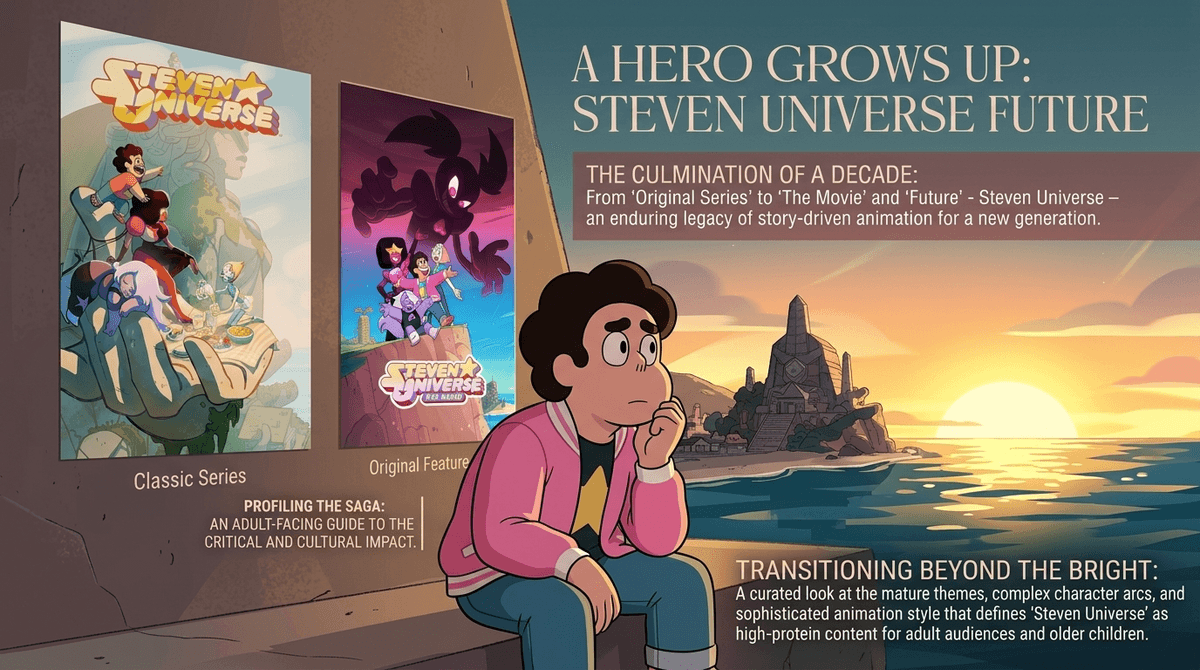
TL;DR: Steven Universe Future is the 20-episode epilogue to the hit series Steven Universe. While the original show was about a boy learning to use his powers to save the world, Future is about what happens to that boy’s mental health after the world is saved. It’s a masterclass in explaining PTSD, burnout, and the "gifted kid" identity crisis to tweens and teens.
Quick Links:
- Watch the original: Steven Universe
- The bridge between series: Steven Universe: The Movie
- For younger siblings: Bluey (for emotional intelligence at a preschool level)
- Similar vibes: She-Ra and the Princesses of Power
If your kids have been in the Cartoon Network ecosystem at all over the last decade, you’ve probably heard the catchy theme song or seen the crystal-gem-themed merch. The original Steven Universe followed Steven, a half-human, half-alien boy, as he navigated childhood with three magical guardians (the Crystal Gems).
Steven Universe Future is different. It’s a limited series that picks up after the main conflict is over. Steven is now 16. He has successfully brokered peace across the galaxy. But instead of "living happily ever after," Steven is falling apart.
The show shifts from "monster-of-the-week" adventures to a deep, psychological exploration of what it feels like to grow up and realize your childhood wasn't exactly "normal." It deals with the reality that even if you’re a hero, you can’t fix everyone, and you certainly can't fix yourself just by being "good" or "useful."
We spend a lot of time talking about "brain rot" or the dangers of TikTok and Snapchat, but we often overlook the content our kids are consuming on streaming platforms like Netflix or Max.
Steven Universe Future is the antithesis of brain rot. It is high-protein media. In a world where kids are constantly performing for an audience or feeling the pressure to be "exceptional" online, Steven’s struggle with identity is incredibly relatable.
The show tackles:
- Trauma Processing: Steven realizes that the "adventures" he had as a kid were actually life-threatening events that left him with literal and figurative scars.
- The Pressure to be Perfect: Steven feels like he has to be the therapist for everyone else, a common trait in "parentified" kids or those who feel they must maintain a certain digital persona.
- Healthy Boundaries: Learning when to say "no" to people who rely on you too much.
Your 12-year-old might not use the word "existentialism," but they definitely feel it. Steven Universe Future resonates because it doesn't talk down to them.
- Relatable Puberty: Steven’s powers start reacting to his emotions in ways he can’t control—his skin turns pink, he grows in size, and he accidentally breaks things. It’s the perfect metaphor for the physical and emotional volatility of being 16.
- The Fandom: The "SU" community is massive. Kids love the lore, the music (composed by Rebecca Sugar), and the incredibly diverse cast of characters.
- Validation: For kids who feel like they have to "carry" their friend group or who struggle with anxiety, seeing a hero go through the same thing is deeply validating.
While the original Steven Universe is generally safe for ages 7+, I’d suggest waiting until age 11 or 12 for Future.
It’s not that the content is "inappropriate" in terms of violence or language; it’s just heavy. There are moments where Steven’s mental health spiral becomes genuinely distressing to watch. One episode, "Growing Pains," explicitly deals with a medical professional explaining how Steven’s childhood trauma has affected his nervous system.
If your child is already struggling with anxiety or has a history of trauma, you’ll definitely want to co-watch this one. It provides a great opening for conversation, but it can be an emotional gut-punch if they watch it alone in their room.
Steven spent his whole life being the "chosen one." Now that there’s no war to fight, he doesn't know who he is. This mirrors the experience many kids have when they transition from being the "star" of elementary school to just another kid in middle or high school.
The series continues the original’s legacy of being incredibly inclusive. It features non-binary characters, same-sex relationships, and diverse family structures without making them "the point" of the story. It’s just the world they live in. If your family prioritizes diversity in media, this is a gold standard.
Without spoiling the ending, the show concludes by reinforcing that "magical" solutions don't fix mental health issues—professional help, community support, and self-care do. It’s a very grounded message for a show about space aliens.
If your kid is binge-watching this on their iPad, try these conversation starters:
- "Steven seems like he’s carrying the weight of the world on his shoulders. Do you ever feel like you have to be the one to fix things for your friends?"
- "What do you think about how Steven’s powers react when he gets angry? Does that feel like what happens when you’re stressed?"
- "In the show, Steven feels like he can't talk to the Gems about his problems because he doesn't want to worry them. Who are the people in your life you feel like you can talk to without worrying?"
Learn more about how to have "tech-positive" conversations with your kids
If your kid finished Future and is looking for more "deep" animation that isn't just mindless noise, check these out:
A fantastic series about a girl who finds herself in a magical world. Like Steven Universe, it deals with identity, found family, and standing up against systemic pressure. Great for ages 9+.
Similar to Future, this is a series of specials that revisit the characters of Adventure Time as they grow up and face more "adult" emotional challenges.
The GOAT (Greatest of All Time) of "kids' shows that are actually for everyone." It balances action with deep philosophical questions about war, forgiveness, and responsibility.
If your kid prefers reading, this series features dragons dealing with prophecy, war, and the trauma that comes with being a "hero."
Steven Universe Future is rare. Most media for kids stops at the "victory." This show has the courage to ask, "Okay, but are the kids actually okay?"
It’s not always an easy watch—it can be uncomfortable and sad—but it’s one of the most useful tools I’ve found for helping kids understand their own emotional landscape. If you’re trying to move your family’s digital diet away from "brain rot" and toward something that actually builds emotional intelligence, this is a must-watch.
Next Steps:
- Check if they’ve seen the original Steven Universe first. The impact of Future is lost without it.
- Watch the first few episodes of Future with them.
- Be prepared for a "big feelings" conversation afterward.