

If you've been watching kids' shows lately, you've probably noticed something different from the cartoons of our childhood: characters with two moms, storylines about gender identity, casual same-sex crushes that aren't treated as "special episodes." LGBTQ+ representation in kids' media has evolved dramatically in the past decade, moving from subtext and coded characters to explicit, age-appropriate inclusion.
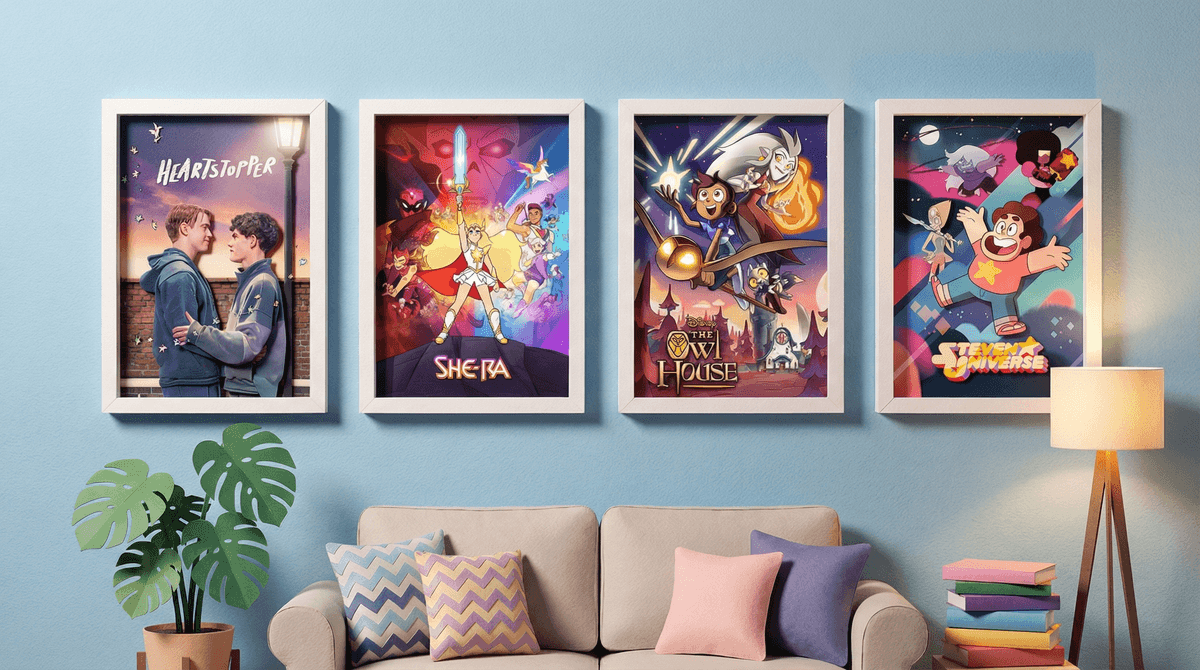
We're talking about everything from The Owl House featuring a bisexual protagonist in a same-sex relationship, to Steven Universe exploring gender fluidity and queer relationships, to Heartstopper becoming a cultural phenomenon for tweens and teens. Even preschool shows like Blue's Clues have featured Pride parades and diverse family structures.
This isn't just happening in niche streaming content. Major platforms like Disney+, Netflix, Cartoon Network, and Nickelodeon are all producing content with LGBTQ+ characters and themes. And yes, it's sparking conversations at pickup lines, in parent group chats, and probably in your living room too.
Here's the thing: whether you're fully on board, cautiously curious, or feeling uncertain about this shift, your kids are encountering this content. According to recent surveys, over 20% of Gen Z identifies as LGBTQ+, and even younger kids are growing up in a world where these identities are part of their everyday reality—at school, in their friend groups, and yes, in their media.
The representation matters for different reasons depending on your kid:
For LGBTQ+ kids: Seeing themselves reflected in media can be genuinely life-changing. Research consistently shows that positive representation correlates with better mental health outcomes, reduced feelings of isolation, and stronger self-acceptance. That character with two dads might be the first time a kid realizes their family isn't "weird."
For kids with LGBTQ+ family members or friends: It normalizes their reality and gives them language to talk about their experiences. When Andi Mack featured a coming-out storyline, countless kids suddenly had a reference point for understanding their sibling, parent, or friend's experience.
For all kids: Exposure to diverse characters and family structures builds empathy, challenges stereotypes, and prepares them for the actual diversity they'll encounter in life. It's basically the same argument for why representation of different races, cultures, and abilities matters.
Let's get real about what age-appropriate LGBTQ+ representation actually looks like, because there's a lot of confusion (and misinformation) out there:
Preschool and Early Elementary (Ages 3-7)
At this age, representation is mostly about family structures and gender expression. Think: a character mentions their two moms in passing, a boy likes to wear dresses, a family celebrates Pride. Shows like Daniel Tiger's Neighborhood and Doc McStuffins have featured same-sex parents the same way they show different family configurations—matter-of-factly.
The content is no more "mature" than showing a mom and dad kiss goodbye. If your kid asks questions, simple answers work: "Some families have a mom and a dad, some have two moms, some have two dads, and some have one parent. All families are different!"
Middle Elementary (Ages 8-11)
This is where you start seeing more character identity and mild crushes. The Loud House features a character with two dads who are just... dads. Craig of the Creek includes non-binary characters. Gravity Falls revealed a same-sex couple in its finale.
The representation here mirrors how these shows handle any crush or relationship—age-appropriately. A character might have a crush on someone of the same gender, handled with the same awkward sweetness as any tween romance.
Tweens and Teens (Ages 12+)
Now we're into more explicit storylines about identity, coming out, and relationships. Heartstopper is the gold standard here—a sweet, wholesome show about a gay relationship that parents and teens are watching together. The Owl House features a bisexual protagonist whose identity is part of the story but not the whole story. Sex Education (definitely for older teens) explores a wide range of identities and experiences.
These shows tackle real issues: coming out anxiety, discrimination, finding your community, first relationships. They're often more thoughtful about consent and healthy relationships than a lot of straight teen content, honestly.
If your kid hasn't mentioned it: You don't need to make it a Big Talk. If you're watching together and a character has two moms, you can simply acknowledge it: "Oh, they have two moms—cool." Your casual acceptance (or discomfort) speaks volumes.
If your kid asks questions: Answer at their level. Young kids usually just want basic facts. Older kids might be processing their own feelings or identities, or trying to understand a friend's experience. Find questions to understand what they're really asking before launching into an explanation.
If this conflicts with your values: This is real, and you're not alone in navigating it. You can acknowledge that different families have different beliefs while still teaching respect: "Our family believes X, but other families believe Y, and we treat everyone with kindness." You can also explore age-appropriate content that aligns with your values while still preparing your kids for a diverse world.
If your kid might be LGBTQ+: Pay attention to how they engage with this content. Are they especially drawn to certain characters or storylines? This might be their way of exploring their own identity in a safe way. Keep the door open for conversations without pressure.
For younger kids (5-10):
- The Loud House - casual, background representation
- Steven Universe - thoughtful themes about identity and love
- She-Ra and the Princesses of Power - adventure with diverse characters
For tweens (10-14):
- The Owl House - fantasy adventure with LGBTQ+ leads
- Kipo and the Age of Wonderbeasts - post-apocalyptic fun with casual representation
- Andi Mack - realistic coming-out storyline
For teens (14+):
- Heartstopper - the sweet, wholesome gold standard
- Love, Simon - coming-out story that's genuinely lovely
- Schitt's Creek - family comedy with pansexual representation
LGBTQ+ representation in kids' media is here to stay, and it's not going anywhere. The question isn't whether your kids will encounter it, but how you'll help them process it.
You don't have to have all the answers. You don't even have to be completely comfortable with it yet. What matters is creating space for your kids to ask questions, modeling respect even when you disagree, and recognizing that representation—seeing diverse people and families—is fundamentally about helping kids understand the world they're actually growing up in.
The shows doing this well aren't pushing an agenda; they're reflecting reality and telling good stories with diverse characters. Just like how we want kids to see characters of different races, abilities, and backgrounds, LGBTQ+ representation is part of showing them that the world is bigger than any one experience.
Start with co-viewing. Watch shows together so you can gauge content and be there for questions. Here's how to make co-viewing actually work.
Get curious about what they're already watching. Check out YouTube, TikTok, and Roblox—LGBTQ+ content and creators are everywhere in digital spaces, often more explicitly than in traditional media.
Focus on media literacy overall. Teach your kids to think critically about ALL media they consume—representation, stereotypes, whose stories get told and whose don't. Building strong media literacy skills helps them navigate everything they encounter.
And remember: you're doing great by even reading this and thinking intentionally about these questions. That's what Screenwise parents do.