

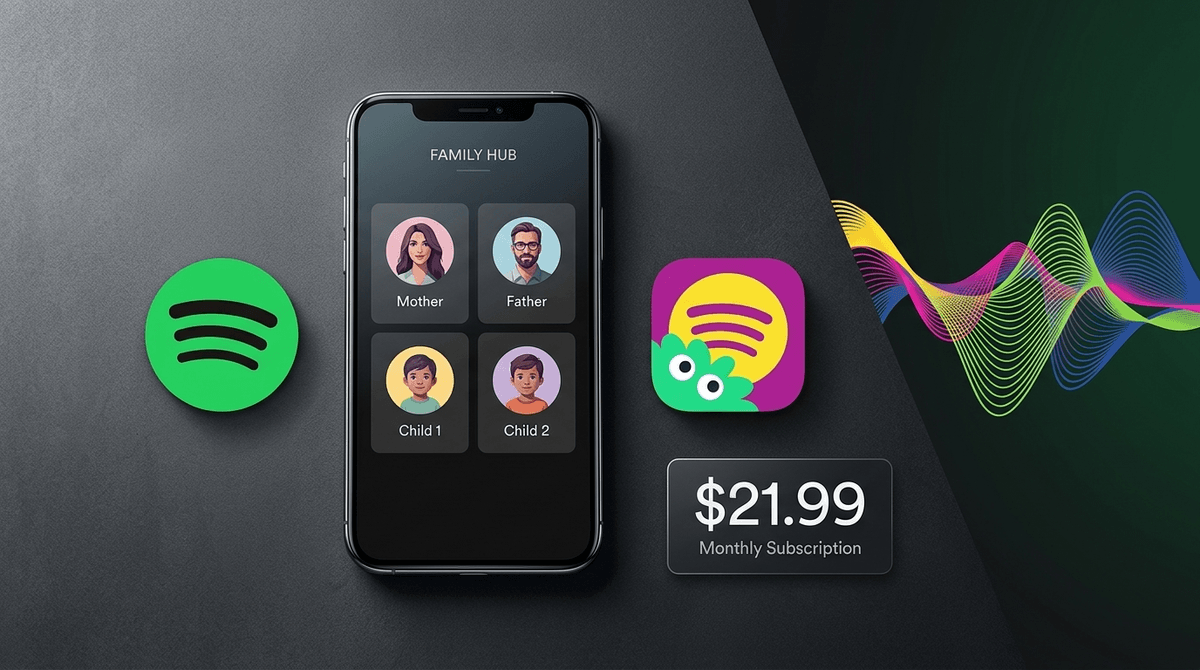
TL;DR: As of January 2026, the Spotify Family Plan has officially hit $21.99 per month. While the price hike bites, the plan remains the gold standard for keeping your personal "Discover Weekly" from being colonizing by Skibidi remixes and "Ohio" memes. You get six premium accounts, the standalone Spotify Kids app, and increasingly robust parental controls.
Quick Navigation:
I know, I know. Another subscription increase. We’re all currently living through the "Great Subscription Creep" of the mid-2020s, and seeing that notification that Spotify is now nudging $22 a month feels like another tiny hole in the family bucket.
But before you rage-quit and go back to burning CDs (do we even have players for those anymore?), let’s talk about why this plan is often the hill intentional parents choose to die on. It’s not just about the music; it’s about digital hygiene, algorithm protection, and keeping your sanity intact when your seven-year-old discovers the "Skibidi Toilet" soundtrack.
The Spotify Family Plan is designed for up to six people living under one roof. For $21.99, everyone gets their own individual Premium account. This means:
- No ads (the biggest win for kids with low attention spans).
- Individual libraries (your Taylor Swift era doesn't have to overlap with your partner's 90s Grunge phase).
- Offline listening for those long car rides where the iPad signal dies.
- Access to the Spotify Kids app.
If you’ve ever let your kid use your main Spotify account for a "quick" dance party, you know the horror. You wake up Monday morning, ready for some chill lo-fi beats to start your workday, and instead, your "Made For You" playlist is 40% Minecraft parodies and 60% high-pitched remixes of songs about "Gyatt" and "Rizz."
This is what I call the Algorithm Hijack. In 2026, music algorithms are spookily good at predicting what we want, but they are incredibly fragile. Once the Spotify AI thinks you’re a fan of Skibidi Toilet audio clips, it takes months of aggressive skipping to convince it otherwise.
The Family Plan solves this by giving kids their own digital sandbox. They can listen to "The Gummy Bear Song" 400 times in a row on their account, and your personal recommendations remain a sanctuary for grown-up music.
By the time kids hit 2nd or 3rd grade, they start developing a "digital identity." They want to curate their own playlists. They want to find the songs they heard on Roblox or saw in a YouTube short.
If you’re wondering why your kid keeps calling things "Ohio" or "Sigma," it’s likely coming from the viral audio trends that start on social media and migrate to Spotify. Having a Family Plan allows you to see what they’re actually listening to without being a "helicopter parent." You can browse their playlists and use it as a conversation starter: "Hey, I saw you added a lot of Imagine Dragons lately, want to hear the stuff I liked at your age?"
One of the best features for parents with younger kids (ages 5-12) is the Managed Account system.
When you add a child to your Family Plan, you can choose between a standard account or a managed Spotify Kids account.
- Spotify Kids is a separate, simplified app. It’s colorful, easy to navigate, and the content is hand-picked by editors. You won't find any explicit lyrics here. It’s perfect for the Bluey and Disney soundtrack crowd.
- Managed Standard Accounts: As they get older (around 10-12), they’ll want the "real" app because the kids' version feels "babyish." With a managed account, you can still toggle the Explicit Content Filter from your master dashboard.
Music is a great "entry drug" to digital responsibility. Unlike TikTok or Instagram, Spotify is primarily consumption-based rather than performance-based. There’s less pressure to "look" a certain way, though there is still a social element with "Friend Activity" and shared playlists.
- Ages 5-9: Stick to the Spotify Kids app. It’s safe, curated, and prevents accidental exposure to podcasts that might be way too mature for them.
- Ages 10-13: This is the transition period. They can move to the main app, but keep the Explicit Content Filter ON. This is also a great time to introduce them to educational podcasts like Brains On! or Wow in the World.
- Ages 14+: At this point, they’re likely managing their own tastes. The Family Plan is mostly just a way to save money and keep the billing centralized.
It’s not just the music we have to worry about anymore. Spotify has leaned heavily into Video Podcasts and Audiobooks.
- Video Podcasts: Some podcasts on Spotify now have video components. If your kid is "listening" to a podcast, they might actually be watching content that hasn't been vetted for visual safety.
- Audiobook Access: The Family Plan now includes 15 hours of audiobook listening per month for the plan manager. Be aware that while you get the hours, your kids can see the titles in the library. If you're listening to a spicy thriller, the cover art and description are right there.
- Social Features: Kids can see what their friends are listening to if they connect their accounts. It’s relatively harmless, but it can lead to "music FOMO" or exposure to artists you might not be ready for them to hear.
Here is the "No-BS" part: The explicit filter on Spotify relies on metadata provided by record labels. Sometimes, a "clean" version of a song still has pretty suggestive themes, or the label forgets to tag a track correctly.
Also, the filter doesn't work on Podcast content the same way it does on music. A podcast might be full of profanity but not marked as "explicit." If your kid is into the "true crime" trend, they might stumble onto some pretty graphic descriptions that the Spotify filter won't catch.
If you have two or more people in your house who listen to music daily, yes.
Buying two individual Premium accounts already puts you at nearly the same price point, and you lose the parental control dashboard. If you have three or more, it’s a no-brainer.
However, if you are strictly an Apple household or you already pay for YouTube Premium, you might want to look at their family bundles. YouTube Music is often included with YouTube ad-free, which might be a better "bang for your buck" if your kids are already spending hours on that platform.
Next Steps for Intentional Parents:
- Audit your accounts: Check if you're still paying for individual accounts and merge them into a Family Plan to save.
- Set up the PIN: If you use Spotify Kids, make sure you set up the parental PIN so your toddler doesn't accidentally wander into your Joe Rogan archives.
- The "Excluded from Taste Profile" Trick: If you do let your kid use your account occasionally, go to the playlist they use, click the three dots, and select "Exclude from your taste profile." This stops those songs from ruining your recommendations.
Get a step-by-step guide to securing your family's Spotify
The price hike sucks, but in the grand scheme of digital wellness, having a dedicated, ad-free, and monitored space for your kids to explore music is one of the "better" ways to spend your tech budget in 2026. Just maybe skip that extra latte this week to balance the books.