

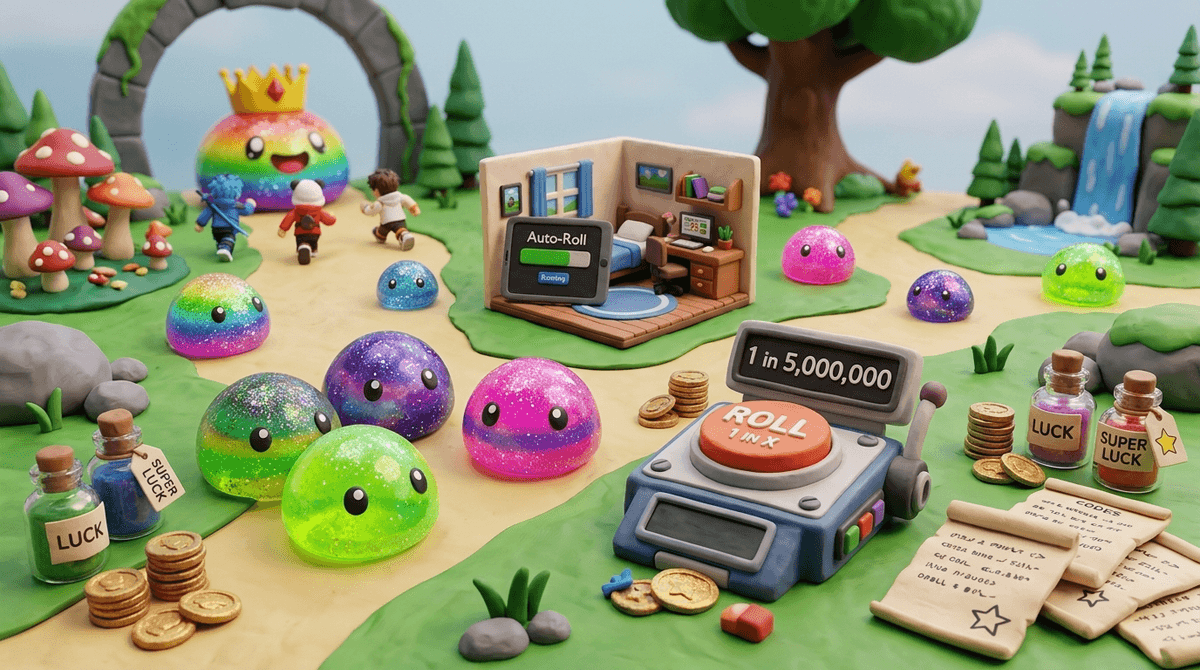
Slime RNG codes are the digital equivalent of a "free spin" coupon at a casino, except the prize is a glowing cartoon blob and the player is likely a ten-year-old on an iPad. In the current Roblox landscape, "RNG" (Random Number Generator) games are a massive sub-genre where the primary gameplay mechanic is—unironically—doing absolutely nothing except clicking a button and praying to the gods of probability.
Slime RNG is a "luck simulator" where players "roll" for rare slimes; codes provide free luck boosts and coins to speed up the process. While it’s not gambling in the legal sense (you can’t cash out), it uses the exact same dopamine loops as a slot machine. If your kid is into this, they’re likely chasing the social status of a "1 in 1,000,000" drop or leaving their device on all night to "AFK farm."
To understand why your kid is hunting for "Slime RNG codes," you have to understand the RNG genre. Unlike Minecraft, where you build, or Fortnite, where you shoot, Slime RNG is about the "roll."
Players click a button to generate a slime. Most of the time, they get a "Common" slime. But there is a slim, microscopic chance they’ll hit a "Mythic" or "Galactic" slime with odds like 1 in 5,000,000. These rare slimes come with flashy auras and leaderboard spots. That’s it. That’s the game. The codes are highly coveted because they grant "Luck Boosts" or "Speed Boosts," temporarily tilting those astronomical odds slightly in the player's favor.
In Slime RNG, progress is gated by time and luck. Developers release codes—usually strings of text like "LUCKYSLIME" or "500KLIKES"—to keep the community engaged.
- Luck Boosts: These are the gold standard. They might double a player's luck for 10 or 30 minutes.
- Coins/Currency: Used to buy "Luck Potions" or permanent upgrades (like faster rolling).
- The Hunt: Kids find these codes on Discord, X (Twitter), or YouTube. It’s a low-stakes scavenger hunt that keeps them tethered to the game’s social ecosystem.
If your kid is asking for codes, they aren't trying to "beat" the game—they're trying to optimize their "rolls per hour." In the world of RNG games, efficiency is the only skill that matters.
The biggest friction point with Slime RNG isn't the content (which is just colorful blobs) or even the spending (which is optional). It’s the AFK (Away From Keyboard) culture.
Because the odds of getting the best slimes are so low, the "pro" way to play is to leave the game running 24/7. Roblox players use "Auto-Clickers" or built-in "Auto-Roll" features to keep their characters rolling while they sleep, go to school, or eat dinner. If you’ve ever walked into your kid’s room at 11 PM and found their laptop screen glowing with a spinning slime, this is why. They are "farming" for a rare drop. It’s a masterclass in passive consumption, and for many parents, the literal "screen time" is less of an issue than the fact that the hardware is running a luck-marathon all night.
If your kid loves the collection aspect of Slime RNG but you’d prefer they play something with, you know, gameplay, there are better options that hit the same "gotta catch 'em all" itch:
- Bee Swarm Simulator: Still on Roblox, still has rare drops, but requires actual strategy, quest completion, and resource management.
- Pet Simulator 99: The titan of the collection genre. It has the same "rolling" feel but with a much deeper world and sense of progression.
- Stardew Valley: If they like the "slimes" specifically, let them go fight them in the mines. It’s a much more rewarding loop than clicking a single button.
The "RNG" craze is a trend of the moment. Before Slime RNG, it was Sol's RNG. The names change, but the math stays the same.
The Conversation to Have: Ask them, "What happens once you get the 1-in-a-million slime?" Usually, the answer is "I get a cooler aura." This is a great opening to talk about how games use "variable reward schedules"—the same thing that makes TikTok scrolling or slot machines hard to put down—to keep people engaged without actually providing a new experience.
Q: Is Slime RNG gambling? Technically, no, because you aren't wagering real money for a chance to win real money. However, it uses identical psychological triggers. If your kid has an impulsive personality or you're worried about future gambling habits, the "rolling" mechanic is worth a conversation.
Q: Are Slime RNG codes safe? Yes, as long as they are entered directly into the game. Never let a kid go to an external website that asks for their Roblox password in exchange for "secret codes"—those are almost always phishing scams.
Q: Why does my kid leave Slime RNG running all night? They are "AFK farming." The game allows them to "Auto-Roll," and since the rarest slimes have odds of 1 in several million, they need thousands of rolls to stand a chance. Leaving the device on is the only way to get enough rolls.
Q: Can you play Slime RNG without spending money? Yes. Codes and "Luck Potions" (bought with in-game coins) allow for a "Free to Play" experience. However, the game will constantly tempt them with "Robux" shortcuts to buy permanent luck multipliers.
Slime RNG is a low-effort, high-dopamine distraction. It’s not "dangerous" in the traditional sense, but it is a massive time-sink designed around the mechanics of chance. If they're using codes to get a quick boost and then moving on to other things, it’s harmless. If they’re obsessed with the "AFK" grind, it might be time to steer them toward a game where their input actually matters.
- Check out our best video games for kids list for titles that reward skill over pure luck.
- Explore the digital guide for elementary school to see how other families handle Roblox trends.
- Find a "Slime RNG" alternative
