

TL;DR
If you’re looking for a game that rewards deep thinking rather than fast thumbs, Slay the Spire is the gold standard. It’s a "roguelike deck-builder"—which is a fancy way of saying it’s a digital card game where you try to climb a tower, and if you lose, you start over with more knowledge. It’s single-player, turn-based (so no "I can't pause it!" excuses), and involves a massive amount of mental math and strategic planning. With a sequel, [Slay the Spire 2](https://screenwiseapp.com/media/slay-the-spire-2-app, officially announced for 2025/2026, now is the perfect time to let your kid get obsessed with a game that actually builds their brain.
Check out our full guide on why deck-builders are great for critical thinking
At its core, Slay the Spire is a strategy game. Your kid chooses one of four characters (The Ironclad, The Silent, The Defect, or The Watcher), and they start with a basic deck of cards—usually just simple "Strike" and "Defend" cards.
As they move up the "Spire," they encounter monsters, elite bosses, and "unknown" events. Every time they win a fight, they get to add one of three random cards to their deck. The goal is to build a "synergy"—a deck where the cards work together so well that they become more than the sum of their parts.
It’s a roguelike, which means the map is different every time you play. When you die (and you will die a lot), you lose your deck and start from the bottom. But the "meta-progression" is that the player gets smarter. They learn which cards are "trash" and which ones are "broken" (in a good way). It’s a game about failing forward, which is a pretty great life lesson for a ten-year-old who usually throws a fit when they lose at Monopoly.
We often talk about "educational games" like they have to be boring apps with a cartoon owl. Slay the Spire is the opposite. It’s a "stealth" educational tool.
To play well, your kid has to constantly calculate:
- Basic Arithmetic: "The monster is attacking for 18. I have 5 block. If I play this card, I get 7 more block. How much health do I lose?"
- Resource Management: You only have 3 "Energy" per turn. Do you spend it all on defense, or take a risk and attack?
- Probability: "There are 15 cards in my draw pile. Two of them can save me. What are the odds I pull one next turn?"
- Synergy and Logic: "If I play this card that doubles my Poison, but the enemy has a Shield, does the math still work in my favor?"
It’s essentially a logic puzzle wrapped in a fantasy skin. I’ve seen kids who "hate math" spend forty minutes staring at a boss fight, doing complex mental multi-step equations to figure out how to survive one more turn.

We’ve all seen the "brain rot" content—those high-stimulation, low-effort YouTube shorts or endless Roblox "obby" games that seem to turn kids into zombies.
Slay the Spire is the "slow food" of gaming.
- It’s Turn-Based: There is no timer. Your kid can sit there for ten minutes thinking about a single move. This builds sustained focus and impulse control.
- No Microtransactions: Unlike Hearthstone or Marvel Snap, there are no "booster packs" to buy with real money. You buy the game once, and you have everything. There is no "pay to win" mechanic to drain your bank account.
- Single Player: There is no toxic chat. No 13-year-old in another state is going to scream slurs at your kid because they played a card wrong. It’s just your kid vs. the machine.
The ESRB rating for Slay the Spire is Everyone 10+.
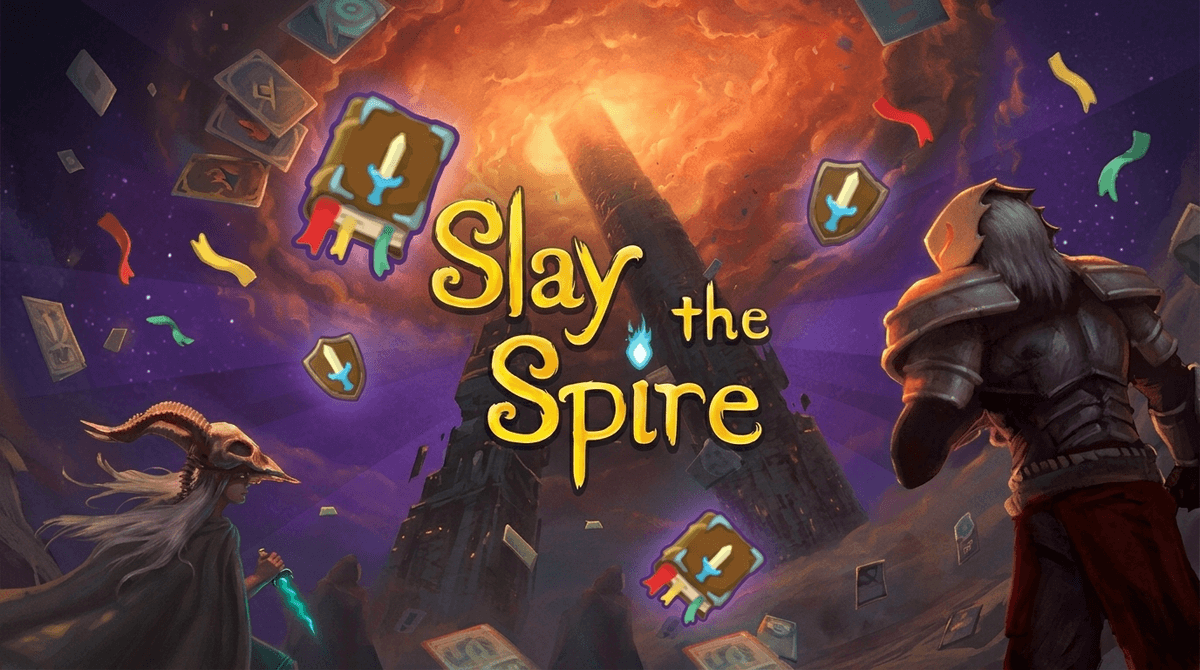
The Content: The art style is a bit "dark fantasy." There are skeletons, slimes, and some slightly creepy monsters (like a giant heart that beats at the end of the game). There is "fantasy violence"—you’re hitting things with swords and spells—but there’s no gore or realistic blood. It’s very stylized, almost like a dark comic book.
The Complexity: This is the real barrier. A 7-year-old might find the math and the reading a bit much. It requires a solid reading level because every card has text that explains what it does. However, if you have a younger kid who is a Pokemon TCG pro, they’ll pick this up in five minutes.
Community Norms: Most kids start getting into "strategy" games around 4th or 5th grade. If your kid is into Minecraft but is starting to get bored of just building, this is a great "next step" into more mature gaming systems.
Honestly, Slay the Spire is one of the "safest" games on the market for parents who are tired of being nagged for V-Bucks.
- Cost: It’s usually around $20-$25 on consoles (Nintendo Switch, PlayStation, Xbox) and even cheaper on mobile/tablets.
- Mobile Version: The mobile app is a full port of the game. It’s great for long car rides, but be warned: it is addictive. Because it’s turn-based, it’s very easy for a kid to say "just one more fight" for three hours.
- Data Privacy: Since it’s primarily an offline, single-player game, there’s very little data-harvesting compared to your average "free-to-play" mobile game.
Learn more about the difference between "Free to Play" and "Premium" games
If your kid is playing, ask them about their "build." This is the best way to engage with a strategy gamer.
- "What's your winning strategy this run?" (Are they focusing on defense? Poison? Strength?)
- "Which relic is carrying you right now?" (Relics are items that give permanent buffs. Kids love explaining how they work.)
- "What’s the hardest boss for you?" (This usually leads to a story about a "close call" which is great for narrative building.)
If they get frustrated because they keep dying, remind them that dying is part of the game. In roguelikes, you aren't supposed to win every time. You're supposed to learn one new thing every time.
If your kid has already beaten the Heart and is looking for more, or if you want some physical alternatives to get them off the screen, check these out:
This is the "it" game of 2024. It’s basically poker but with "Joker" cards that let you cheat and break the game. It’s incredibly math-heavy and addictive. Ages 10+ (Note: It uses poker imagery, but there is no actual gambling with real money).
Yes, they made a physical version! It’s a cooperative board game, so you and your kid can play on the same team against the Spire. It’s a great way to take the digital obsession and turn it into a family game night. Ages 12+ (it's a bit complex to set up).
Very similar to Slay the Spire but you’re defending a train. It’s a bit faster-paced and has a "tower defense" feel to it. Ages 10+.
The classic. If they like building decks in Slay the Spire, they will love the competitive nature of Pokemon. Just be prepared for the "I want real cards" requests. Ages 7+.
Great for quick 3-minute bursts. It’s very polished, though it does have more "microtransaction" pressure than Slay the Spire. Ages 10+.
Slay the Spire is a rare win-win. Your kid feels like they’re playing a "cool," challenging video game, and you get to watch them perform mental gymnastics and probability calculations without a single complaint.
With [Slay the Spire 2](https://screenwiseapp.com/media/slay-the-spire-2-app on the horizon for 2026, letting them master the mechanics now is a great way to encourage a hobby that values patience, logic, and critical thinking over mindless clicking.
- Download the game on a tablet or Switch for a long trip.
- Sit with them for the first 20 minutes to help them read the card descriptions.
- Ask them to explain their strategy once they reach the second "Act."
Check out our guide on the best strategy games for middle schoolers