

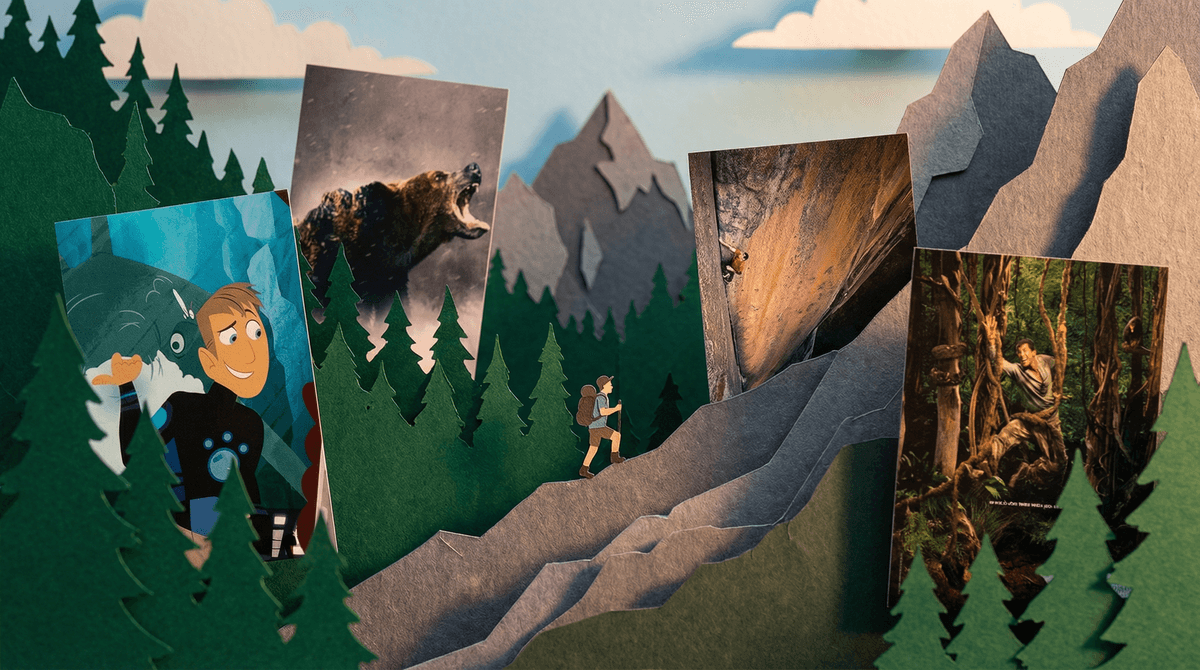
We're talking about content where the main character (or host) heads into the wilderness—sometimes with a crew, sometimes completely alone—to hike, camp, survive, or explore. Think Man vs. Wild, Alone, Wild Kratts for the younger set, or even narrative shows like Hatchet adaptations where a kid has to make it on their own in nature.
This genre spans everything from survival reality TV to animated nature adventures to scripted dramas about self-reliance. The common thread? Someone's out there figuring it out, usually with minimal resources and maximum stakes.
There's something deeply compelling about watching someone navigate the wild with just their wits and maybe a backpack. For kids growing up in a world where we've bubble-wrapped everything, these shows offer vicarious risk-taking. They get to experience danger, problem-solving, and independence from the safety of the couch.
Younger kids (ages 5-8) gravitate toward shows like Go, Diego, Go! or Wild Kratts where adventure is paired with animal facts and teamwork. The "solo" part is less literal—there's usually a buddy or magical creature along for the ride.
Tweens and teens want the real deal. They're watching Alone (where contestants actually tap out from isolation and hunger), Free Solo (the climbing doc that'll make your palms sweat), or Running Wild with Bear Grylls. The appeal here is watching humans push limits, make mistakes, and figure out solutions without a safety net.
Here's the thing: this content can be genuinely educational and inspiring. Kids learn about ecosystems, weather patterns, fire-building, water purification, and risk assessment. They see people fail, adapt, and persist. That's good stuff.
But let's be real about what you're signing up for:
The survival shows are intense. Man vs. Wild has Bear Grylls drinking his own urine and eating live insects. Alone features people literally starving and having psychological breakdowns. 127 Hours involves self-amputation. These aren't background viewing for your 7-year-old.
Some shows romanticize risky behavior. The "just go for it" mentality can be inspiring, but it can also downplay the years of training, safety protocols, and backup plans that make these adventures possible. Your 10-year-old watching Free Solo might not grasp that Alex Honnold has been climbing since age 11 and has a team of experts supporting him.
The "solo" narrative can be misleading. Even shows about solo adventures usually involve camera crews, safety personnel, and emergency protocols. That's not a bad thing—it's just worth noting when your kid starts planning their own backcountry expedition.
Ages 5-8: Stick with animated or highly produced nature shows. Wild Kratts, Octonauts, and The Magic School Bus all feature adventure with educational content and zero actual peril. My Side of the Mountain (the book or older film) works for strong readers who can handle a longer narrative.
Ages 9-12: This is the sweet spot for shows like Running Wild with Bear Grylls (celebrity guests soften the survival edge), Survivorman (Les Stroud is more methodical and educational than theatrical), or narrative content like Hatchet (the book is better than any adaptation, honestly). These kids can start understanding risk vs. reward and the preparation that goes into these adventures.
Ages 13+: They can handle the real stuff. Alone, Free Solo, Touching the Void, 127 Hours. Just watch with them the first time and talk through what they're seeing. These shows can spark conversations about mental health, preparation, knowing your limits, and when to quit.
Looking at our community data, about 42% of kids are watching YouTube solo, and that's where a lot of outdoor adventure content lives now. Channels like Brave Wilderness, Outdoor Boys, and various survival/camping creators are hugely popular.
Meanwhile, 40% of families use Netflix regularly (where you'll find Our Planet, Alone, and various nature docs), and 50% watch Disney+ together (home to National Geographic content and shows like Running Wild).
The key difference: supervised vs. independent viewing. Nature documentaries on Disney+ are pretty safe for independent viewing. A YouTube rabbit hole of survival content? That needs more oversight, especially for younger kids who might stumble into increasingly extreme content.
Co-watch first. Even if your kid is old enough to watch independently, start together. You'll catch any content that's too intense AND you'll have a shared reference point for conversations.
Connect it to real experiences. If your kid is obsessed with hiking shows, plan a family hike. Let them navigate with a map. Teach them to identify plants. Build a fire together (safely, obviously). The gap between watching and doing is where the real learning happens.
Talk about the production. Explain that these shows have teams, safety protocols, and often multiple takes. That doesn't make them fake—it makes them responsible. This is especially important for teens who might be inspired to push their own limits.
Use it as a gateway to independence. Our data shows that 70% of families haven't yet given their kids much digital independence, but physical independence is different. If your 11-year-old is watching survival content, maybe they're ready to camp in the backyard alone, or take a solo walk around the block, or plan a family hike route. Small steps that build real confidence.
Hiking and solo adventure shows can be fantastic content—they inspire curiosity about nature, teach problem-solving, and model resilience. They can also be intense, misleading about risk, and occasionally gross (looking at you, Bear Grylls).
The move here is to match the content to your kid's maturity level, watch together when possible, and use what they're seeing on screen as a springboard for real-world experiences. A kid who watches Alone and then spends a weekend camping with you is getting way more value than a kid who just binges survival content and never leaves the house.
Want to dig deeper? Check out our guide on outdoor and nature content for more specific recommendations by age. Or explore how to balance screen time with outdoor time in a way that actually works for your family.
And if your kid is already deep into the survival content rabbit hole, let's talk about how to channel that interest into real skills they can actually use.