

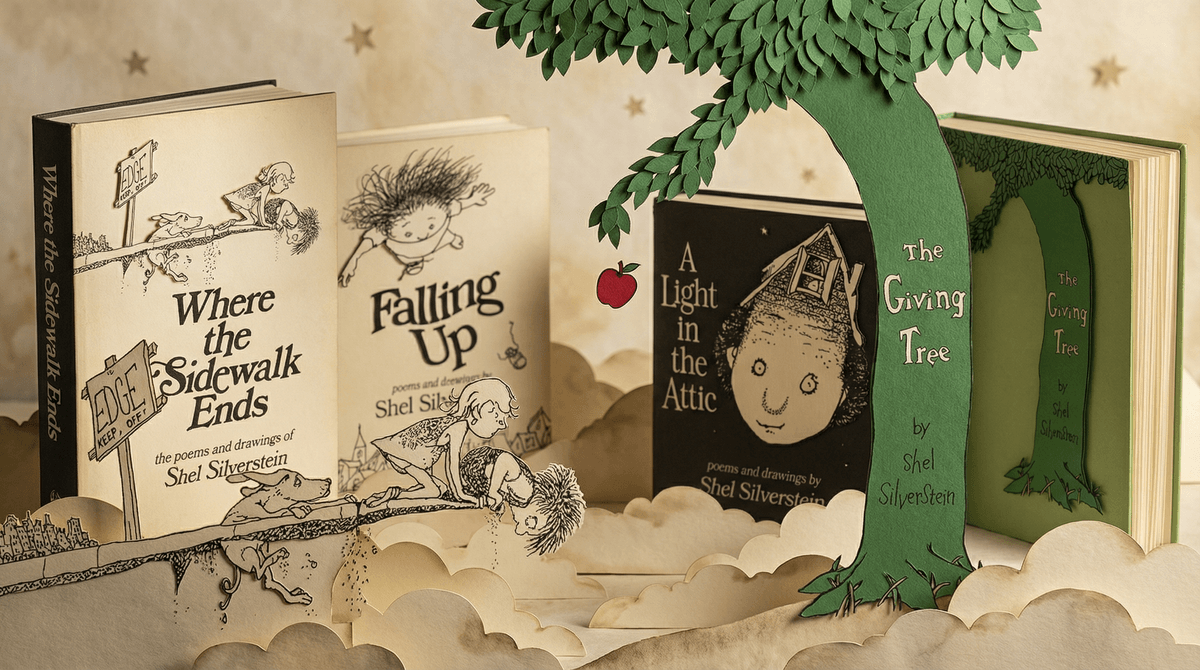
Shel Silverstein isn't exactly "digital media," but if you're here, you're probably trying to figure out if his poems are actually appropriate for kids—or you just caught your 8-year-old giggling at something that sounded a little... off.
Shel Silverstein (1930-1999) was a poet, cartoonist, and songwriter who became a children's literature icon through books like Where the Sidewalk Ends, A Light in the Attic, and Falling Up. His simple line drawings and deceptively simple poems have been classroom staples since the 1970s.
But here's the thing: Silverstein wasn't really a children's author. He wrote for Playboy, drew cartoons for adults, and wrote country songs about heartbreak and drinking. He just happened to also write poetry that kids absolutely loved—and that's where things get interesting for parents.
Kids are drawn to Silverstein because he treats them like people who can handle complexity. His poems don't talk down. They're funny, weird, sometimes gross, occasionally sad, and always memorable.
"Sick" is about a kid faking every illness imaginable to avoid school—until she remembers it's Saturday. "Sarah Cynthia Sylvia Stout Would Not Take the Garbage Out" is a gleefully disgusting catalog of rotting food. "The Giving Tree" will make you cry (and question everything about relationships and self-sacrifice, but we'll get to that).
The rhythm and rhyme make these poems incredibly sticky. Kids memorize them without trying. They're perfect for reluctant readers because they're short, punchy, and actually entertaining. And unlike a lot of "educational" content, Silverstein never feels like he's trying to teach a lesson—even when he absolutely is.
The Humor Can Be Dark
Silverstein's humor isn't always sunshine and rainbows. Kids get eaten by monsters, characters die in absurd ways, and some poems have a genuinely morbid edge. "Little Abigail and the Beautiful Pony" is about a girl who literally dies because her parents won't buy her a pony. It's darkly funny, but it's also... dark.
Most kids find this hilarious. They understand the absurdity. But if your family doesn't do dark humor, or if you have a particularly sensitive kid who takes things literally, you might want to preview some poems first.
"The Giving Tree" Is Controversial
Let's address the elephant in the room. The Giving Tree is Silverstein's most famous work, and it's also the most debated. Is it a beautiful story about unconditional love? Or is it a deeply problematic tale about codependency and taking without giving back?
Both interpretations are valid. Some kids see it as sweet. Some adults see it as a cautionary tale about boundaries. It's worth reading with your kids and actually talking about it—what do they think? Did the boy do the right thing? Was the tree happy? It's one of those rare children's books that can spark genuine philosophical discussion.
Some Content Feels Dated
Silverstein wrote in the '70s and '80s, and occasionally it shows. There are a few poems that touch on gender roles or body image in ways that feel... not great in 2026. Nothing wildly offensive, but you might find yourself doing some light reframing in real-time.
The Poetry Is Actually Good
Unlike a lot of children's poetry that's just rhyming for the sake of rhyming, Silverstein's work has real craft. The rhythm is tight, the wordplay is clever, and the imagery is vivid. Kids who read Silverstein are getting an actual introduction to what makes poetry work—meter, internal rhyme, surprise endings, emotional punch.
Ages 4-7: Start with the sillier, lighter poems. "Boa Constrictor," "Sick," "Hug O' War," "Peanut Butter Sandwich"—these are goofy and accessible. You can read them aloud and do funny voices. Skip the darker stuff for now.
Ages 8-12: This is peak Silverstein age. Kids can handle the full range—the funny, the weird, the dark, the sad. They'll probably read these books cover-to-cover multiple times and have favorites they quote constantly. Let them explore independently, but be available for conversations about the poems that hit different.
Ages 13+: Teens often rediscover Silverstein and appreciate the layers they missed as kids. "The Giving Tree" hits different at 14. "Masks" (about two people who never show their true selves to each other) suddenly feels devastatingly relatable. These aren't just kids' poems—they're human poems.
Read them out loud. Silverstein's poems are meant to be performed. The rhythm and rhyme come alive when you say them.
Let kids illustrate their favorites. Silverstein's drawings are iconic, but kids love making their own versions.
Use them as conversation starters. "What do you think this poem means?" is a great question that doesn't have a wrong answer.
Don't force the lesson. If your kid just thinks "Sarah Cynthia Sylvia Stout" is funny because of the word "gloppy," that's fine. They don't need to extract a moral about responsibility. Sometimes a poem is just a poem.
Shel Silverstein's work is a rare thing: genuinely beloved by kids, genuinely well-crafted, and genuinely thought-provoking. Yes, some poems are dark. Yes, some feel dated. Yes, you might have opinions about The Giving Tree.
But these books have staying power for a reason. They're funny, they're memorable, and they treat kids like they can handle complexity and nuance. In a world of content designed to be "safe" and "educational," Silverstein is refreshingly weird and human.
Worth having on the shelf? Absolutely. Just maybe read them yourself first if you're the type who needs to know what's coming.
- Grab Where the Sidewalk Ends from the library and read a few poems together
- Check out other great poetry books for kids if your family gets into it
- Explore more classic children's books that spark real conversations