

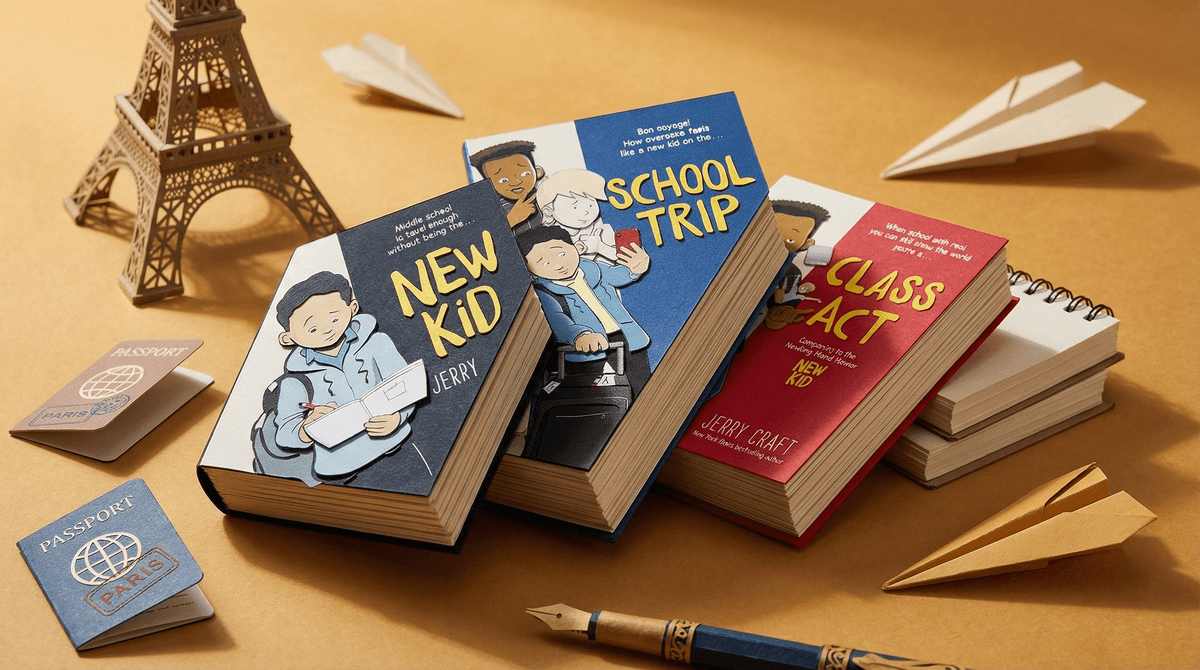
School Trip is the third book in Jerry Craft's acclaimed graphic novel series that started with New Kid and continued with Class Act. Published in 2023, it follows seventh-grader Jordan Banks and his classmates from Riverdale Academy Day School as they take a school trip to Paris.
If you haven't read the series yet, here's what you need to know: Jordan is one of the few Black students at his prestigious private school, and these books brilliantly capture his experience navigating two worlds—his Washington Heights neighborhood and his predominantly white, wealthy school. School Trip takes this dynamic international, exploring how privilege, identity, and belonging play out when the stakes feel even higher.
The book tackles some weighty themes—microaggressions, economic inequality, cultural appropriation, and what it means to be yourself when you're constantly being "othered"—but does it through Jerry Craft's signature blend of humor, heart, and incredibly relatable middle school drama. It's a graphic novel format, which means it's highly visual and moves quickly, making it accessible even for reluctant readers.
Middle schoolers are eating this series up for good reason. The graphic novel format makes it a quick, engaging read—most kids can finish it in a few hours. The illustrations are expressive and funny, and Jordan's internal monologue (shown through thought bubbles and side commentary) perfectly captures that middle school experience of constantly analyzing every social interaction.
Kids relate to Jordan's struggles with fitting in, dealing with clueless adults, navigating friendships that get complicated, and figuring out who they are. The Paris setting adds excitement—there's adventure, mishaps, and the universal experience of school trips where everything feels more intense because you're away from home.
But here's what really resonates: Jordan's experience of being seen as "different" is something almost every middle schooler can connect with in some way. Whether it's race, class, learning differences, interests, or just general middle school awkwardness, kids get what it feels like to not quite fit the mold.
This book is going to spark conversations—that's actually its superpower. Jerry Craft doesn't shy away from uncomfortable moments, but he handles them with nuance and age-appropriate care.
The good stuff:
- Real representation: Jordan's experiences with racism and microaggressions are authentic and important for all kids to read about
- Economic class awareness: The book explores wealth disparity in ways that help kids understand privilege without being preachy
- Character growth: Jordan makes mistakes, learns from them, and figures out how to use his voice
- Diverse perspectives: Multiple characters get development, showing different ways of navigating similar challenges
- Humor and heart: Even when tackling serious topics, the book maintains warmth and relatability
Things to be aware of:
- Microaggressions and racism: Characters experience racial profiling, assumptions based on skin color, and being treated as "other." These moments are uncomfortable by design—they're meant to build empathy and awareness
- Economic inequality: The wealth gap between Jordan and some classmates is stark, which might prompt questions about money and fairness
- Peer pressure and mistakes: Characters make poor choices (nothing dangerous, but real middle school stuff like excluding others or going along with the crowd)
- Adult imperfection: Teachers and chaperones sometimes miss the mark or say the wrong thing, which is realistic but might surprise younger readers expecting adults to always get it right
Ages 8-12: This is the sweet spot. The book is written for middle-grade readers and handles its themes in age-appropriate ways. Fourth and fifth graders can absolutely read it, though they might need more conversation support around some of the social dynamics.
Ages 13+: Older middle schoolers and even high schoolers still love this series. They often pick up on additional layers and can engage in more sophisticated discussions about systemic issues.
Younger than 8: Probably wait. Not because of content concerns, but because the social dynamics and emotional complexity really land best for kids who are experiencing or about to experience similar situations.
The graphic novel format makes it accessible for different reading levels. Kids who struggle with traditional chapter books often thrive with graphic novels, and the visual storytelling helps convey emotion and subtext that might be missed in text alone. Learn more about why graphic novels are actually great for literacy development .
.
The beauty of School Trip is that it's basically a conversation starter disguised as entertainment. Here are some natural entry points:
If your child is reading it independently: Ask open-ended questions like "What's happening in the story?" or "Which character do you relate to most?" Let them guide the conversation rather than jumping straight to "What did you learn about racism?"
For discussing identity and belonging: "Have you ever felt like Jordan, like you had to act differently in different places?" or "What would you do if you saw someone being treated the way Jordan was?"
About privilege and economic differences: "Why do you think some of Jordan's classmates don't understand what he's dealing with?" This can open discussions about perspective-taking and empathy.
If your child is Black or another marginalized identity: This book can be validating—seeing their experiences reflected matters. But also check in: "How did it feel to read about Jordan's experiences?" Some kids find it affirming, others might find it heavy.
If your child is white or economically privileged: This is an opportunity to build awareness and empathy. Focus on "What did you learn about experiences different from yours?" and "How can you be a better friend/classmate to people who might be dealing with this?"
Pro tip: Read it yourself first if you can. It's a quick read, and you'll be so much more equipped to have meaningful conversations if you know the specific situations Jordan faces.
School Trip by Jerry Craft is exactly the kind of book we should be putting in front of middle schoolers. It's entertaining enough that kids actually want to read it, but meaningful enough that it sticks with them.
Yes, it deals with serious topics. Yes, it might make some readers (kids and adults) uncomfortable at times. That's the point. Growth happens in discomfort, and this book provides a safe, age-appropriate way to explore complex social issues through a character kids genuinely care about.
If you're worried about whether your child is "ready" for conversations about race and privilege—they're already having those experiences and observations, whether we're talking about them or not. Books like this give us a framework and vocabulary to have those conversations together.
The entire series (New Kid, Class Act, and School Trip) is worth reading. They build on each other, and watching Jordan's growth across the series is genuinely moving.
If your child hasn't read the series yet: Start with New Kid. It won the Newbery Medal for a reason, and the series makes more sense read in order.
If they've already read the first two: Get School Trip from your library or bookstore and maybe read it alongside them. Having a shared reading experience makes conversations so much easier.
Looking for similar books: Check out Twins by Varian Johnson, Allergic by Megan Wagner Lloyd, or Ghosts by Raina Telgemeier for other graphic novels that tackle meaningful themes through middle-grade perspectives.
Want to dig deeper: Explore how to talk to kids about race and identity or learn more about choosing diverse books for your family.
The bottom line? This is a book that meets kids where they are, entertains them, and helps them become more empathetic humans. That's a win in anyone's book.