

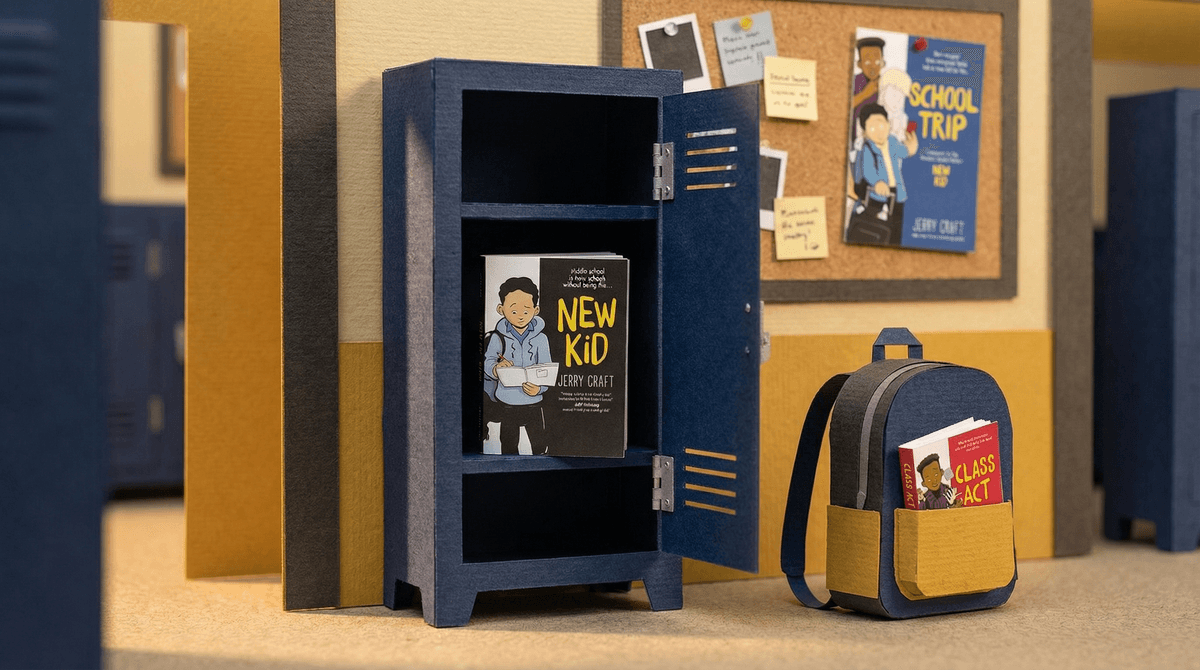
Class Act is the 2020 graphic novel sequel to Jerry Craft's Newbery Medal-winning New Kid. While New Kid follows Jordan Banks navigating a prestigious private school as one of the few Black students, Class Act shifts perspective to Jordan's friend Drew Ellis, exploring what it means to be a scholarship student caught between two worlds—his old neighborhood and his new school.
The book deals with code-switching, economic inequality, identity, and the complicated dynamics of middle school friendship. It's part of a growing wave of graphic novels that tackle real social issues without talking down to kids, and it's become a staple in middle school classrooms and libraries across the country.
If your kid brought this home from school or has been devouring it, here's what you need to know.
It's painfully relatable. Drew's experience of feeling like he doesn't fully belong anywhere—not quite fitting in with his wealthy classmates, but also feeling distant from old friends who think he's "changed"—hits hard for kids navigating their own identity formation in middle school.
The graphic novel format makes it accessible. Kids who might struggle with dense text or who are visual learners can engage with complex themes through Craft's expressive illustrations and dialogue-driven storytelling. It's the same reason Raina Telgemeier's books and Dav Pilkey's Dog Man series have become so popular—graphic novels meet kids where they are.
The characters feel real, not like after-school special versions of kids. Drew makes mistakes, misreads situations, and sometimes says the wrong thing. His friends have their own complicated lives and perspectives. There's no neat bow at the end where everyone learns a lesson and everything is perfect.
The Big Themes
Code-switching and identity: Drew constantly adjusts how he speaks, dresses, and acts depending on whether he's at school or in his neighborhood. This is a lived reality for many kids (especially kids of color navigating predominantly white spaces), and the book doesn't shy away from how exhausting and confusing it can be.
Economic privilege and class: The book explores how wealth shapes opportunities, expectations, and even friendships. Drew's wealthy classmate Liam struggles with his own issues despite material comfort, while Drew navigates the stress of being on scholarship and the assumptions people make about him.
Friendship complexity: The relationships in this book are messy. Friends hurt each other, misunderstand each other, and have to figure out how to repair trust. It's a much more realistic portrayal than the "friends forever no matter what" narrative in younger kids' books.
Age Appropriateness
Best for ages 9-14, though the sweet spot is probably 10-13. The content deals with:
- Microaggressions and racial stereotyping (handled thoughtfully, not gratuitously)
- Economic stress and family financial pressure
- Social exclusion and bullying
- Some mild language (nothing worse than what they hear at school)
There's nothing graphic or inappropriate, but younger elementary kids might not have the social-emotional context to fully understand the nuances. High schoolers can still get a lot from it, though some might feel it's "too young" for them (even if the themes are evergreen).
Reading Level vs. Content Level
Here's something important: the reading level is accessible (around 3rd-5th grade), but the content is solidly middle school. This is actually perfect for kids who are strong readers but need material that matches their emotional maturity, or for reluctant readers who need something that doesn't feel babyish.
If your kid is reading or has read Class Act, here are some conversation starters that don't feel like a book report interrogation:
"Drew talks about feeling like he has to act differently in different places. Do you ever feel that way?" This opens up discussion about code-switching without making it about race specifically (though it can go there if your kid wants to).
"What do you think about what happened with Drew and [character name]?" Let them drive the conversation about specific plot points that stuck with them.
"Do you think the characters' money situations affected their friendships?" This can lead to really interesting discussions about class and privilege that many families don't talk about openly.
"Were there parts that felt similar to your school?" Chances are, yes. Middle school social dynamics are universal even when the specifics differ.
This book centers Black characters and their experiences, written by a Black author who draws from his own life. For Black kids, especially those in predominantly white schools, seeing their specific experiences reflected can be incredibly validating. For kids from other backgrounds, it's an opportunity to understand perspectives different from their own.
If your family is white, this might bring up questions about race, privilege, and microaggressions. That's good. Learning to talk about race is an essential part of raising kids in a diverse world.
If your kid loves Class Act, they should definitely read New Kid if they haven't already (it won the Newbery Medal for a reason). The third book, School Trip, came out in 2023 and follows the gang on a school trip to Paris.
Also worth checking out: Guts by Raina Telgemeier, Roller Girl by Victoria Jamieson, and The Crossover graphic novel for more middle-grade graphic novels that tackle real issues.
Class Act is one of those rare books that's both entertaining and genuinely meaningful. It doesn't preach, but it also doesn't shy away from hard topics. It trusts kids to handle complexity, which is exactly what middle schoolers need.
Whether your kid is dealing with code-switching, navigating economic differences with friends, or just trying to figure out who they are in middle school, this book offers both mirrors and windows—chances to see themselves and to understand others.
If your kid loved it: Make sure they've read the whole trilogy. Consider other books by Jerry Craft or graphic novels that tackle social issues.
If you want to read it yourself: It's a quick read (maybe 90 minutes) and genuinely enjoyable for adults. Reading it gives you shared language to talk about these themes with your kid.
If you're looking for more like this: Check out our guide to graphic novels for middle schoolers or books about identity and belonging.
The fact that your kid is reading this—especially if they chose it themselves—is a good sign. They're engaging with material that asks them to think critically about the world around them. That's exactly what we want.