

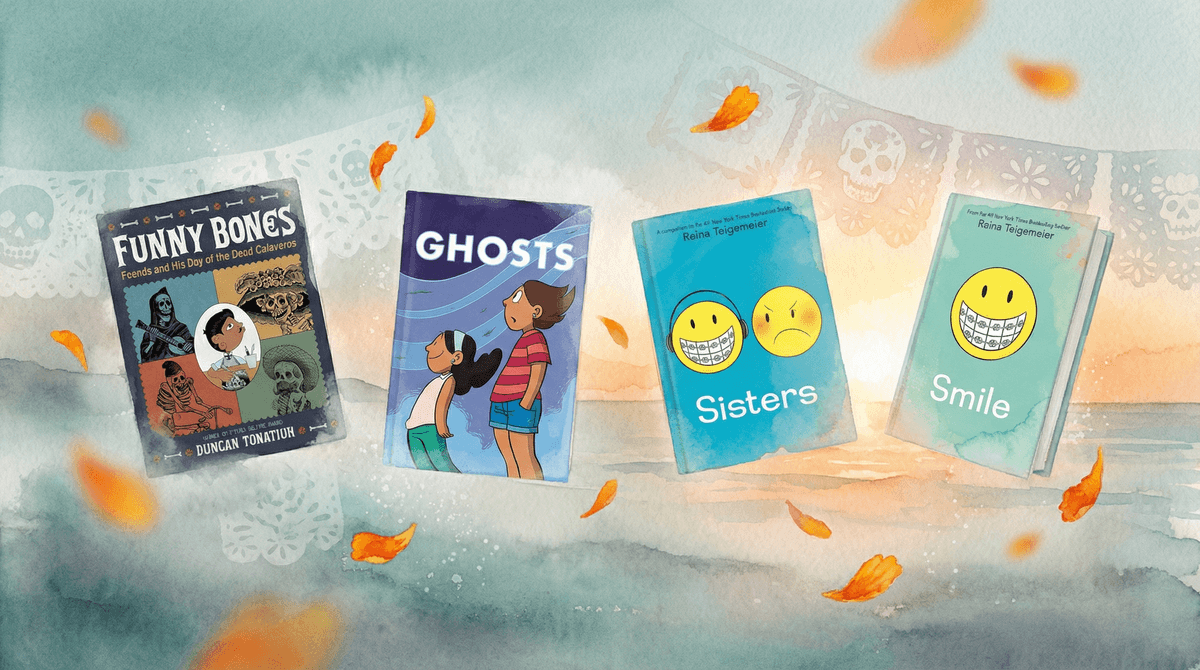
Ghosts is a graphic novel by Raina Telgemeier, the beloved author behind Smile, Sisters, and Drama. Published in 2016, it tells the story of Catrina and her family moving to the coastal town of Bahía de la Luna, California, where the cool, foggy air is supposed to help her younger sister Maya's cystic fibrosis.
The book tackles some genuinely heavy topics: chronic illness, death, and grief—all wrapped up in the Mexican tradition of Día de los Muertos (Day of the Dead). It's about 256 pages of full-color illustrations that make these complex themes accessible to middle-grade readers, typically recommended for ages 8-12.
Here's what makes parents pause: there are actual ghosts in this book. Not scary horror-movie ghosts, but friendly spirits who are part of the town's culture and history. The climax involves Maya—a child with a serious, life-threatening illness—wanting to meet these ghosts at a Day of the Dead celebration.
Telgemeier has this gift for making kids feel seen. Her graphic novels tackle real emotions without being preachy, and her art style is incredibly approachable—expressive characters with just enough detail to pull you into the story.
For kids dealing with their own family challenges (whether it's a sibling's health issues, moving to a new place, or feeling like the "responsible" older kid), Catrina's story resonates deeply. The graphic novel format also makes it accessible for reluctant readers or kids who find dense text overwhelming.
Plus, the cultural representation matters. For Mexican-American kids, seeing their traditions celebrated in a mainstream book is huge. For kids from other backgrounds, it's an engaging introduction to Day of the Dead traditions that goes beyond the superficial skull face paint they might see around Halloween.
The Cystic Fibrosis Representation
Maya has cystic fibrosis (CF), and the book doesn't shy away from showing her using a nebulizer, dealing with limitations on her activities, and the family's constant worry about her health. This is actually really well done—it normalizes chronic illness without making Maya's entire identity about being sick.
However, some parents of children with CF have raised concerns about one plot point: Maya wanting to encounter ghosts and the family's anxiety about whether she's getting "too close" to death, both literally and metaphorically. Some have worried this could send confusing messages to kids with serious illnesses.
That said, many families—including those affected by CF—have found the book opens up important conversations about mortality that are otherwise hard to start.
The Death and Ghost Themes
Let's be clear: this book deals with death as a natural part of life, not something to be feared. The ghosts are friendly, translucent, and connected to Day of the Dead traditions where deceased loved ones are remembered and celebrated.
There's no gore, no jump scares, nothing traumatizing. But there is a scene where the family visits a cemetery, discussions about people who have died, and the underlying tension of Maya's illness.
If your family has recently experienced a loss, or if your child has significant anxiety about death, you'll want to read this one first or read it together. For many families, though, this book provides a gentle framework for discussing mortality in a way that's comforting rather than scary.
Cultural Authenticity
Telgemeier (who is not Mexican-American herself) worked with cultural consultants and has been generally praised for her respectful handling of Day of the Dead traditions. The book shows ofrendas (altars), marigolds, sugar skulls, and the belief that spirits return to visit the living—all core elements of the tradition.
Some critics have noted that as an outsider to the culture, even with consultation, there are limitations to the perspective. But overall, the representation has been well-received, and the book has won several awards including recognition from the Pura Belpré committee, which honors Latino/Latina writers and illustrators.
Ages 8-10: This is right in the sweet spot, but know your kid. If they're sensitive about death or illness, consider reading it together. The graphic novel format makes it easy to pause and discuss.
Ages 11-13: Most kids this age can handle the themes independently, though they might still want to talk about it afterward (and you should let them).
Ages 7 and under: Probably too young for the nuanced themes, though mature 7-year-olds who are already familiar with Day of the Dead traditions might be fine with parental guidance.
Teens: Not too old for Telgemeier! Her books remain popular with middle schoolers, and the emotional themes are sophisticated enough to resonate with older readers.
If your child is reading or wants to read Ghosts, here are some conversation starters:
Before reading:
- "This book talks about a girl whose sister has a serious illness. How do you think that might affect their family?"
- "Have you heard of Day of the Dead? It's a tradition where families remember people who have died. What do you think about that?"
After reading:
- "How did the book make you feel about ghosts? Were they scary or different than you expected?"
- "Why do you think Maya wanted to see the ghosts so badly?"
- "What did you learn about how different cultures think about death and remembering people who have died?"
If your child has a sibling with health challenges, this book might bring up feelings about their own family situation. Create space for them to share without forcing it.
Ghosts by Raina Telgemeier is a thoughtful, beautifully illustrated book that handles heavy themes with care and cultural respect. It's not going to be right for every family—particularly those dealing with recent loss or serious illness who might not be ready for these conversations.
But for families looking to open up discussions about chronic illness, cultural traditions, death, and sibling relationships, this book provides a gentle, age-appropriate entry point. The fact that it's been a classroom staple and won multiple awards speaks to its value.
Like all of Raina Telgemeier's work, Ghosts validates kids' real feelings and experiences while telling an engaging story. That's worth a lot.
Want to read it first? Check your local library—Telgemeier's books are almost always available, though you might have to wait for a hold. It's a quick read (1-2 hours for most adults).
Looking for similar books? Try El Deafo by Cece Bell for another graphic novel about a kid with a health difference, or The Crossover by Kwame Alexander for a different format tackling family and health themes.
Want to learn more about Day of the Dead? Explore the cultural context with your kids through videos, activities, or other books like Funny Bones by Duncan Tonatiuh.
Concerned about the CF representation? The Cystic Fibrosis Foundation has resources for families navigating these conversations.