

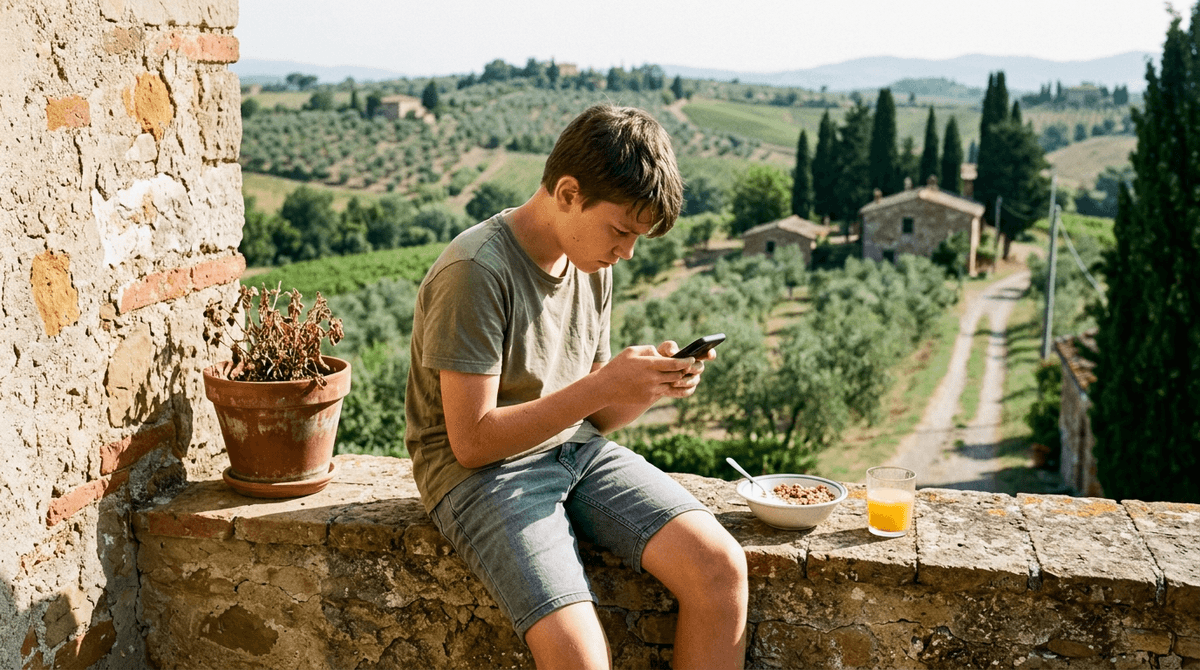
Rural living no longer protects children from weight gain, as nearly 40% of children in traditional farming regions now struggle with obesity driven by weekend screen time and skipped breakfasts.
Prioritize a consistent morning meal and strict weekend screen limits to combat the rapid decline of traditional health benefits in rural environments. Even in areas where the Mediterranean diet was born, nearly half of boys and a third of girls are now overweight, signaling that digital sedentary habits are more powerful than geographic tradition.
Parents often assume a "country life" or a Mediterranean setting provides a natural buffer against modern health issues. We tell ourselves that because the kids have access to space or live in a culture known for healthy eating, they are inherently safer from the "lifestyle diseases" of the city. This study proves that assumption is dead.
When nearly 40% of kids in a rural cohort are overweight, the "geographic protection" theory collapses. For parents, this means you cannot rely on your environment to do the heavy lifting of health. Whether you live in a small Italian village or a quiet American suburb, the digital pull of the weekend and the convenience of processed breakfast are now the primary drivers of your child’s physical health.
Researchers were investigating the "Rural Health Paradox." Traditionally, rural children were more active and ate closer to the land. However, as global food systems change and digital entertainment becomes ubiquitous, researchers suspected that rural children might actually be at higher risk due to lower access to organized sports and the "urbanization" of their diets.
This pilot study, part of the larger SBAM-ONFOODS project, sought to verify if the "Mediterranean Diet" was still a reality for the children living where it originated. They found a significant gap between the traditional ideal and the modern reality of rural childhood.
"The prevalence of overweight and obesity is high," the authors note, highlighting a stark gender divide where 46% of boys were overweight compared to 31% of girls. The data suggests that the "traditional" lifestyle is being replaced by sedentary digital habits and poor nutritional "gateways."
- The Breakfast Gateway: Children who ate breakfast daily were nearly six times more likely to have a high-quality overall diet.
- The Vegetable Gap: Roughly 73% of children do not eat vegetables every day, a shocking departure from Mediterranean norms.
- The Weekend Spike: While weekday screen time is manageable for many, 80% of children exceed two hours of screen time on weekends.
- The Education Link: Maternal education remains a primary predictor of health; children of highly educated mothers were significantly less likely to be overweight.
The "weekend drift" is the real enemy. The study shows that sedentary behavior on the weekends is four times higher than during the week. This suggests that while school provides a necessary structure for movement, that structure completely evaporates on Saturday morning.
Furthermore, breakfast isn't just about the calories—it's a "lead domino." When a child skips breakfast or eats a highly processed "industrial" snack, it sets a metabolic and behavioral tone for the rest of the day. The researchers imply that by securing the first meal of the day, parents can effectively "nudge" the rest of the child's nutritional choices into place without as much hovering.
This was a small pilot study of only 182 children in two specific Italian towns. While the findings are alarming, they represent a snapshot of a specific population and may not apply perfectly to every rural or suburban setting.
Additionally, the data on what the children ate and how long they spent on screens came from parental surveys. This is a "confidence: low" methodology because parents tend to over-report "good" behaviors (like eating broccoli) and under-report "bad" ones (like four hours of iPad time). The actual situation could be worse than the numbers suggest. Finally, because this is a cross-sectional study, we can see that screens and weight are linked, but we can't definitively say the screens caused the weight gain.
- If your child is a habitual breakfast skipper... ensure they eat a "traditional" carbohydrate like whole-grain bread or rusks every single morning to stabilize their diet for the rest of the day.
- If you find your weekend routine feels chaotic... set a hard "screen-free" block on Saturday and Sunday mornings to prevent the fourfold spike in sedentary behavior found in the study.
- If you are raising a boy... be extra vigilant about physical activity levels, as the study found boys in these environments are significantly more likely to be overweight than girls.
- If you are choosing between convenience and health... swap out commercially baked breakfast goods (pre-packaged pastries) for simpler, traditional staples to align better with the health outcomes of the Mediterranean diet.
Geography is no longer destiny when it comes to your child's health. You must actively defend the "gateway" habits—specifically a consistent breakfast and restricted weekend screen time—to prevent modern sedentary culture from overriding the natural benefits of your environment.
Galfo M, D'Addezio L, Roccaldo R et al. (2026). Ponderal Status, Eating and Lifestyle Habits in Rural School Children: A Pilot Survey of the SBAM-ONFOODS Cohort Study. Nutrients. doi:10.3390/nu18111756 — pubmed.ncbi.nlm.nih.gov