

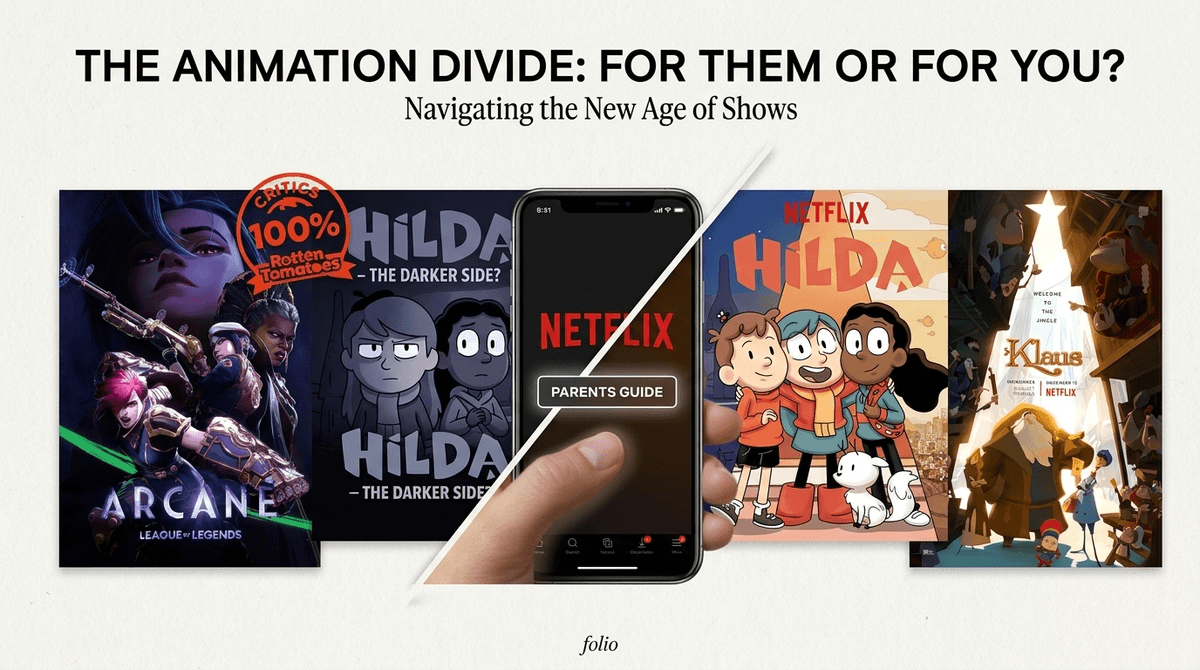
A high Rotten Tomatoes score on a Netflix title tells you exactly one thing: professional critics liked the cinematography, the pacing, or how "subversive" the themes were. It tells you zero things about whether that show will result in your seven-year-old asking you to explain what "existential dread" is at 7:30 AM on a Saturday.
TL;DR: Rotten Tomatoes measures critical acclaim, not family compatibility; a 98% for a show like Arcane means it's a masterpiece for adults, not a safe bet for elementary schoolers. To find content where the quality actually matches your kid's age, skip the Tomatometer and head to our best shows for kids list or our best movies for kids list.
Critics are bored. They watch hundreds of hours of content every year, so they reward things that break the rules. They love "dark reimaginings," "gritty reboots," and "challenging narratives." When a Netflix original gets a 95% or higher, it’s often because it took a genre we think is for kids—like animation or superhero stories—and made it "mature."
Take Arcane. It is, by almost every critical metric, one of the best things Netflix has ever produced. The Rotten Tomatoes score is near-perfect. But it’s also a show about systemic poverty, drug addiction, and siblings trying to kill each other. If you see that 100% and think, "Oh, it’s a cartoon based on a game, the kids will love it," you’re in for a very intense weekend. The critics aren't wrong—it is great—but their "great" isn't always your "appropriate."
There is a specific category of Netflix content that lives in the Rotten Tomatoes "Goldilocks Zone": shows that look like they’re for kids but are actually "deconstructing" childhood.
Critics lose their minds for this. If a show features a talking horse or a colorful robot but uses them to discuss mid-life crises or the heat death of the universe, the Tomatometer is going to hit 99% faster than you can find the remote.
For an intentional parent, this is the trap. You’re looking for Hilda—which is genuinely fantastic, critically acclaimed, and actually for kids—but the algorithm is going to serve you things that "critics also loved" which might be aimed squarely at thirty-somethings with a nostalgia habit.
The "Aged-Up" Animation Tier
Netflix has leaned hard into "Adult Animation" that doesn't always look like South Park.
- Blue Eye Samurai: Stunning, 100% on RT, and absolutely, definitely a TV-MA bloodbath.
- Nimona: A critical darling that hits the sweet spot for older kids and teens, but covers heavy themes of identity and state-sponsored exclusion. It's a masterclass in storytelling, but it's not a "set it and forget it" watch for the younger crowd.
- The Sea Beast: Often compared to How to Train Your Dragon, it holds a high RT score because it’s a solid, traditional adventure. This is one where the critics and parents actually agree.
If the Critic Score (the Tomato) is about "prestige," the Audience Score (the Popcorn bucket) is about "fandom." If a show has a massive built-in fanbase—like anything in the Stranger Things universe or a big-budget anime adaptation—the audience score will be inflated by fans who would give it five stars if it was just a still image of the main character for eight hours.
Neither of these numbers tells you if the "scary parts" are the kind that build resilience or the kind that require a nightlight for the next six months.
Instead of chasing the red tomato, look for these specific indicators that a high-quality show is actually going to land with your family:
The "Co-Watch" Winners
These are shows that critics respect because they aren't "dumbed down," but they remain accessible for the ages they claim to target.
- The Dragon Prince: High critical marks for its world-building, but it stays firmly in the epic fantasy lane that kids can handle.
- Klaus: A rare 90%+ movie that is visually innovative enough for critics and heartwarming enough for a family tradition.
- Orion and the Dark: Written by Charlie Kaufman (a critic favorite), it handles childhood anxiety with a sophistication that respects kids' intelligence without traumatizing them.
The "Quiet" Masterpieces
Sometimes the best stuff for your family doesn't have 50,000 reviews on Rotten Tomatoes. Look for things that prioritize curiosity over conflict.
- Our Planet: High scores because, well, it’s David Attenborough and it’s beautiful. It’s the ultimate "safe" high-quality watch.
- City of Ghosts: A "hidden gem" that critics loved for its unique style, but it’s incredibly gentle and great for younger kids.
The hardest part of navigating Netflix isn't the content—it's the auto-play trailers. Even if you've vetted a 95% rated show for your 10-year-old, the "Because you watched" trailers that trigger immediately after the credits can feature much more intense, critic-bait content. Pro-tip: Turn off "Test Participation" and "Auto-play previews" in the Netflix profile settings. It’s the single best way to keep the "dark and subversive" stuff from leaking into your living room.
When your kid wants to watch something "everyone" is talking about (and the RT score is through the roof), turn it into a conversation about intent. "Critics like this because it's 'dark,' but that usually means it's made for adults who want to feel serious. Let's look at the Screenwise WISE score to see if it’s actually fun, or just 'important.'"
Q: Is a 90% Rotten Tomatoes score a guarantee that a movie is good for kids? No. It’s a guarantee that critics thought it was a good film. A 90% rating for a horror movie or a gritty drama means it’s very good at being scary or depressing. Always check the specific content breakdown before assuming "Fresh" means "Family-Friendly."
Q: Why do some of my kid's favorite shows have low Rotten Tomatoes scores? Critics often penalize shows that are "formulaic" or "simple." But kids love formula and simplicity—it’s how they learn. A show like Paw Patrol doesn't need to be subversive to be effective for a four-year-old.
Q: Does Netflix use Rotten Tomatoes ratings in their app? No, Netflix uses their own "Match" percentage, which is based on your viewing history, not quality. They also show "Top 10" lists, which only measure popularity. Neither of these are reliable indicators of age-appropriateness.
Q: Where can I find ratings that actually matter for parents? Check our best apps for kids list or our digital guide for elementary school for curated recommendations that weigh quality against actual developmental stages.
Rotten Tomatoes is a tool for cinephiles, not a handbook for parents. Use it to find your own Friday night movie, but when it comes to the kids, trust the data that actually accounts for their age. High quality is great; high quality and high relevance is the goal.
- Check the Hubs: See what actually made the cut on our best shows for kids list.
- Go Deeper: If your kid is asking for a specific high-rated show, Get a content breakdown
 .
. - Explore Alternatives: Love the animation style of a "prestige" show but not the themes? Find similar, age-appropriate titles here.