

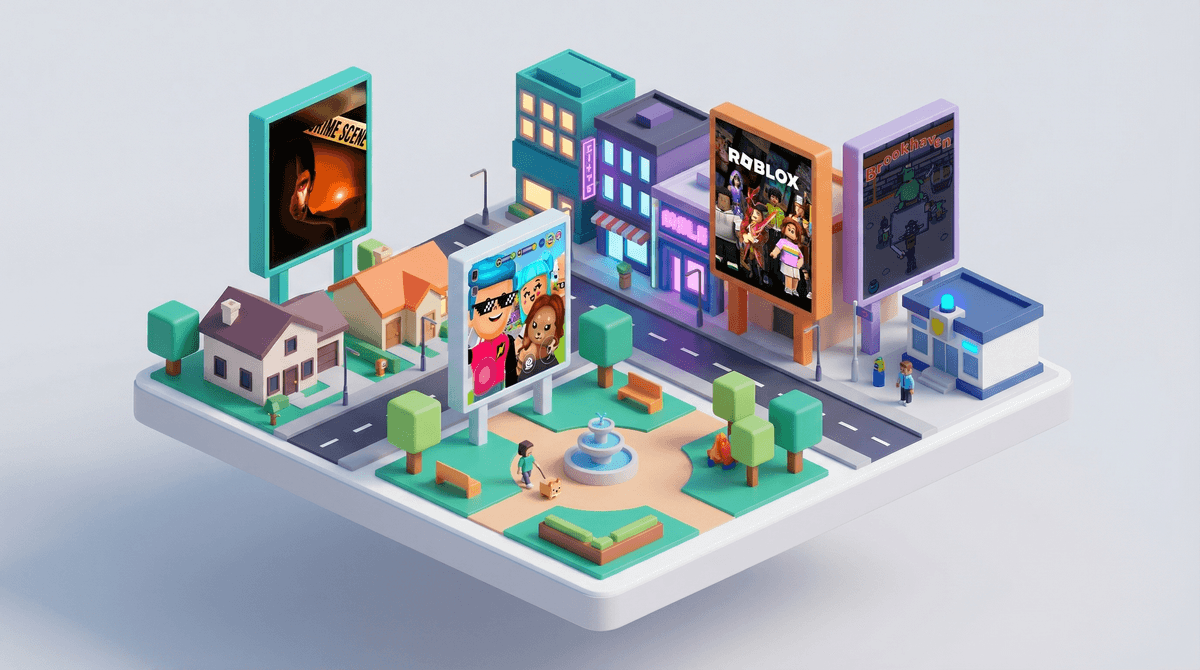
If your kid is playing Roblox, they're not just playing one game—they're jumping between dozens of experiences created by other users. Think of Roblox less like a single game and more like YouTube: it's a platform where millions of creators publish their own games, and a handful become absolutely massive.
The most popular games on Roblox aren't necessarily the ones with the best graphics or most complex gameplay. They're the ones that tap into what kids actually want: hanging out with friends, role-playing, collecting stuff, and yes, sometimes just causing absolute chaos.
Here's what's actually dominating the platform right now, and what you need to know about each one.
Adopt Me is the perennial giant—think of it as a virtual pet simulator meets home design game. Kids adopt and raise pets (from common dogs to legendary dragons), trade them with other players, and decorate their houses. It's been one of the top games for years, and the trading economy is... intense. We're talking kids negotiating multi-pet trades like they're day traders. The game itself is pretty innocent, but the social pressure around rare pets can get real. If your kid is begging for Robux to buy pet eggs, this is probably why.
Brookhaven is basically a digital dollhouse where kids role-play everyday life. They can be a parent, a kid, a cashier at the store, whatever. There's no set objective—it's pure imaginative play. The appeal is the freedom and the social aspect. Kids meet up with friends and create their own stories. The game has minimal moderation of player interactions, which means you'll want to make sure chat settings are locked down (more on that in a sec).
Blox Fruits is an anime-inspired combat game where players collect powers, level up, and fight bosses. It's basically a grinding game—repetitive tasks to level up and get stronger. Kids love the progression system and the satisfaction of becoming more powerful. The combat can be intense but it's cartoonish, not graphic. Fair warning: this one is VERY time-consuming. If your kid is "just trying to get to the next level," they might be there for three hours.
Murder Mystery 2 is exactly what it sounds like—players are assigned roles (innocent, sheriff, or murderer) and have to figure out who the killer is before they eliminate everyone. It's like a digital version of Mafia or Werewolf. The violence is extremely cartoonish (think falling over dramatically, not blood or gore), and kids love the social deduction aspect. Games are quick, so it's easy to play "just one more round" for an hour.
Tower Defense Simulator is a strategy game where players work together to defend against waves of enemies. It requires actual teamwork and planning, which honestly makes it one of the more constructive options on this list. Kids need to communicate, coordinate, and strategize. If your kid is into this one, that's actually a pretty good sign.
The magic of these games isn't really the games themselves—it's the social experience. Roblox is where their friends are. It's the digital equivalent of going to the mall or the park, except they can do it from your couch at 7pm on a Tuesday.
These games also tap into some pretty fundamental kid desires:
- Collection and progression: Whether it's pets in Adopt Me or powers in Blox Fruits, kids love working toward something and showing off what they've earned
- Creative control: Games like Brookhaven let kids create their own narratives and identities
- Social status: Rare items, high levels, and exclusive accessories signal status in their peer group
- Low barrier to entry: Most of these games are free to play and easy to pick up, so everyone can join
Let's talk about the elephant in the room: Robux is real money. Learn more about how Robux is in fact real money . These games are free to play, but they're designed to encourage spending. Want a legendary pet? Want a cool outfit? Want to skip the grinding? That'll be Robux.
Some kids handle this fine. Others become tiny economists arguing why they NEED the $50 Robux package. The pressure is real because these items are visible status symbols among their friends.
Practical approach: Set clear boundaries about Robux spending upfront. Some families do a monthly allowance, some tie it to chores, some don't allow purchases at all. Whatever you choose, be consistent and prepare for negotiations.
The biggest concern with these games isn't the content—it's the unmoderated social interaction. These are multiplayer games where your kid is playing with strangers from around the world. While Roblox has improved its safety features, no system is perfect.
Essential safety steps:
- Lock down chat settings through Roblox parental controls—you can disable chat entirely or limit it to friends only
- Review their friend list periodically
- Talk about not sharing personal information (real name, age, location, school)
- Make sure they know to come to you if anyone makes them uncomfortable
- Consider having them play in a common area, at least initially
The trading aspect in games like Adopt Me also opens the door to scams. Kids get tricked into unfair trades or fall for "duplicating" scams. It's worth having a conversation about digital literacy and too-good-to-be-true offers.
Ages 7-9: These kids can handle the gameplay but need the most supervision around social features. They're still learning digital social norms and are more vulnerable to manipulation. Keep chat disabled or friends-only, and check in regularly about who they're playing with.
Ages 10-12: More independence is reasonable, but they still need boundaries. They understand trading and social dynamics better but can still fall for scams or feel intense peer pressure around in-game purchases. Regular conversations about online safety and spending are key.
Ages 13+: At this point, they probably know Roblox better than you do. Focus on trust-building and keeping communication open rather than heavy-handed restrictions. They should understand the value of money and how to recognize manipulation tactics.
These popular Roblox games aren't inherently harmful, but they're also not just innocent fun. They're sophisticated social platforms with real-world implications—financial, social, and emotional.
The good news? With proper setup and ongoing conversations, Roblox can actually be a decent space for kids to socialize, be creative, and develop digital literacy skills. The key is staying involved without hovering, setting clear expectations, and keeping the lines of communication open.
If your kid is deep into Roblox, you don't need to panic. But you do need to understand what they're actually doing in there, set up proper safety guardrails, and have regular check-ins about their experiences.
Next steps: If you haven't already, spend 20 minutes setting up Roblox parental controls tonight. Then ask your kid to show you their favorite game and actually watch them play for a bit. You'll learn more in 15 minutes of observation than in hours of googling "is Roblox safe."
And if you're wondering whether there are better alternatives to Roblox entirely, check out our guide on alternatives to Roblox.