

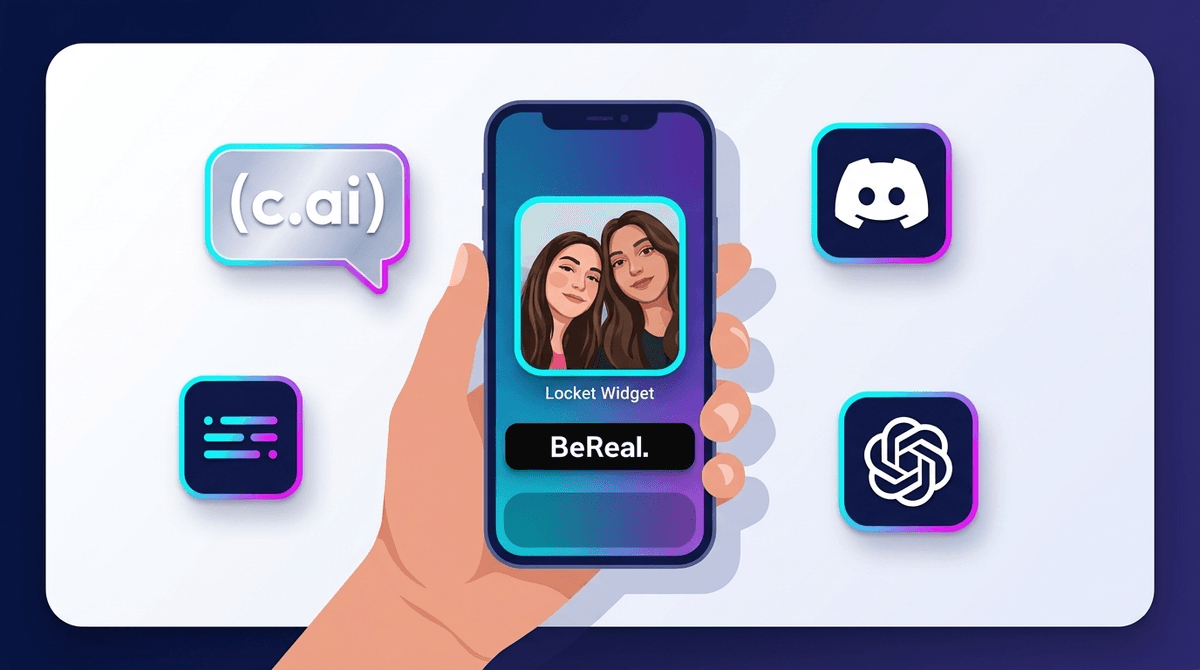
TL;DR: The Quick List Teens in 2026 are moving away from the "broadcast to everyone" vibe of TikTok and toward "closed-loop" communication. If you want to stay in the loop, keep an eye on these:
- The Private Feed: Locket Widget (sharing photos directly to friends' home screens).
- The AI Bestie: Character.ai (chatting with fictional or celebrity AI personas).
- The Digital Basement: Discord (still the king of community hangouts).
- The "New" Snapchat: Wizz (finding new friends through swiping—high risk, high popularity).
- The Event Planner: Partiful (how they actually organize the "Ohio"-themed birthday parties).
If you feel like you just finally figured out how TikTok works, I have some news that might make you want to throw your router into the nearest body of water: your teen probably thinks TikTok is for "old people" now.
Screenwise Parents
See allOkay, that’s a slight exaggeration. TikTok is still a massive time-sink, but the culture has shifted. In 2026, teens are increasingly "vibe-checking" their digital lives and moving toward smaller, more curated, and—honestly—weirder spaces. We’ve moved past the era of wanting 10,000 followers and into the era of wanting a "private digital backyard."
As a Screenwise parent, you’re already ahead of the curve because you’re intentional. But keeping up with the "Skibidi" of it all is a full-time job. Here is the breakdown of what is actually happening on your teen’s home screen right now.
The biggest trend we're seeing in our community data is the rise of the "Widget." Teens are tired of opening an app, scrolling through ads, and seeing "Suggested for You" content. They want to see their actual friends.
Locket is arguably the most popular "wholesome" app right now. It puts a live photo from a best friend or significant other directly onto the iPhone or Android home screen. There’s no "feed" to scroll. You just look at your phone, and there’s a goofy face your best friend made five seconds ago.
- Why they love it: It feels exclusive. It’s a "besties only" space.
- The Screenwise Take: It’s relatively low-risk because you can only add people from your contacts. However, the "real-time" nature can create some anxiety for kids who feel they need to be "on" 24/7.
- Learn more: Check out our guide on Locket Widget safety
This is where things get a little "Black Mirror." If your teen is spending hours staring at their phone but they aren't texting a human, they are likely talking to a bot.
This app is massive for the 13-18 demographic. It allows users to chat with AI personas. These can be "official" characters (like Harry Potter or Tony Stark) or user-created bots with specific personalities (the "grumpy boyfriend," the "supportive therapist," or even a "history teacher").
- Why they love it: It’s a mix of role-playing and companionship. For a generation that struggles with social anxiety, talking to an AI feels "safe."
- The Screenwise Take: This is a "no-BS" moment. While it can be a creative outlet for fan-fiction lovers, it can also become an emotional crutch. Some of these bots are programmed to be "flirty," and while the app has filters, teens are experts at "jailbreaking" those conversations.
- Use Screenwise's list maker: Is Character.ai replacing real friendships?

Teens aren't hanging out at the mall; they’re hanging out in "servers."
If your teen plays Minecraft, Fortnite, or Roblox, they are almost certainly on Discord. It’s a platform for text, voice, and video chat organized into "servers."
- Why they love it: It’s where the "inner circle" lives. They can stream their gameplay to friends or just sit in a voice channel in silence while they do homework.
- The Screenwise Take: Discord is the most powerful tool for community, but it’s also the most dangerous if unmonitored. Public servers can be toxic, and the "Direct Message" (DM) feature is a primary spot for online grooming.
- Next Step: Read our guide on setting up Discord parental controls
I’m going to be blunt: Wizz is basically Tinder for teenagers. It uses a "swipe" mechanic to help kids find "new friends" to chat with on Snapchat.
- Why they love it: It’s the thrill of the swipe and the "clout" of having a high Snap score.
- The Screenwise Take: This app is a red flag. Despite age-verification attempts, it is crawling with adults posing as teens. If your 14-year-old has this on their phone, it’s time for a very serious conversation about stranger danger.
- Use Screenwise's list maker: What are the dangers of the Wizz app?
It’s not all brain rot. Teens are using tech to survive high school, but the line between "help" and "cheating" is thinner than ever.
ChatGPT is the new Google. If they need to understand a complex topic, they ask the bot. Photomath allows them to take a picture of a calculus problem and get the step-by-step solution.
- The Screenwise Take: These tools are incredible for learning if used correctly. If they are just copy-pasting, their brains are turning into mush.
- Recommendation: How to talk to your teen about using AI for school
At Screenwise, we don't just look at what apps are popular globally; we look at what’s popular in your community. If 90% of your daughter's 9th-grade class is on BeReal, her being the only one left out feels like social suicide.
However, if 40% of the boys in 8th grade are using Wizz, that’s a community-wide safety concern that needs to be addressed at the next PTA meeting.
Take the Screenwise survey to see how your family's app usage compares to your community
- Ages 11-13 (The "Middle School Minefield"): Stick to "closed" apps. Locket Widget is okay; Discord should be restricted to friends-only servers. No Snapchat yet if you can help it.
- Ages 14-16 (The "Exploration Phase"): This is when they want Discord and TikTok. Focus on "Digital Wellness"—teaching them to recognize when they’ve been scrolling for three hours and feel like garbage.
- Ages 17+ (The "Pre-Launch Phase"): At this point, they need to manage their own boundaries. Talk about "Digital Footprints" and how Character.ai chats might feel private but are ultimately data points for a corporation.
Don't go in with "I read a blog post about how Wizz is dangerous." That’s a one-way ticket to them hiding their phone.
Try this instead: "Hey, I saw this app Locket on a tech guide and it looked actually kind of cool. Do you and your friends use that, or is it 'mid' now?"
(Yes, you might get a massive eye-roll for using the word "mid," but you’ve opened the door.)
Ask them to show you their "Screen Time" stats. Not as a "gotcha," but as a "wow, look at how much time Instagram stole from us this week." Make it a "us vs. the algorithm" conversation rather than a "me vs. you" conversation.
The 2026 app landscape is more fragmented than ever. Your teen isn't just on "the internet"—they are in ten different micro-communities at once. The apps will change by the time you finish reading this, but the need for intentional parenting remains the same.
Stay curious, stay non-judgmental, and remember: if they say something is "Ohio," it just means it’s weird. And let’s be honest, most of this stuff is definitely Ohio.
Next Steps:
- Check the phone: Look for the Locket Widget or Character.ai icons.
- Audit Discord: If they use Discord, ask which servers they spend the most time in.
- Update your Screenwise profile: Make sure your family's app list is current so we can give you the most relevant data.