

Podcasts That Spark Conversations: Turn Listening Time Into Family Connection
Look, we all know screen time is the default. But here's something that's been quietly gaining ground: audio content that actually gets kids thinking and talking. Not just passively consuming, but actively engaging with ideas.
Conversation-sparking podcasts are shows designed to make kids curious, ask questions, and—here's the magic part—want to tell you about what they just learned. They're the opposite of brain rot. They're shows about science, storytelling, history, emotions, current events, and big ideas that kids can actually understand and get excited about.
The best part? Unlike a screen that isolates, podcasts can happen in the car, during dinner prep, or while you're folding laundry. And when a kid hears something fascinating, they'll actually interrupt you to talk about it. (Yes, even the quiet ones.)
Kids are naturally curious. They want to understand how things work, why people do what they do, and what's happening in the world around them. Good podcasts tap into that curiosity without talking down to them.
The format works because:
- It's their own thing - Headphones on, they feel independent and grown-up
- It's active listening - Unlike passive video watching, audio requires imagination and engagement
- It feels like a conversation - The best shows have hosts who talk with kids, not at them
- They can revisit favorites - Found an episode they love? They'll listen to it five times and catch new things each time
Also, let's be real: there's something about audio that makes kids willing to engage with topics they might roll their eyes at in other formats. A podcast about emotions? Sure. A worksheet about emotions? Hard pass.
Ages 4-7: Wonder and Curiosity
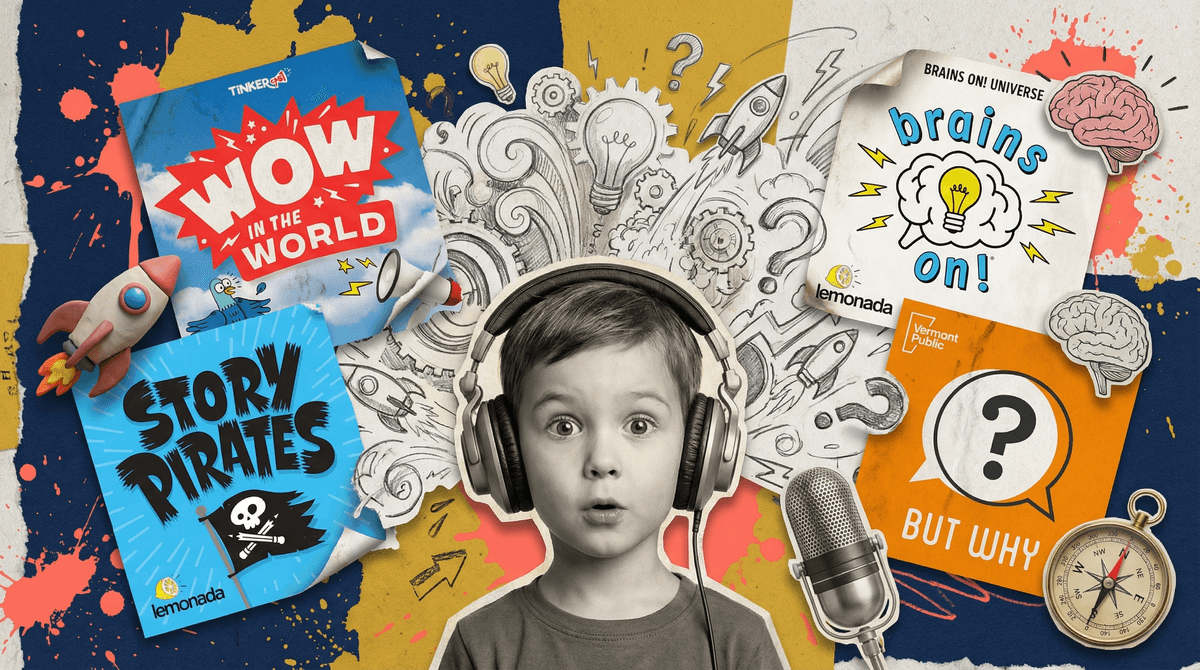
Wow in the World is the gold standard here. Hosts Mindy and Guy Raz make science absolutely delightful, and the energy is infectious. Your kid will 100% interrupt you to share facts about octopus intelligence or why we hiccup.
Circle Round takes folktales from around the world and adapts them with professional actors. Great for sparking conversations about different cultures, problem-solving, and what makes a good person good.
Story Pirates turns kids' story ideas into songs and sketches. It's hilarious, celebrates creativity, and will absolutely get your kid thinking about their own story ideas.
Ages 8-12: Big Ideas and Real Talk
Brains On! is where kids start asking the real questions: Why do we have butts? What is time? How do computers work? The show features actual kid co-hosts asking questions alongside adult experts. Read this guide to the Brains On! podcast for more on why it works so well.
But Why: A Podcast for Curious Kids from Vermont Public Radio answers real questions from real kids. Topics range from "Why do we have to go to school?" to "How do bridges work?" It's thoughtful, respectful, and doesn't shy away from complex topics.
The Past and The Curious makes history actually interesting by focusing on weird, surprising, and funny stories. Your kid will come away knowing about everything from ancient Roman graffiti to the invention of ice cream.
Six Minutes is a sci-fi mystery series that's genuinely gripping. It's episodic storytelling that will have kids theorizing and wanting to discuss what happens next.
Ages 10-14: Current Events and Deeper Thinking
KidNuz delivers daily news in a kid-friendly format. It's short (under 10 minutes), covers real current events, and gives kids context without being scary or overwhelming.
Radiolab for Kids takes the beloved adult show's approach to big questions and makes it accessible for younger listeners. Philosophy, science, and human nature—all fair game.
Smash Boom Best is a debate show for kids. Cats vs. Dogs. Books vs. Movies. It teaches critical thinking and argumentation skills while being genuinely funny. Your kid will absolutely want to debate you after listening.
Here's the thing: just putting on a podcast isn't enough. The magic happens in what comes after.
Start with shared listening. Play an episode during car rides or while making dinner. When something interesting comes up, pause it. Ask "Wait, what do you think about that?" or "Does that surprise you?"
Follow their interests. If your kid is obsessed with space, start with space episodes. If they're into animals, go there. The goal is engagement, not education for education's sake.
Ask open-ended questions:
- "What was the most interesting thing you learned?"
- "What would you do in that situation?"
- "Does that remind you of anything?"
- "What do you think happens next?"
Let them be the expert. Kids love explaining things. When they share a fact from a podcast, let them teach you. Ask follow-up questions. Show genuine interest. This builds confidence and reinforces the learning.
Create podcast time rituals. Maybe it's Saturday morning breakfast with Wow in the World, or bedtime with Circle Round. Routines make it feel special and give kids something to look forward to.
Podcasts aren't a magic fix. Some kids will love them immediately. Others need time to adjust to audio-only content. If your kid is used to constant visual stimulation, start with shorter episodes and build up.
Quality varies wildly. Not every "kids podcast" is created equal. Some are basically ads. Some talk down to kids. The ones listed here are genuinely good, but get more recommendations based on your kid's specific interests.
Audio literacy is a real skill. Kids who grow up with podcasts develop better listening skills, longer attention spans, and stronger imagination. They learn to follow narratives without visual cues, which is huge for reading comprehension and critical thinking.
It's okay to curate. You don't have to let your kid listen to everything. Preview episodes, especially for sensitive topics. Most podcast apps let you download specific episodes rather than giving kids full access to a feed.
Some kids prefer silence. And that's fine! Not every kid needs audio stimulation during car rides or quiet time. If your kid resists podcasts, don't force it. Offer it as an option, not an obligation.
In a world where so much digital content is designed to zone kids out, podcasts that spark conversations are genuinely valuable. They make kids think. They make kids want to talk to you. They build knowledge, curiosity, and critical thinking skills.
Start with one show that matches your kid's interests. Listen together. See what happens. You might be surprised how much a 10-minute podcast episode can fuel an hour of conversation.
And honestly? In the landscape of digital content competing for your kid's attention, that's a pretty great trade-off.
Try it this week: Pick one podcast from the age-appropriate list above and listen to one episode together. See what your kid gravitates toward.
Need more specific recommendations? Find podcasts for your kid's specific interests and we'll help you find the perfect match.
Want to explore other conversation starters? Check out board games that spark conversations or books that get kids talking about big ideas.