

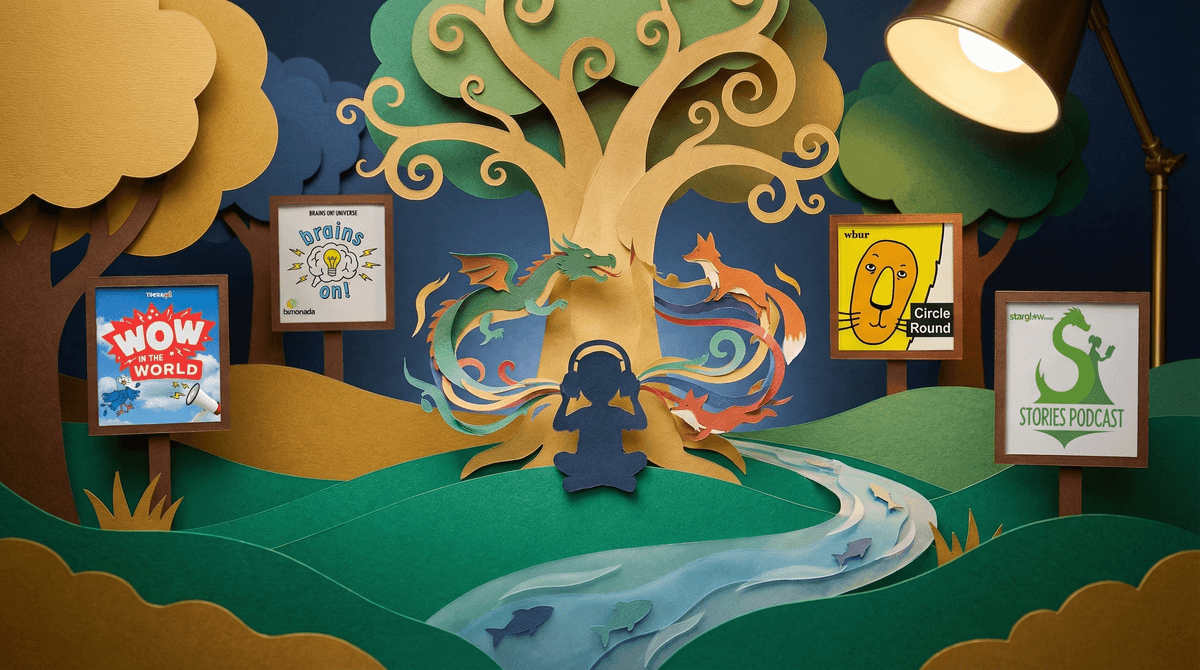
Circle Round is a storytelling podcast from WBUR that adapts folktales from around the world into 10-20 minute audio adventures. Think Aesop's fables meets global mythology, with professional voice actors, sound effects, and original music. Each episode ends with a simple activity or discussion prompt to extend the story.
It's basically the Goldilocks of kids' podcasts: substantive enough to feel enriching, entertaining enough that kids actually want to listen, and short enough to fit into real life.
And here's the thing — Circle Round isn't alone. There's a whole ecosystem of story podcasts that are genuinely good, screen-free content that can fill those in-between moments without defaulting to YouTube or Roblox.
Let me be direct: audio storytelling is one of the most underrated tools in the modern parenting toolkit.
Here's what these podcasts actually do:
They build listening comprehension. Kids have to follow a narrative without visual cues. This is the same skill they need for school, for following multi-step directions, for basically functioning in the world.
They create mental images. When there's no screen showing them what the dragon looks like, kids have to imagine it themselves. This is not some woo-woo creativity exercise — this is how reading comprehension works.
They're genuinely multicultural. Circle Round pulls from Korean, Nigerian, Indigenous, and dozens of other storytelling traditions. Your kid learns that every culture has wisdom to share, and it happens naturally through story rather than through a forced "today we're learning about diversity" lesson.
They fill the dead zones. Car rides. Dinner prep. Quiet time. That weird 15 minutes before you need to leave for soccer practice. These podcasts slot into real life without requiring you to set up a whole activity.
They're a gateway to audiobooks. Once kids realize they can enjoy a story through their ears, you've unlocked a whole world of long car trips and independent "reading" time.
If your kid has exhausted Circle Round or you want variety, here's what actually holds up:
Sparkle Stories — Gentle, Waldorf-inspired original tales. The production is simpler than Circle Round (one narrator, minimal sound effects), but the stories have this calm, imaginative quality. Great for ages 3-8, especially kids who get overstimulated easily.
Stories Podcast — A massive library of fairy tales, myths, and classics read aloud. No frills, just solid storytelling. Think of it as the public library of podcasts. Ages 4-10.
The Alien Adventures of Finn Caspian — Serialized sci-fi adventure about kids on a spaceship. Each episode is 15-20 minutes and ends on a cliffhanger. If your kid loves Dog Man books or adventure stories, this is the podcast equivalent. Ages 5-10.
Six Minutes — A mystery thriller told in (you guessed it) six-minute episodes. Genuinely suspenseful without being scary. My recommendation: perfect for ages 8-12 who think they're too old for "little kid" podcasts.
Grimm, Grimmer, Grimmest — The original Brothers Grimm tales, unvarnished. Hosted by Panoply's Adam Gidwitz (author of A Tale Dark and Grimm). These are darker, more complex stories for older kids who can handle some genuine peril. Ages 9+.
Ages 3-5: Start with Circle Round or Sparkle Stories. Keep episodes short (10-15 minutes max) and listen together at first. Talk about what's happening to help them follow along.
Ages 6-8: They can probably handle longer episodes and more complex plots. Try The Alien Adventures of Finn Caspian or Stories Podcast. They might also enjoy Brains On! (science) or Wow in the World (also science, more chaotic energy).
Ages 9-12: They're ready for serialized stories with real stakes. Six Minutes, Grimm Grimmer Grimmest, or even The Unexplainable Disappearance of Mars Patel (mystery/sci-fi hybrid).
Make it routine. Podcasts work best when they're part of an existing pattern: every car ride to school, every Tuesday during dinner prep, every Saturday morning while you drink coffee.
Don't force it. If they're not into a particular podcast, try a different one. Audio storytelling isn't universal — some kids need more time to adjust, and some just prefer visual media. That's fine.
Listen together first. Especially for younger kids, co-listening helps them learn how to follow an audio narrative. You can pause and discuss, rewind if they miss something, and model engaged listening.
Use it strategically. Podcasts are fantastic for transitions. "We're leaving in 15 minutes, want to start an episode?" or "Let's listen to one story before bed instead of screens."
Let them relisten. Kids love repetition. If they want to hear the same Circle Round episode for the fifth time, that's actually great — they're deepening their comprehension and catching details they missed.
Story podcasts like Circle Round are one of those rare things that check every box: educational, entertaining, screen-free, culturally enriching, and actually practical for daily life.
They're not going to replace all screen time (nor should they), but they can fill a lot of the gaps where you'd otherwise default to YouTube or games just to get through the day.
The best part? Once your kid discovers they love audio stories, you've opened up a whole world of content that doesn't require your Wi-Fi, your phone, or your sanity.
Start here: Download the Circle Round app or find it in your podcast player. Pick an episode with a title that sounds interesting to your kid. Listen to it on your next car ride.
Branch out: Try one of the other podcasts mentioned above based on your kid's age and interests. Read this guide to the best kids' podcasts for even more recommendations.
Make it a habit: Pick one regular time slot where podcasts become the default. Consistency is what makes this actually work.
Talk about it: After an episode, ask your kid what they thought. What was their favorite part? What would they have done differently? This reinforces comprehension and makes it more engaging.
And if you're wondering whether podcasts "count" as screen time — let's talk about that . Spoiler: they don't, and that's kind of the whole point.