

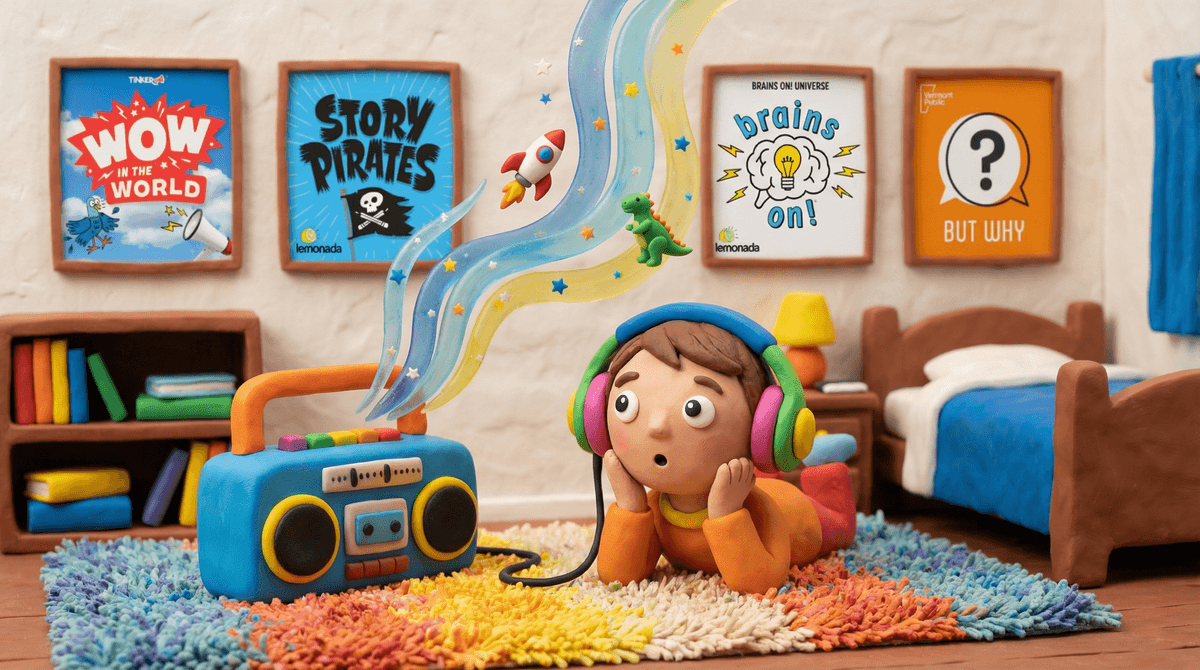
Podcasts for little kids are audio shows designed specifically for preschool and early elementary-aged children (roughly ages 3-8). They're like audiobooks, radio shows, and storytime rolled into one—but without the screen. Think NPR for the sippy cup set.
These aren't your true crime murder mysteries or tech bro interview shows. We're talking stories about adventurous cats, science experiments explained by enthusiastic hosts, silly songs, bedtime tales, and educational content that teaches everything from emotions to dinosaurs to why the sky is blue.
The beauty of kids' podcasts? They can turn car rides, quiet time, or pre-bedtime wind-down into something actually enriching instead of just handing over the iPad for the 47th Bluey episode of the day (no judgment, we've all been there).
Theater of the mind is magical at this age. Without visuals, kids' imaginations fill in the gaps. A dragon can look however they want it to. A spaceship can be any color. This kind of creative engagement is chef's kiss for developing brains.
They're designed for short attention spans. Most kids' podcast episodes run 10-20 minutes—perfect for the car ride to preschool or folding time before nap. They're not asking for an hour-long commitment.
The good ones are genuinely entertaining. Shows like Wow in the World and Story Pirates have professional voice actors, sound effects, music, and production quality that rivals anything on TV. Kids aren't settling for boring; they're getting actual entertainment.
Repetition and familiarity build comfort. Little kids love knowing what to expect. Once they find a podcast they love, they'll want to hear the same episodes over and over (sound familiar?). This repetition actually helps with language development and comprehension.
Ages 3-5: Keep it simple, silly, and short
At this age, look for:
- Episodes under 15 minutes
- Clear, engaging voices
- Lots of sound effects and music
- Simple storylines or concepts
- Interactive elements (songs, prompts to move or respond)
Try: Circle Round (folktales), Sesame Street Podcast, or Little Stories for Tiny People.
Ages 6-8: They're ready for more complexity
Now you can introduce:
- Longer episodes (20-30 minutes)
- Serialized stories with continuing plots
- More complex science and history topics
- Chapter book-style narratives
- Light humor and wordplay
Try: Brains On! (science), The Alien Adventures of Finn Caspian (sci-fi adventure), or But Why: A Podcast for Curious Kids.
Start with co-listening. Don't just throw on a podcast and disappear. Listen to at least the first episode or two together. This helps you gauge if it's appropriate, and it gives you conversation starters. Plus, some of these shows are genuinely funny for adults too.
Not all "kids" podcasts are for little kids. Some podcasts marketed as "for kids" are really aimed at 10-12 year olds. Check the recommended age range and listen to a sample. A podcast about Greek mythology might be too intense for a 4-year-old, even if it's labeled "educational."
Screen-free doesn't mean supervision-free. Yes, podcasts are audio-only, but you still want to know what content your kid is absorbing. Some shows have mild scary moments, bathroom humor, or themes that might not align with your family values. Read reviews from other parents before committing.
Ads can be tricky. Many free podcasts include ads. Some are fine ("This episode is brought to you by..."), but others might be for products or services you'd rather not expose your kid to. Premium/paid versions often remove ads entirely. Worth considering for little ones who don't understand the difference between content and advertising yet.
Podcasts can replace screen time, not just fill extra time. This is the real win. Instead of "educational" YouTube videos that lead to autoplay chaos, podcasts offer contained, curated content. They're perfect for:
- Morning routine background (getting dressed, eating breakfast)
- Car rides
- Quiet time/rest time
- Bedtime wind-down
- While doing puzzles, coloring, or playing with blocks
Some kids need a visual anchor at first. If your kid is super screen-oriented, they might struggle with audio-only at first. Try having them color or play with Play-Doh while listening. The hands-busy-mind-engaged combo works wonders.
Where to listen:
- Apple Podcasts (free, but interface isn't super kid-friendly)
- Spotify (free with ads, premium without)
- Podcast apps with parental controls like Chompers or Pinna (subscription-based, curated for kids)
Pro tip: Download episodes for offline listening. Nothing worse than losing service mid-episode during a tantrum-prevention emergency.
Podcasts for little kids are one of the most genuinely useful tools in the modern parent toolkit. They're screen-free, imagination-building, often educational, and can actually make your life easier during those transition moments when you need 15 minutes of peace.
The key is curation. Not every podcast is created equal, and not every "kids" podcast is appropriate for little kids. Start with well-reviewed shows designed specifically for the preschool/early elementary crowd, co-listen to establish favorites, and watch how quickly your kid starts asking for "just one more episode" instead of "just one more show."
And honestly? When your 5-year-old starts explaining how volcanos work because they heard it on Brains On!, you'll feel like a parenting genius. Even if you had no idea volcanos worked that way either.
Start here: Pick one podcast from the age-appropriate list above and listen to an episode together this week—in the car, during breakfast, or at bedtime.
Create a playlist: Once you find 2-3 favorites, download several episodes so you always have content ready for those "I'm bored" or "I need a screen break" moments.
Check out our full guide: Best podcasts for kids by age breaks down recommendations for every developmental stage, with specific episode suggestions and content warnings where relevant.