

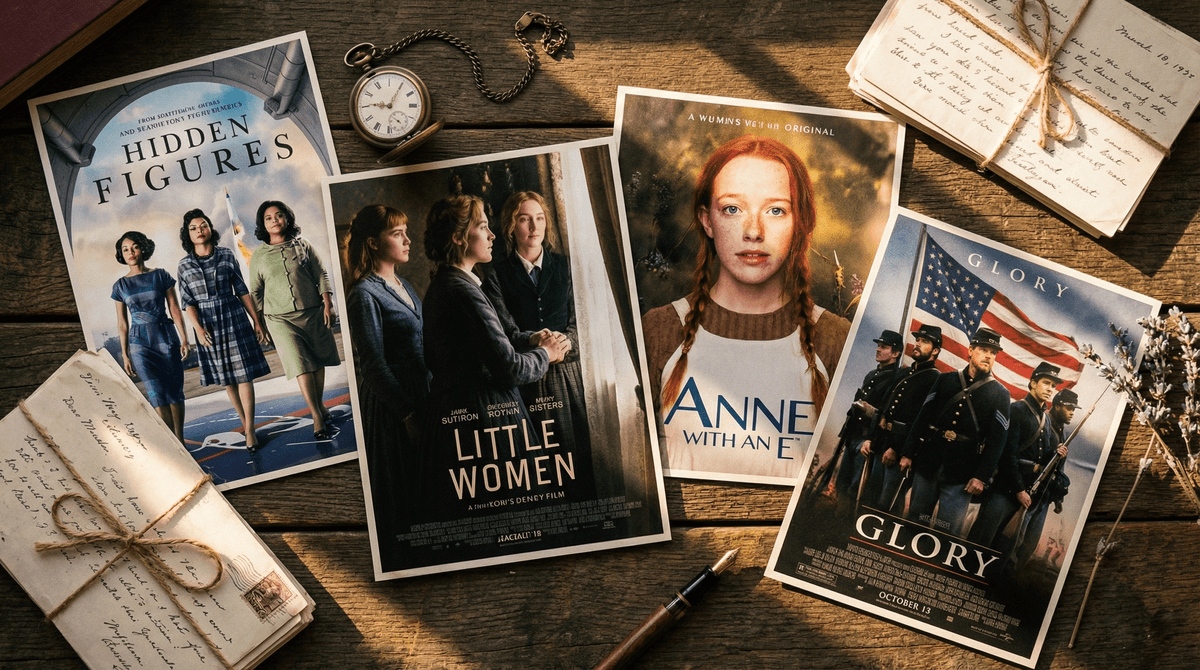
Period pieces are movies and TV shows set in a different historical era—think Victorian England, Colonial America, World War II, or the Roaring Twenties. They're the ones with the fancy costumes, careful attention to historical detail (well, sometimes), and a window into how people lived, loved, and navigated their worlds in a completely different time.
For families, period dramas can be surprisingly engaging content. Yes, even for kids who claim they "hate history." Because here's the thing: when history comes alive through compelling characters and stories, it stops being a list of dates and becomes something kids can actually connect with.
In an era where so much content is designed to be consumed and forgotten, period pieces offer something different. They slow down. They invite questions. They create natural opportunities for conversations about how society has changed—and in some cases, how it frustratingly hasn't.
They're also sneakily educational. Your kid might not remember the specific dates of the Civil War, but after watching Glory, they'll understand the human cost and complexity in a way no textbook can convey. After Hidden Figures, they'll know that Black women mathematicians were literally calculating rocket trajectories while dealing with segregated bathrooms.
Period pieces can also help kids develop critical thinking about progress and social change. Why couldn't women vote? Why were people treated differently based on race? Why did kids work in factories? These aren't abstract concepts when you're watching them play out on screen.
Ages 6-9:
- Little House on the Prairie (the show) - Pioneer life without being too intense. Great for talking about how families worked together before electricity and smartphones.
- The Secret Garden (1993 version) - Edwardian England, grief, friendship, and the magic of nature. Gentle introduction to period storytelling.
- Paddington and Paddington 2 - Set in modern London but with such a strong sense of British tradition and old-world charm that they capture that period piece feeling.
Ages 10-13:
- Anne with an E - Netflix's adaptation of Anne of Green Gables. Set in 1890s Canada, it tackles bullying, trauma, identity, and feminism in ways that feel remarkably modern. Fair warning: it's more intense than the books, dealing with Anne's orphanage trauma more directly.
- The Railway Children - Edwardian England, family separation, and kids being resourceful. Sweet without being saccharine.
- Newsies - The 1992 Disney musical about the 1899 newsboy strike. It's got Christian Bale singing and dancing, and it's actually about labor rights and standing up to corporate exploitation.
Ages 13+:
- Hidden Figures - The story of Black women mathematicians at NASA during the Space Race. Should be required viewing, honestly.
- Pride & Prejudice (2005) - The Keira Knightley version is gorgeous, romantic, and a great entry point for talking about women's limited options in Regency England.
- The Crown - For older teens interested in recent history and the British monarchy. Complex, nuanced, and raises great questions about duty, family, and power.
- Brooklyn - 1950s immigration story that's tender and beautifully made. Great for discussing the immigrant experience.
For the whole family (with some caveats):
- Harriet - About Harriet Tubman's escape from slavery and work with the Underground Railroad. Intense but important. Ages 11+.
- The Sound of Music - Yes, it's long. Yes, your kids might roll their eyes. But it's also about a family fleeing Nazi occupation, wrapped in one of the most singable soundtracks ever made.
Period pieces often reflect the prejudices of their time—racism, sexism, classism, and more. This is actually a feature, not a bug, if you're willing to talk about it. The question isn't whether to shield kids from historical injustice, but how to help them process and understand it.
Some period pieces romanticize the past in ways that gloss over real suffering. Others go too far in the opposite direction, wallowing in misery without offering context or hope. The best ones find a balance—acknowledging the hardships while celebrating the resilience and humanity of people living through them.
Content warnings to consider:
- Historical violence (war, slavery, abuse)
- Outdated attitudes about race, gender, and class
- Death and loss (common themes in historical drama)
- Slow pacing (not everything explodes every five minutes, and that's okay)
Pause and talk. When something confusing or upsetting happens, hit pause. "Why do you think they're treating her that way?" "What would you do in that situation?" "How is this different from today?"
Connect to today. Help kids see the throughlines. After watching Selma, talk about current voting rights issues. After Little Women (the Greta Gerwig version is chef's kiss), discuss how women's career options have expanded—and where barriers still exist.
Follow their curiosity. If they're fascinated by Victorian fashion or World War II planes or medieval castles, lean into it. Period pieces can be gateway drugs to deeper historical interests.
Period pieces aren't just fancy costumes and British accents (though those help). They're time machines that let kids experience different eras, understand how far we've come, and grapple with how far we still have to go.
They're also a nice antidote to the constant present-tense of most kids' media. In a world of TikTok and Fortnite, there's something valuable about slowing down and spending time in a different century.
Not every kid will love them, and that's fine. But for families looking for content that sparks real conversations about history, values, and social change? Period pieces deliver in ways that few other genres can.
Next time you're scrolling through streaming options, consider swapping another Marvel rewatch for something with corsets or top hats. You might be surprised by what your kids connect with—and what conversations unfold.