

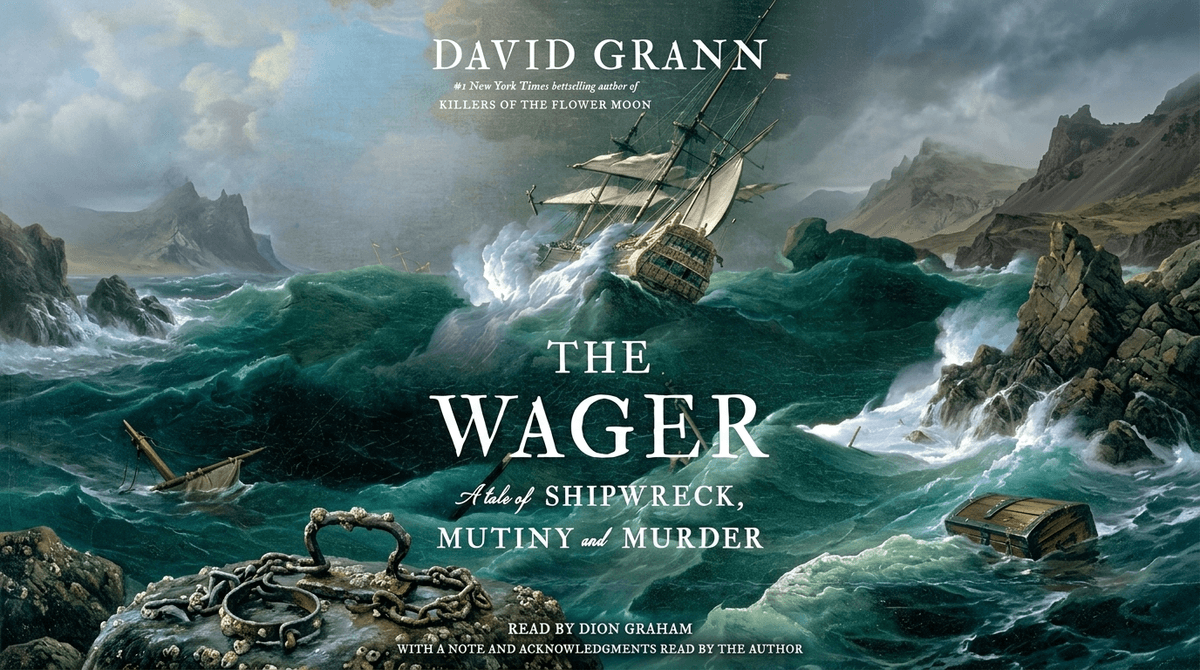
David Grann’s The Wager: A Tale of Shipwreck, Mutiny and Murder is a brutal, masterfully told survival story that makes most modern reality TV look like a catered spa day. If your teen is ready for a story where the "bad guy" is usually the weather and the "good guys" are all slowly losing their minds, this is the gold standard of narrative non-fiction. It’s historically dense but moves like a thriller, making it a rare "dad book" that actually lands with the 14-and-up crowd.
TL;DR: The Wager is a high-octane historical account of a 1741 British naval wreck that devolved into anarchy, mutiny, and starvation. It’s perfect for teens who enjoyed the survival stakes of The Hunger Games or the psychological breakdown in Lord of the Flies, but want the weight of a true story. Expect graphic descriptions of 18th-century ailments and the grim reality of what happens when the rule of law vanishes in the middle of the ocean.
Screenwise Parents
See allDavid Grann has a specific superpower: he finds obscure historical footnotes and turns them into cinematic experiences. You might know him from Killers of the Flower Moon, and he brings that same "I can't believe this actually happened" energy here.
For a teen, the draw isn't the 1740s British naval politics—it’s the sheer, relentless disaster. The ship, the Wager, is part of a secret mission to intercept a Spanish treasure galleon. They hit Cape Horn (the final boss of ocean geography), the ship falls apart, and the survivors end up on a desolate island off the coast of Patagonia.
This isn't a "pull yourself up by your bootstraps" story. It’s a "watch everything go wrong and see who survives" story. It’s the kind of book that makes a kid realize that history isn't just a list of dates; it’s a series of high-stakes decisions made by people who were often cold, hungry, and terrified.
Let’s talk about the "grit" mentioned in the title. Grann doesn't look away from the physical reality of the 1700s.
First, there’s the scurvy. If your kid thinks a cold is bad, wait until they read about teeth falling out and old wounds literally un-healing. It’s body horror, but it’s biological reality. Then there’s the starvation. The survivors on "Wager Island" eventually reach a point where the social contract dissolves.
And yes, there are the cannibalism rumors. Without spoiling the historical record, let’s just say that when people are starving on a desolate rock, the definition of "food" becomes uncomfortably flexible. Grann handles this with journalistic distance rather than slasher-movie gore, but the psychological weight of those choices is what makes the book stick. If your teen is sensitive to animal death or extreme physical suffering, this will be a heavy lift. If they’re into The Last of Us or survival sims, they’ll probably find it fascinating.
If you’re trying to get a reluctant reader to pick up something that isn't a graphic novel, The Wager is a top-tier candidate. The chapters are short, the pacing is relentless, and Grann uses the "Rashomon effect"—showing how different survivors told different versions of the story to avoid being hanged for mutiny.
It’s essentially a courtroom drama wrapped in a shipwreck. When the survivors finally make it back to England, they all have different stories about who was the hero and who was the murderer. It’s a masterclass in how "truth" is often just the story told by the person who survived the longest.
If they love the "Man vs. Nature" vibe:
- Endurance by Alfred Lansing: The ultimate Shackleton survival story. Less mutiny, more "how are they not dead yet?"
- Into Thin Air by Jon Krakauer: The definitive account of the 1996 Everest disaster.
- The Martian by Andy Weir: For a fictional, more optimistic take on "science-ing" your way out of a death sentence.
The best part of The Wager isn't the shipwreck; it’s the fallout. It’s a perfect jumping-off point for talking about things that actually matter:
- The Fragility of Law: When the ship wrecked, the Captain argued he was still in charge. The crew argued that since the ship was gone, the "Articles of War" no longer applied. Ask your kid: If you’re on a desert island, do the rules from home still matter? Who gets to decide?
- The Unreliable Narrator: Everyone in this book is lying to save their own necks. It’s a great way to talk about media literacy and how to spot when someone is spinning a story to make themselves look like the hero.
- The Cost of Empire: The British sent these men into a meat grinder for the sake of some Spanish gold. It’s a raw look at how institutions often treat people as expendable.
The hardest part of The Wager isn't the violence—it's the hopelessness. For about 200 pages, things just get worse. There are no "lucky breaks." If your kid is in a headspace where they need an uplifting win, maybe save this for later. But if they’re ready for a deep dive into the extremes of human endurance, this is one of the best books they'll read all year.
Also, keep an eye out for the upcoming movie adaptation. It’s being developed by Martin Scorsese and Leonardo DiCaprio (the same duo behind Killers of the Flower Moon), so expect the hype—and the graphic visuals—to ramp up soon. Reading it now gives your teen the "I liked the book better" bragging rights.
Q: What age is The Wager appropriate for? The Wager is best for ages 14 and up. While the vocabulary is accessible for strong middle-school readers, the themes of mutiny, starvation, and the sheer grimness of the survival conditions land better with high schoolers who can handle the psychological complexity.
Q: Is there a lot of swearing or "adult" content? There is very little "modern" profanity, though there is plenty of 18th-century naval grit. There is no sexual content. The "adult" nature of the book comes entirely from the violence, the descriptions of disease (scurvy is no joke), and the desperate measures taken for survival.
Q: Is The Wager better than Killers of the Flower Moon? They’re different flavors of the same high-quality brand. Killers of the Flower Moon is a true-crime conspiracy; The Wager is a survival thriller. If your kid prefers Man vs. Nature, go with The Wager. If they prefer Man vs. Greed, go with Killers.
Q: How graphic is the violence in the book? It is descriptive but not gratuitous. Grann describes the results of 18th-century warfare (cannon fire, etc.) and the physical toll of the shipwreck. It feels more like a history documentary than a horror movie, but it doesn't sugarcoat the reality of death at sea.
The Wager is a rare beast: a history book that reads like an action movie but leaves you thinking like a philosopher. It’s a high-value read for any teen who thinks they've seen it all in fiction. For more deep dives into what's worth their time, check out our best books for kids list or our digital guide for high schoolers.
- Find more survival stories for teens

- Check out our best movies for kids list to see if there are any survival classics your family missed.
- See other David Grann books